Bulldog
House of Fabergé · c. 1895–1915 · Cleveland Museum of Art
Guide
Adjust the guideNew to it · Medium
Looking for this guide.
From the museum
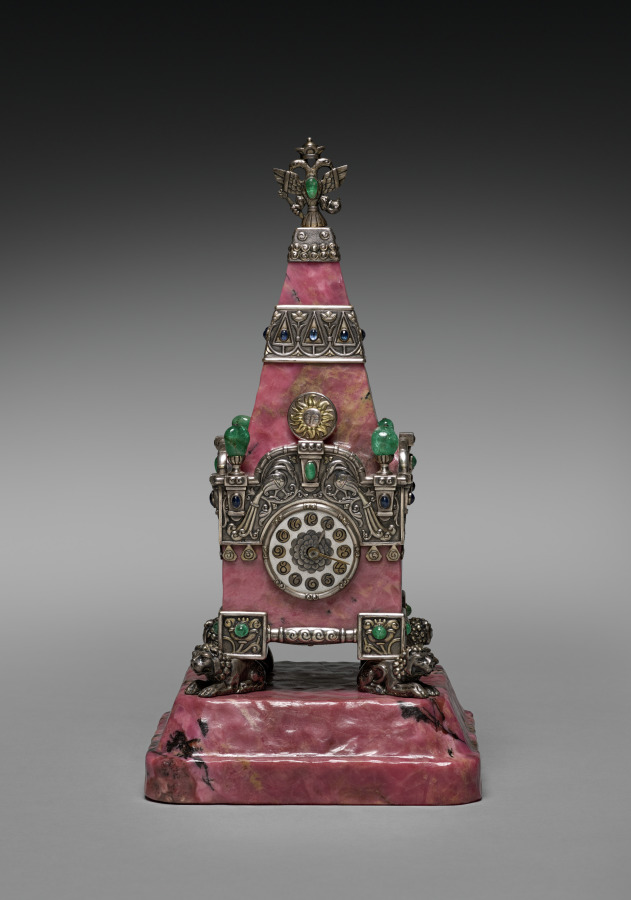
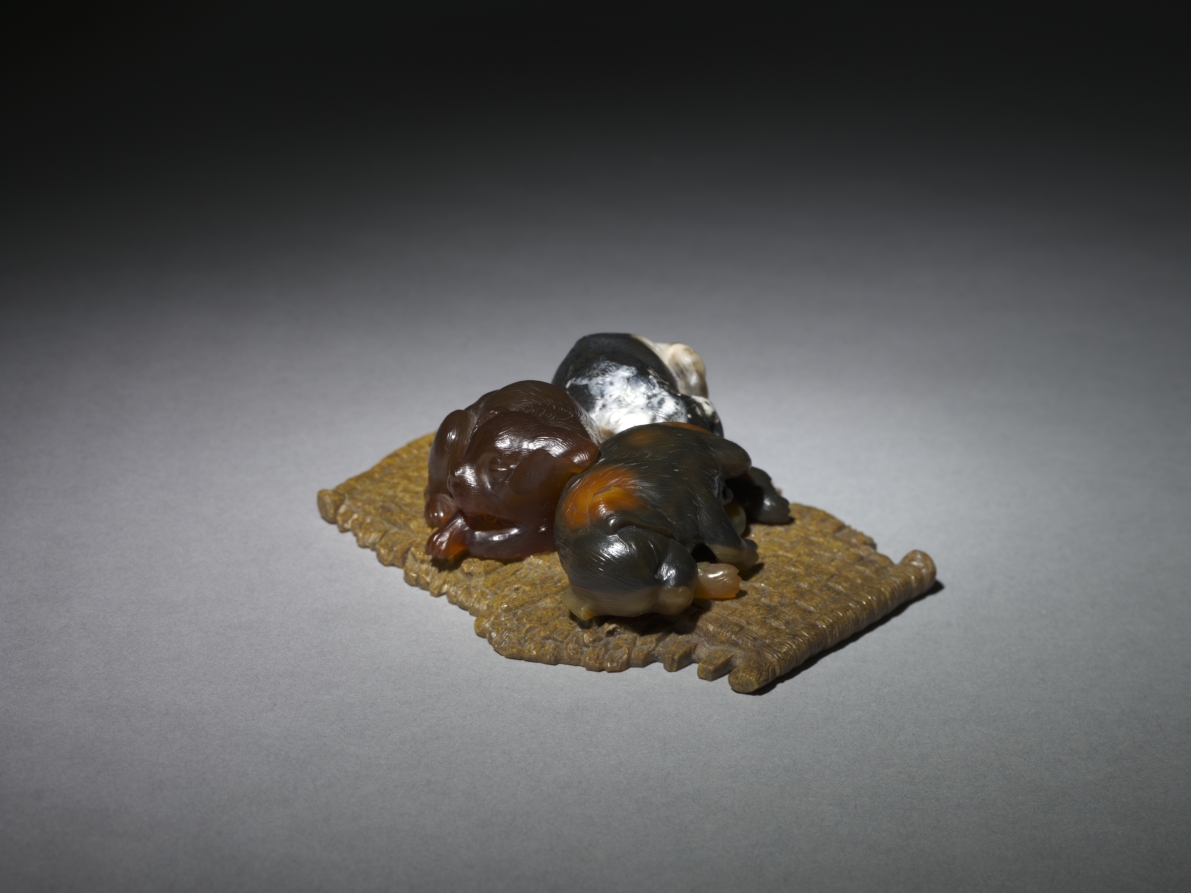
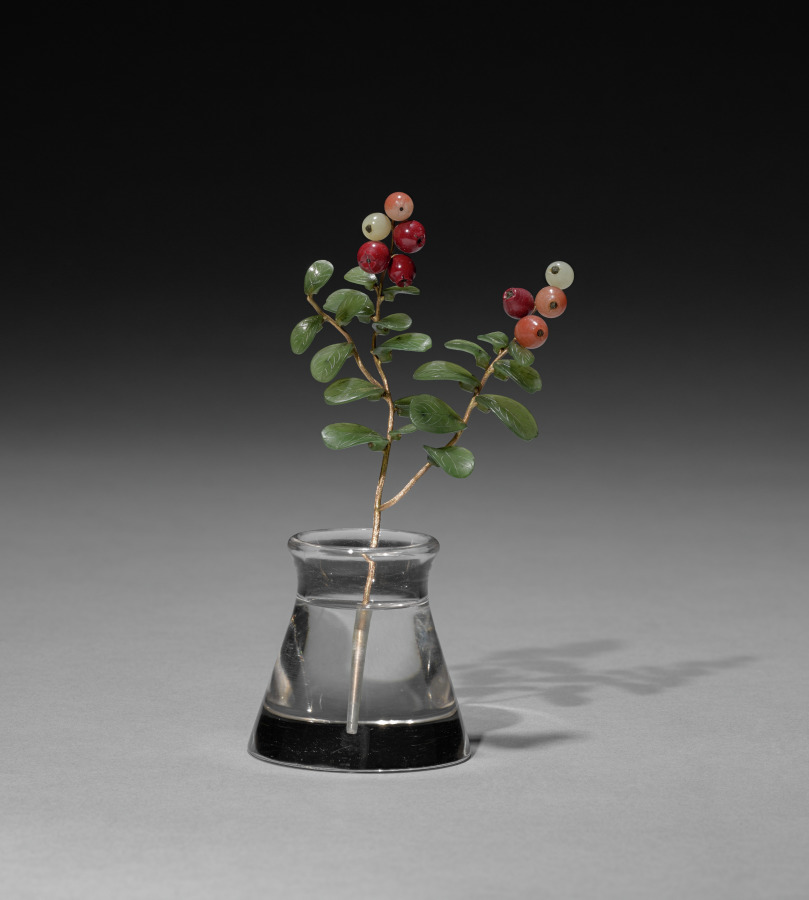
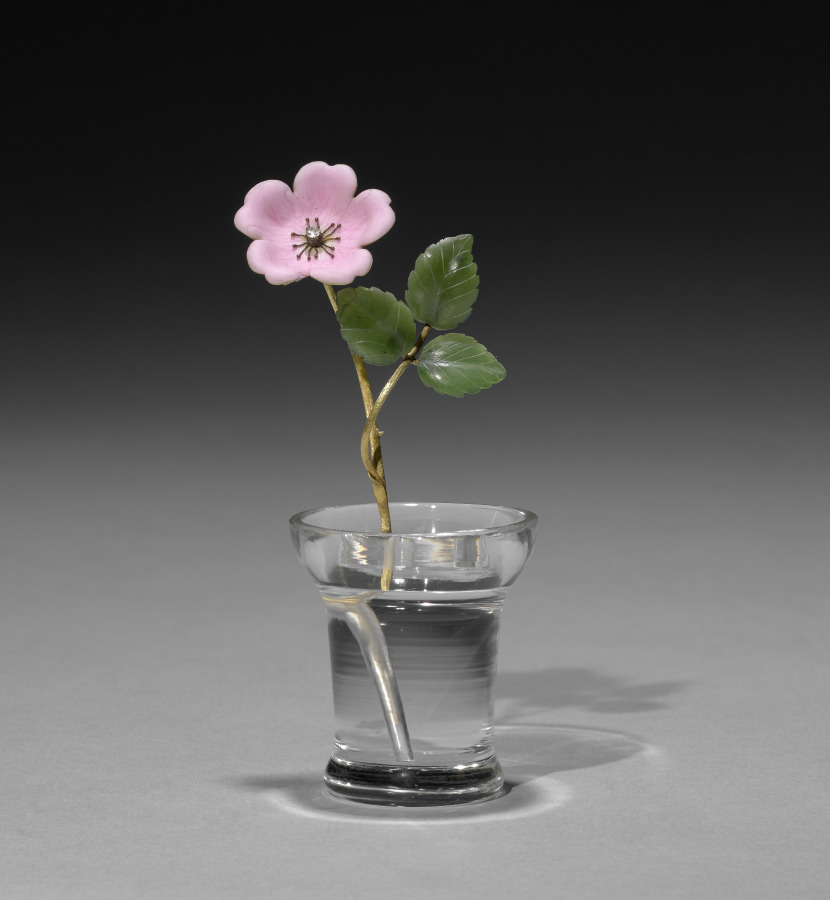
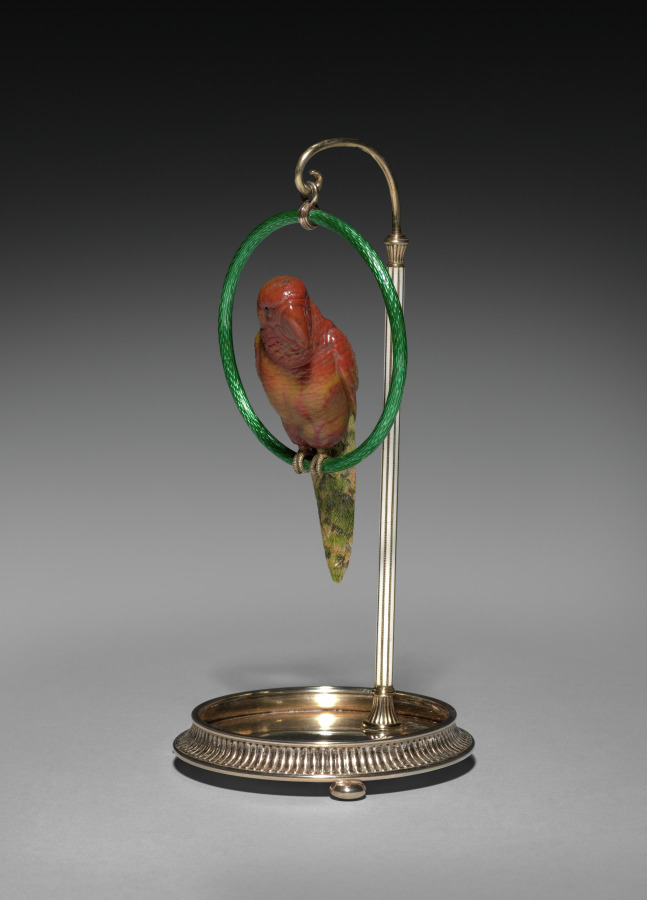
In creating luxurious accessories for a desk or tabletop, the House of Fabergé often used native hardstones such as multicolored agate and jasper, green nephrite, pink rhodonite, quartz, and rock crystal found in the Ural Mountains of western Russia. By paying careful attention to the unique colors and textures of the stones, Fabergé and his craftsmen brought them to life, turning smoky quartz into this figure of a seated bulldog, for example. The use of native materials also promoted Russian nationalism, which appealed greatly to the tsar and his family. Fabergé's lapidaries carefully chose the stones to resemble the color and texture of the figure they were sculpting. The smoky quartz used for this bulldog was polished to resemble his dark shiny coat.
The museum’s own description, in English. Licence: CC0
What did you think?
Save this work’s image and museum information on this device to read without a connection.
Ask about this work
Ask in your own words. The answer comes from what the museum has written about the work, and says so when that does not hold it.
Details
- Maker
- House of Fabergé (Russian, 1842–1918)
- Date
- c. 1895–1915
- Medium
- amethystine quartz, diamonds
- Dimensions
- Overall: 4.4 x 5.1 x 3.5 cm (1 3/4 x 2 x 1 3/8 in.)
- Place of origin
- Russia
- Held by
- Cleveland Museum of Art, Cleveland · On view · 211 Fabergé
- Credit line
- The India Early Minshall Collection
Image: Cleveland Museum of Art, CC0