Clock
Henrik Wigström · 1908–17 · Cleveland Museum of Art
Guide
Adjust the guideNew to it · Medium
Looking for this guide.
From the museum
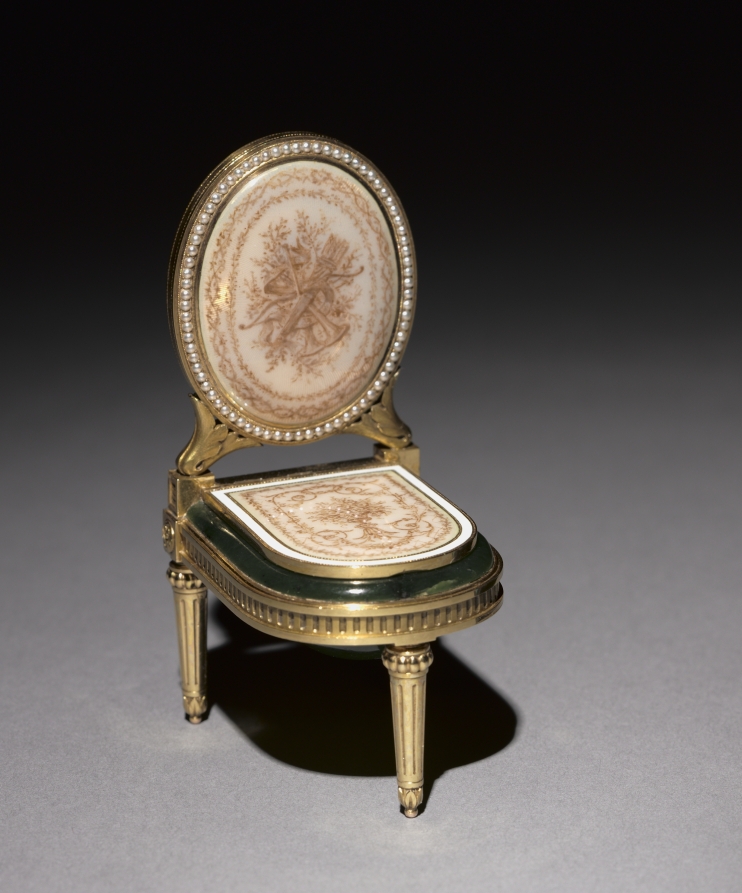
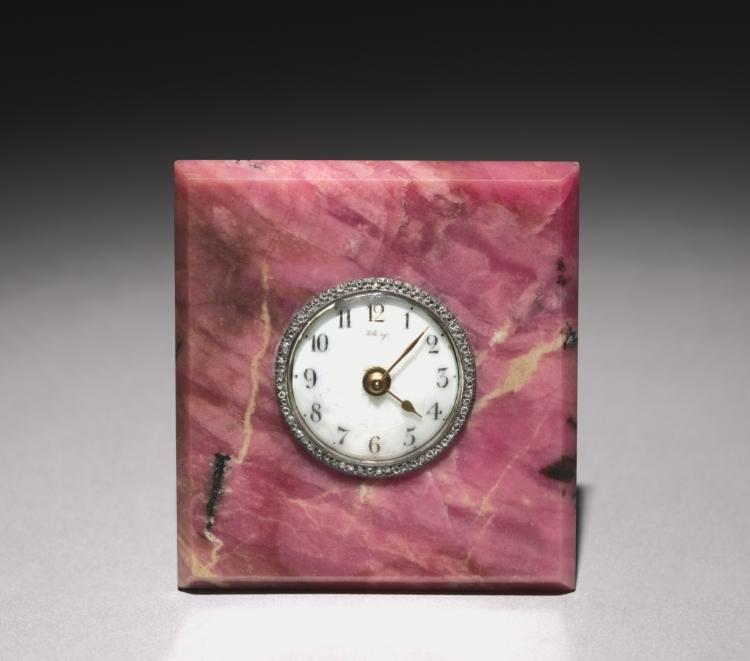
The use of Russian hardstones in creating precious objects became a hallmark of design from the House of Fabergé. Easily carved, these minerals were sourced largely from the western region surrounding the Ural Mountains. Fabergé's workmasters used colorful stones such as agate, lapis lazuli, rock crystal, rhodonite, and nephrite (jade), seen here in this small desk clock, to create and embellish flower studies, animal figures, and all manner of luxurious accessories. The face of this small luxurious desk clock features tiny pink enameled roses in place of the customary numbers along with hour and minute hands paved in diamonds.
The museum’s own description, in English. Licence: CC0
What did you think?
Save this work’s image and museum information on this device to read without a connection.
Ask about this work
Ask in your own words. The answer comes from what the museum has written about the work, and says so when that does not hold it.
Details
- Maker
- Henrik Wigström (Russian, 1862–1923), House of Fabergé (Russian, 1842–1918)
- Date
- 1908–17
- Medium
- nephrite, gold, enamel, diamonds
- Dimensions
- Overall: 7.9 x 3.4 x 2.5 cm (3 1/8 x 1 5/16 x 1 in.)
- Place of origin
- Russia
- Held by
- Cleveland Museum of Art, Cleveland · On view · 211 Fabergé
- Credit line
- The India Early Minshall Collection
Image: Cleveland Museum of Art, CC0