Fish (Still Life)
Édouard Manet · 1864 · Art Institute of Chicago
Guide
4 chapters · about 2 minAdjust the guideNew to it · Medium
This is a still life, which means a painting of everyday objects arranged on a table. Here the objects are food and kitchen things: fish, including eels, along with oysters, lemons and other fruit, a pot, and a knife, all resting on a tablecloth. It is painted in oil on canvas and measures about 74 by 92 centimeters, or roughly 29 by 36 inches. That makes it wider than it is tall, a size you could imagine in a home rather than a grand hall. Édouard Manet painted it in 1864.
Start with the overall shape of the arrangement. The museum describes a strong diagonal running through the objects, a slanting line that carries your eye across the canvas. Then look for the carp, a large fish. It is placed so that it works against that diagonal, and this pushes the picture off balance in a lively way. Next, come close and study the brushwork. The strokes are bold and quick, and you can see how the paint was put down. Notice too how fresh the food looks, as if it had just come from the market.
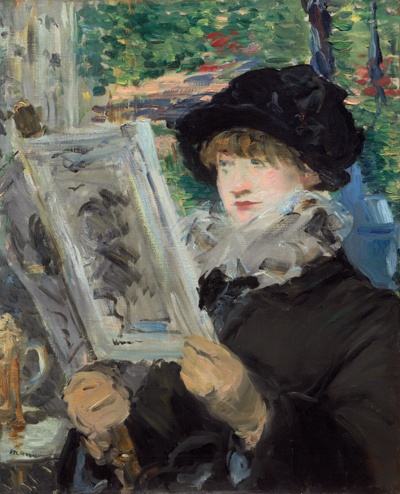
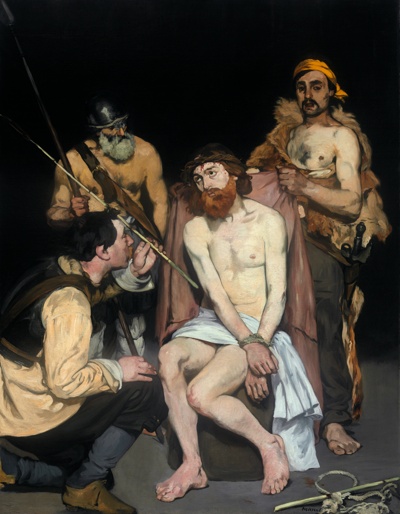
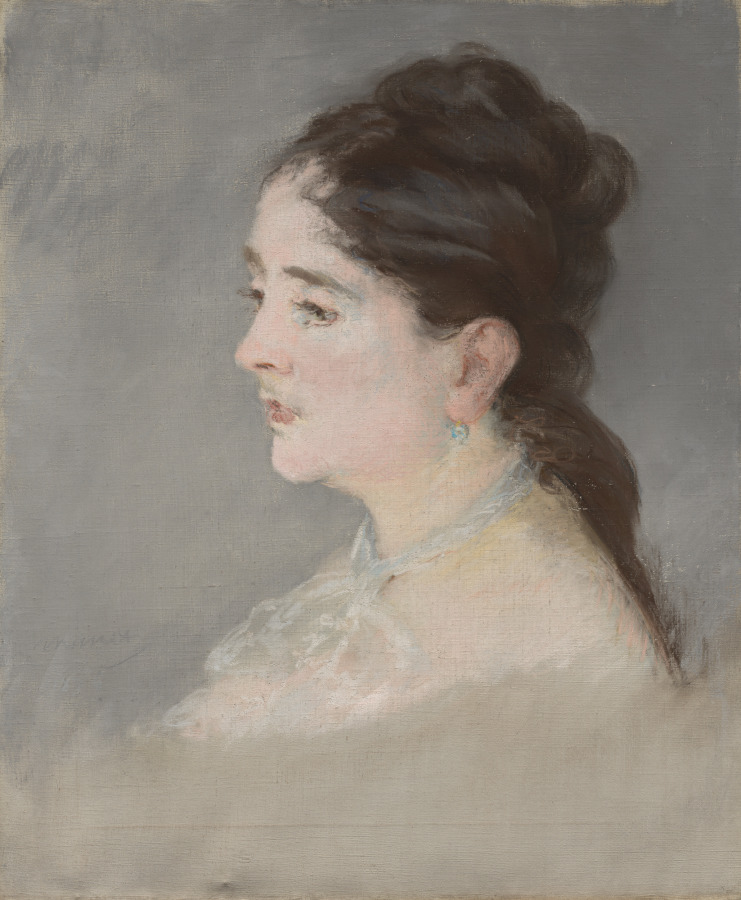
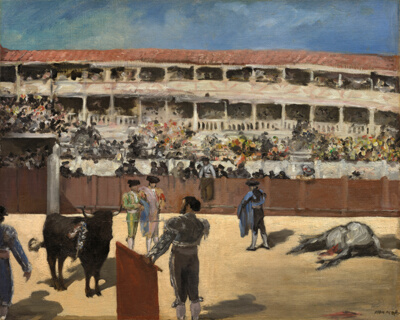
Manet was a French artist described as avant-garde, meaning ahead of the accepted taste of his time. He returned to still life again and again, but his most sustained interest came in 1864 and 1865, when this canvas was made. Painters in seventeenth-century Holland had made many such pictures, and Fish recalls them. Interest in the genre was growing again, partly because a rising middle class liked smaller, moderately priced works. Manet never sent his still lifes to the official French exhibition, the Salon. He sold them through Paris art galleries and gave them to friends.
The French words for still life are nature morte, which means dead nature. Fish shows exactly that: animals that are no longer alive, laid out for the table. Yet the museum points out that there is nothing still about the painting. The food looks fresh, and the paint is handled with great energy. The directness of the picture is part of why the public of Manet's day found his work unorthodox and confrontational. Before you move on, look once more at the brushstrokes themselves, and see how much movement they bring to a quiet scene.
This guide was written by AI from material published by Art Institute of Chicago. Licence: CC BY 4.0
Save this version (English · New to it · Medium) with all its audio, guide text and work image. It replaces the saved guide for this work and language.
Audio storage: about 40 MB per guide and 150 MB on this device. Audio expires 7 days after it is downloaded.
What did you think?
Save this work’s image and museum information on this device to read without a connection.
Ask about this work
Ask in your own words. The answer comes from what the museum has written about the work, and says so when that does not hold it.
Details
- Maker
- Édouard Manet (French, 1832–1883)
- Date
- 1864
- Medium
- Oil on canvas
- Dimensions
- 73.5 × 92.4 cm (28 15/16 × 36 3/8 in.); Framed: 108.6 × 127 × 12.7 cm (42 3/4 × 50 × 5 in.)
- Place of origin
- France
- Held by
- Art Institute of Chicago, Chicago · On view · Gallery 222
- Credit line
- Mr. and Mrs. Lewis Larned Coburn Memorial Collection
Image: Art Institute of Chicago, CC0