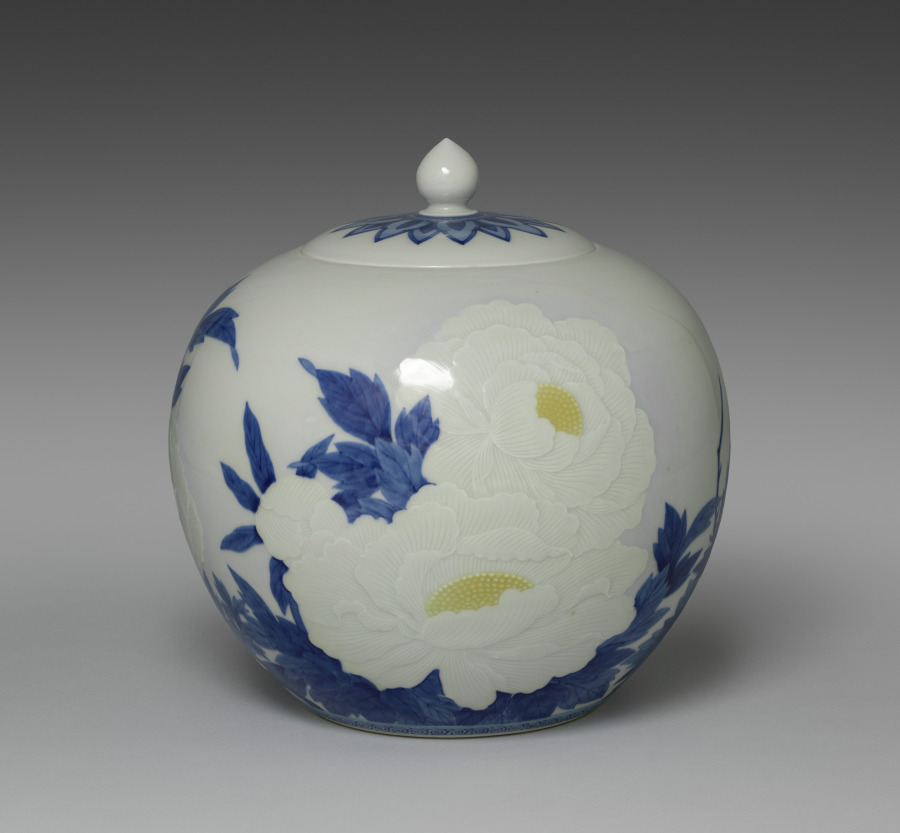
Gu-Shaped Flower Vase
Seifu Yohei III · 1893–97 · Cleveland Museum of Art
What did you think?
Guide
Adjust the guideNew to it · Medium
Nobody has listened to this guide yet. Making it takes about twenty seconds, and after that anyone can hear it straight away.
From the museum
Seifū Yohei III was the most prominent head of a ceramics studio in Kyoto that specialized in Chinese-style porcelains and especially items for use in sencha (煎茶), or the drinking of steeped-leaf tea with companions. Sencha was popular among the bunjin of Kyoto and Osaka, who often enjoyed it as part of their emulation of Chinese culture. While sencha was by design less formal than the Japanese tea ceremony, it still featured the display of treasured objects. Prized Chinese antiquities were generally unobtainable, so substitutes such as the Gu-Shaped Flower Vase were much in demand. This gu-shaped vase has “cherry blossom glaze” (ōkayū), which Yohei III invented in 1890.
The museum’s own description, in English. Licence: CC0
Ask about this work
Ask in your own words. The answer comes from what the museum has written about the work, and says so when that does not hold it.
Details
- Maker
- Seifū Yohei III (Japanese, 1851–1914)
- Date
- 1893–97
- Medium
- Glazed porcelain with molded and carved designs
- Dimensions
- height: 31.1 cm (12 1/4 in.); Diameter of mouth: 13.5 cm (5 5/16 in.); Diameter of foot: 11 cm (4 5/16 in.)
- Place of origin
- Japan
- Held by
- Cleveland Museum of Art, Cleveland · On view · 235A Japanese
- Credit line
- Gift of James and Christine Heusinger
Image: Cleveland Museum of Art, CC0