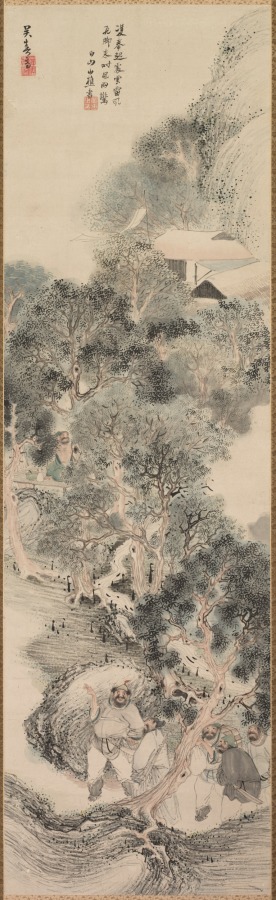
Happy Forest, from Water Margin
Matsumura Goshun · late 1700s · Cleveland Museum of Art
What did you think?
Guide
Adjust the guideNew to it · Medium
Nobody has listened to this guide yet. Making it takes about twenty seconds, and after that anyone can hear it straight away.
From the museum
The Chinese literary classic Water Margin is set in the 1120s and tells the story of 108 outlaws who first rebel against the government and then join forces with it. This painting depicts an episode in which hero Wu Song reclaims the tavern Happy Forest for its rightful owner, the prison warden’s son, Shi En. To prepare for the fight, Wu Song drinks a lot of wine. The painting was inscribed with a quote in which an ally describes Wu Song’s fighting style. It reads as follows: Where his twin fists rise, clouds and thunder roar, When his flying kick comes, wind and rain tremble.
The museum’s own description, in English. Licence: CC0
Ask about this work
Ask in your own words. The answer comes from what the museum has written about the work, and says so when that does not hold it.
Details
- Maker
- Matsumura Goshun (Japanese, 1752–1811), and Amenomori Shōteki (Japanese, 1731–1786)
- Date
- late 1700s
- Medium
- hanging scroll; ink and color on paper
- Dimensions
- Image: 137.8 x 41.3 cm (54 1/4 x 16 1/4 in.); Overall: 209.6 x 62.3 cm (82 1/2 x 24 1/2 in.)
- Place of origin
- Japan
- Held by
- Cleveland Museum of Art, Cleveland · On view · 235A Japanese
- Credit line
- Mr. and Mrs. William H. Marlatt Fund
Image: Cleveland Museum of Art, CC0
More by Matsumura Goshun
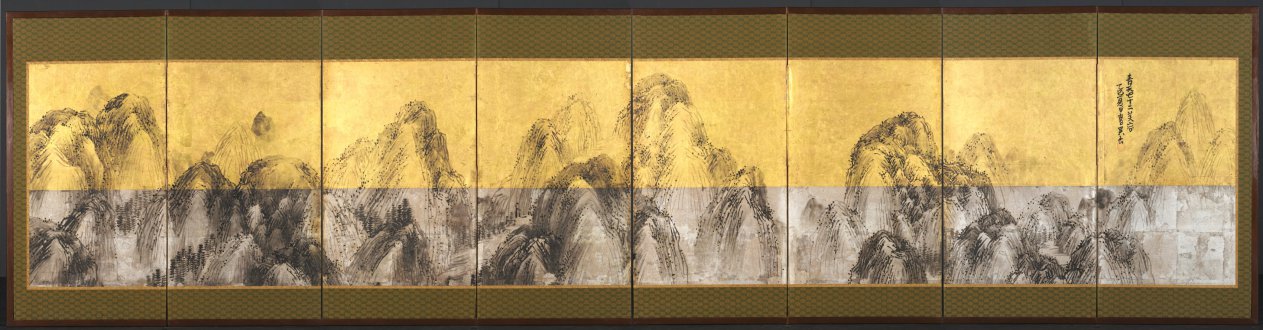 Seventy-Two Peaks Under the Blue Sky with Mount FurongMatsumura Goshun · 1785
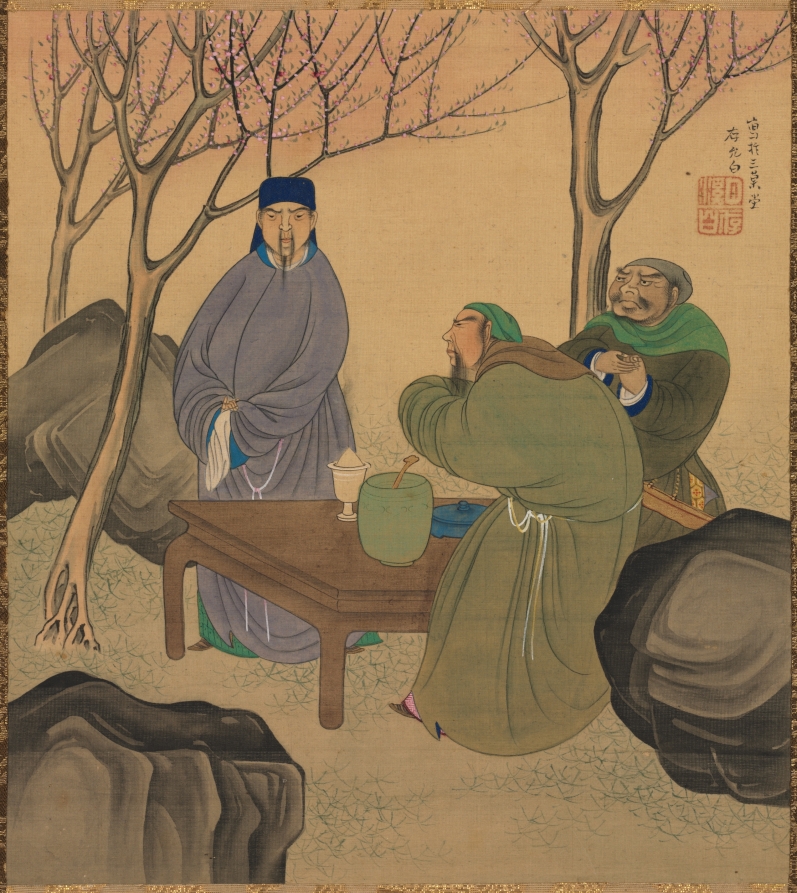 Oath of the Peach Garden, from Romance of the Three KingdomsMatsumura Goshun · c. 1780
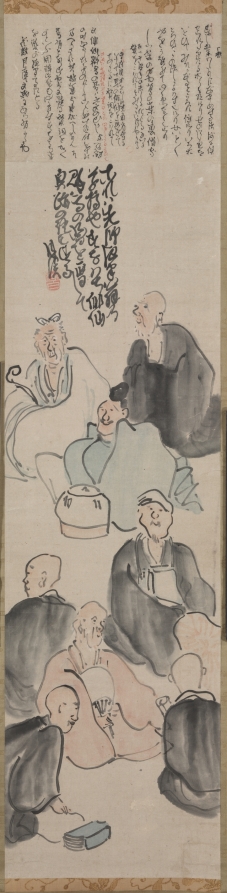 Gathering of Poetic Immortals with Poem DraftsMatsumura Goshun · late 1700s
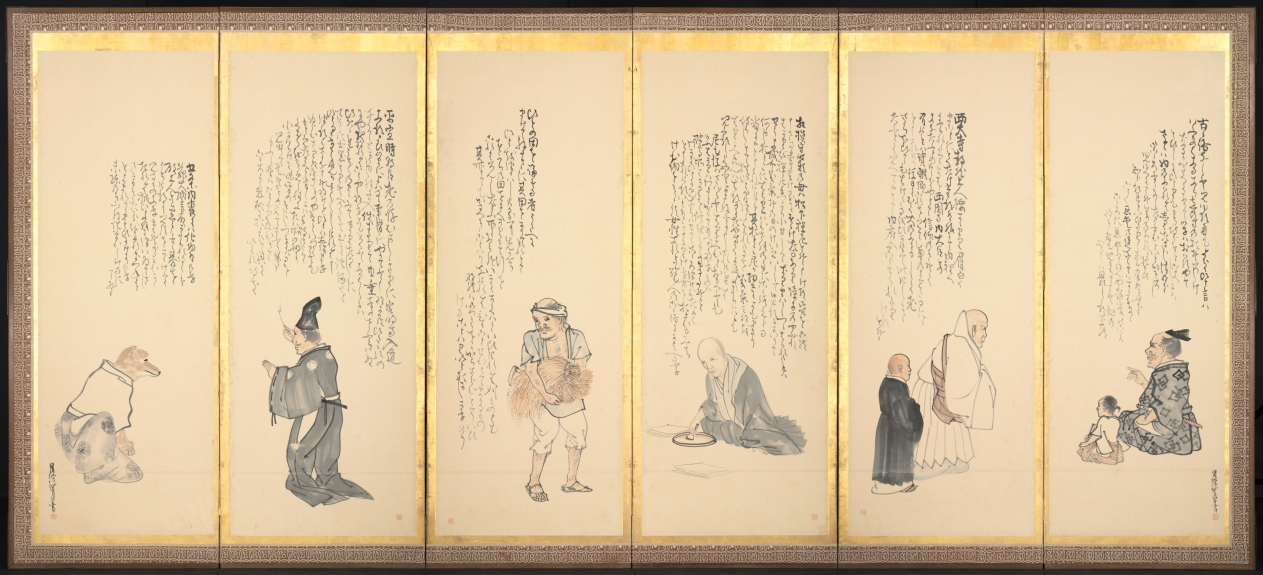
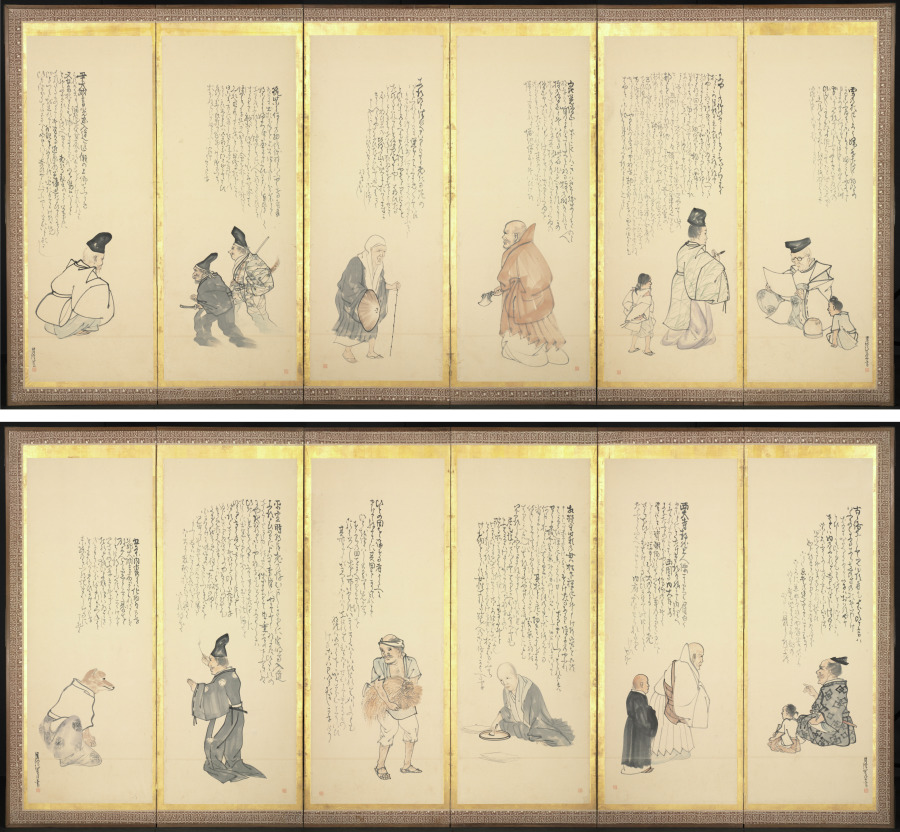 Scenes from Essays in IdlenessMatsumura Goshun · late 1700s–early 1800s
Shown in
- “Bunjin” in Japanese ArtJun 21, 2026 – Jun 20, 2027
- Unfolding Beauty: Japanese Screens from the Cleveland Museum of ArtJul 15, 2001 – Sep 16, 2001
- Asian Autumn: Splendid Variety: 18th-Century Art in JapanNov 16, 1993 – Mar 6, 1994
- Byobu: The Art of the Japanese ScreenDec 8, 1987 – Jan 10, 1988
- Year in Review for 1986Feb 4, 1987 – Mar 15, 1987