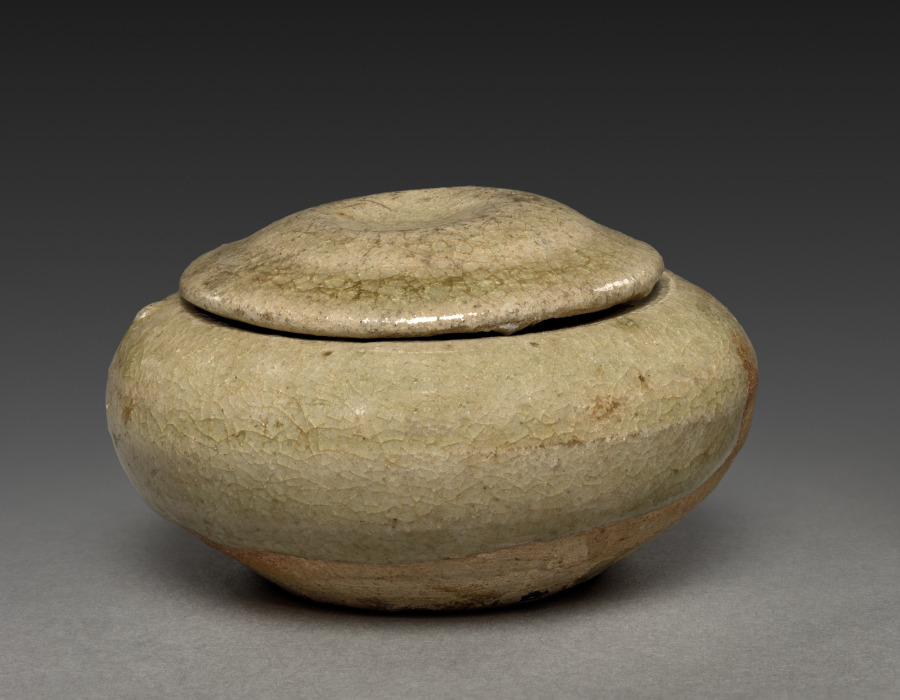
Incense Box: Seto Ware
Japan, Kamakura period (1185–1333) · 1200s–1300s · Cleveland Museum of Art
What did you think?
Save this work’s image and museum information on this device to read without a connection.
Guide
Adjust the guideNew to it · Medium
Nobody has listened to this guide yet. Making it takes about twenty seconds, and after that anyone can hear it straight away.
From the museum
Old Seto, also called Koseto ware, was typically coated with an ash glaze in the mineral feldspar, which produced a yellow or grayish-green glaze. This palette appealed to medieval Buddhist priests and samurai alike. The practice of burning incense in religious, court, and domestic settings dates from the early 700s in Japan.
The museum’s own description, in English. Licence: CC0
Ask about this work
Ask in your own words. The answer comes from what the museum has written about the work, and says so when that does not hold it.
Details
- Maker
- Japan, Kamakura period (1185–1333)
- Date
- 1200s–1300s
- Medium
- glazed stoneware
- Dimensions
- Diameter: 6 cm (2 3/8 in.); Overall: 3.5 cm (1 3/8 in.)
- Place of origin
- Japan
- Held by
- Cleveland Museum of Art, Cleveland · Not on view
- Credit line
- Gift of Dr. and Mrs. Sherman E. Lee
Image: Cleveland Museum of Art, CC0