Just a moment
Just a moment
Master of Guillebert de Mets · 1430s · Cleveland Museum of Art
A closer look, connecting key details with the work’s background.
Looking for this guide.
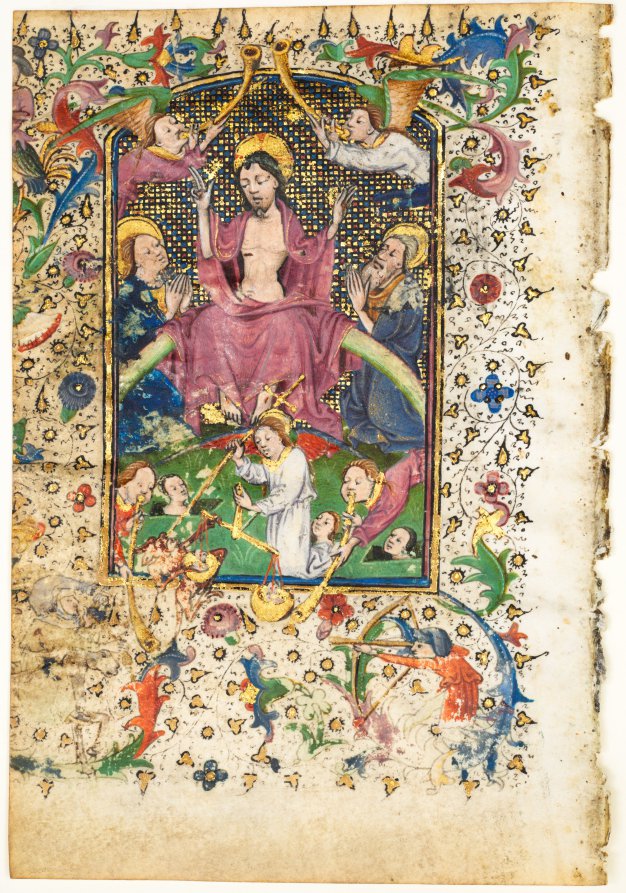
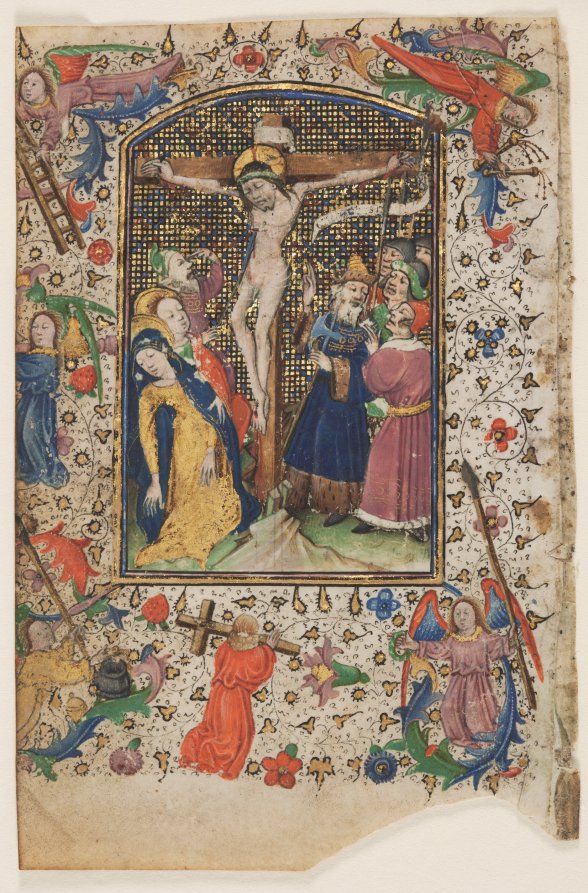
The Master of Guillebert de Mets (probably Jean de Pestivien) is named after the scribe who recorded his name in an illuminated copy of the Decameron (a collection of stories by Giovanni Boccaccio, written 1351–53) made for Duke Philip the Good of Burgundy, and for which the artist contributed several miniatures. The Master of Guillebert de Mets was active from about 1410 to 1445. So far there is no proof that allows us to follow his career or to know precisely where he worked. Some evidence, however, hints that he was of Flemish origin. The artist painted in an easily recognizable style. His figures have prominent heads with clearly delineated eyes and small mouths, slender torsos with thin, spindly legs, and long, finely worked fingers. Many of his miniatures, such as the Crucifixion and Last Judgment here, show that he often favored mosaic backgrounds of delicately worked checkered patterns.
The museum’s own description, in English. Licence: CC0
Save this work’s image and museum information on this device to read without a connection.
Ask in your own words. The answer comes from what the museum has written about the work, and says so when that does not hold it.
Image: Cleveland Museum of Art, CC0