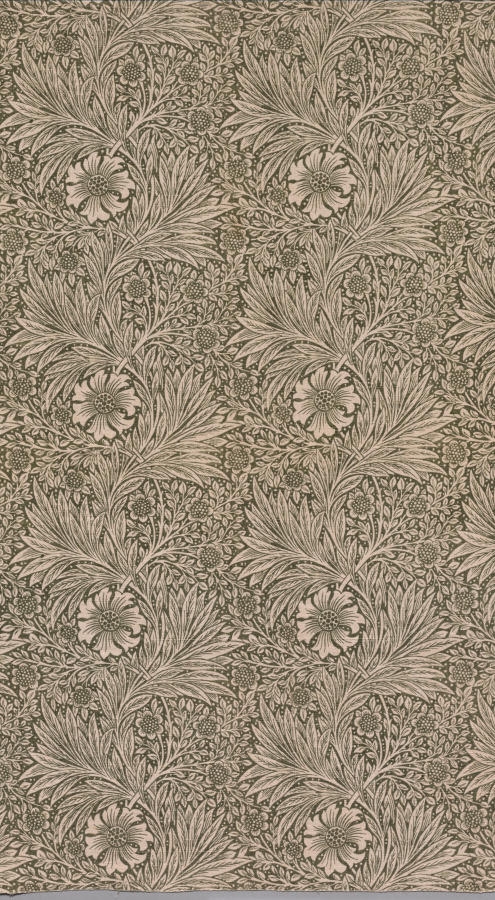
Marigold
William Morris · 20th century · Cleveland Museum of Art
What did you think?
Save this work’s image and museum information on this device to read without a connection.
Guide
Adjust the guideNew to it · Medium
Nobody has listened to this guide yet. Making it takes about twenty seconds, and after that anyone can hear it straight away.
From the museum
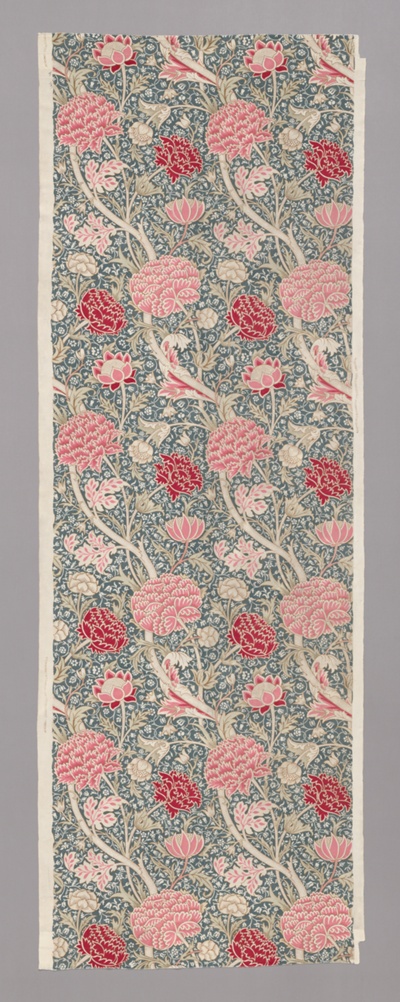
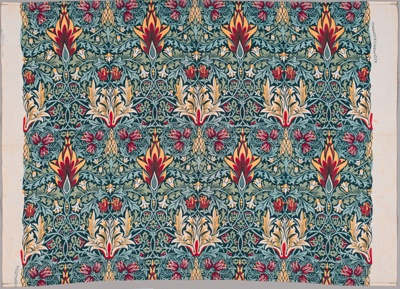
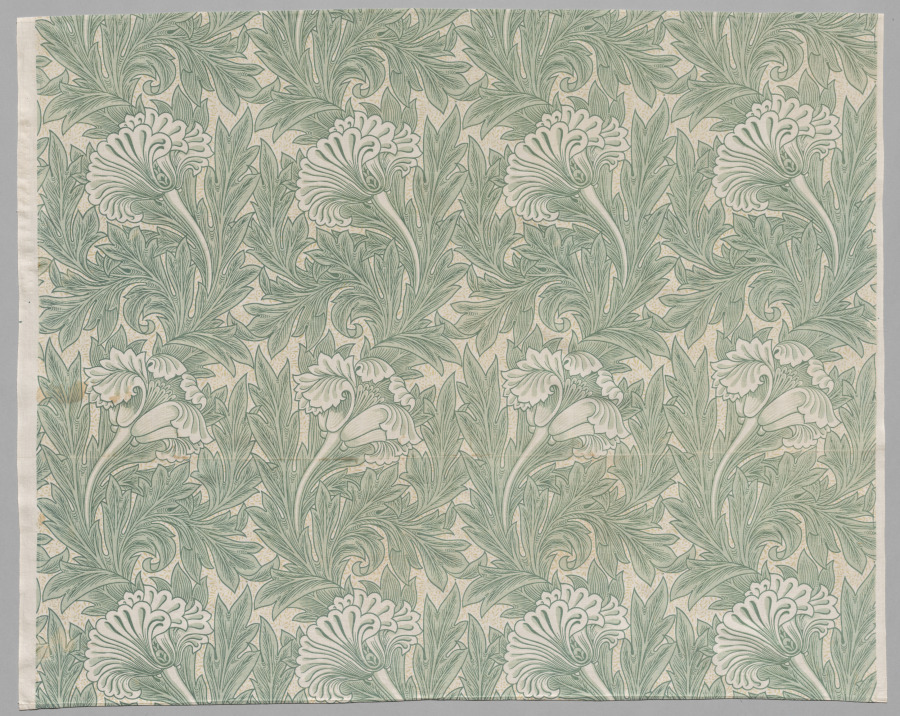
Among Morris’s first designs for printing on fabric, Marigold was originally intended for use on wallpaper, as seen in the image below. It was one of only a few patterns that clients could buy as both textile and wallpaper; it was also printed on linoleum. The wide variety of media available in Marigold speaks to the broad decorative application of its lively organic pattern. Here, blossoms and vines spread with ordered freedom, generating a sense of movement and demonstrating Morris’s revolutionary principle of “rational growth,” which set his designs apart from the formal, rigid patterns of his competitors.
The museum’s own description, in English. Licence: CC0
Ask about this work
Ask in your own words. The answer comes from what the museum has written about the work, and says so when that does not hold it.
Details
- Maker
- William Morris (British, 1834–1896)
- Date
- 20th century
- Medium
- plain weave cotton, printed
- Dimensions
- Overall: 91.4 x 92.7 cm (36 x 36 1/2 in.)
- Place of origin
- England
- Held by
- Cleveland Museum of Art, Cleveland · Not on view
- Credit line
- Gift of Mrs. Henry Chisholm
Image: Cleveland Museum of Art, CC0