
Just a moment
Just a moment
Paul Gauguin · 1893 · Art Institute of Chicago
A closer look, connecting key details with the work’s background.
This is a portrait of a Tahitian girl named Tehamana, who was thirteen years old. It is painted in oil on jute, a coarse, rough fabric made from plant fibre. The canvas is fairly small, about thirty inches tall and twenty-one wide. Your eye goes first to the girl herself. Her shoulders are squared and her gaze does not flinch, so she seems serious and composed, almost stoic. She wears a missionary dress. Around her are white flowers, a piece of fruit, a fan, and strange shapes behind her that look like a kind of writing.
Start with her hands. She holds a fan, which comes from Samoa, another Pacific island group. Then look at her hair, where white flowers tumble down from her head. Next to her is a ripe mango, a hint of fertility, meaning the power to bear life and children. Last, look at the background behind her. There you will find symbols copied from a tablet from Easter Island, and a female figure who is a deity, a being worshipped as a god.
The background looks like a record of Tehamana's world, but it is not. Gauguin gathered emblems from different non-European sources. The signs come from Easter Island, and the goddess draws on both Polynesian and Hindu ideas. Together they create a general feeling of foreignness and mystery rather than a true picture of one place. In doing so, he turned Tehamana into the embodiment of his own desire. Look once more at her face. Her steady stare seems to hold back from all the invented decoration that surrounds her.
This guide was written by AI from material published by Art Institute of Chicago. Licence: CC BY 4.0
Save this version (English · New to it · Medium) with all its audio, guide text and work image. It replaces the saved guide for this work and language.
Audio storage: about 40 MB per guide and 150 MB on this device. Audio expires 7 days after it is downloaded.
Save this work’s image and museum information on this device to read without a connection.
Ask in your own words. The answer comes from what the museum has written about the work, and says so when that does not hold it.
Image: Art Institute of Chicago, CC0
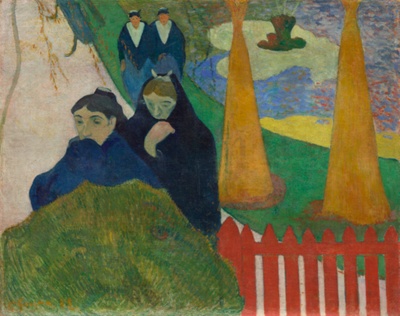 GuideArlésiennes (Mistral)Paul Gauguin · 1888
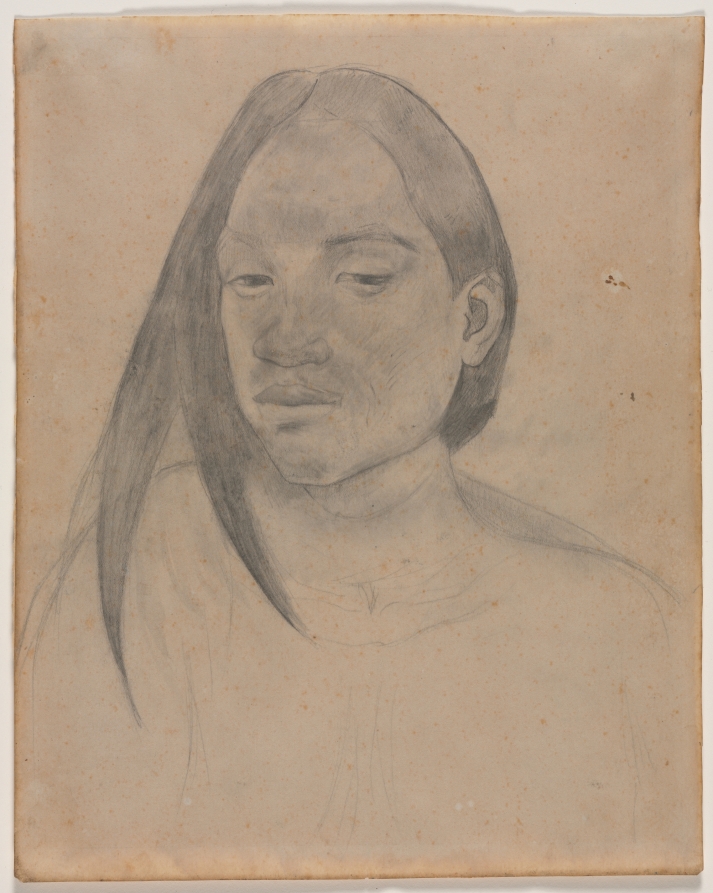 Head of a Tahitian WomanPaul Gauguin · 1891
 The Devil Speaks (Mahna No Varua Ino) (recto); Women Washing Clothes (verso)Paul Gauguin · 1893–1894
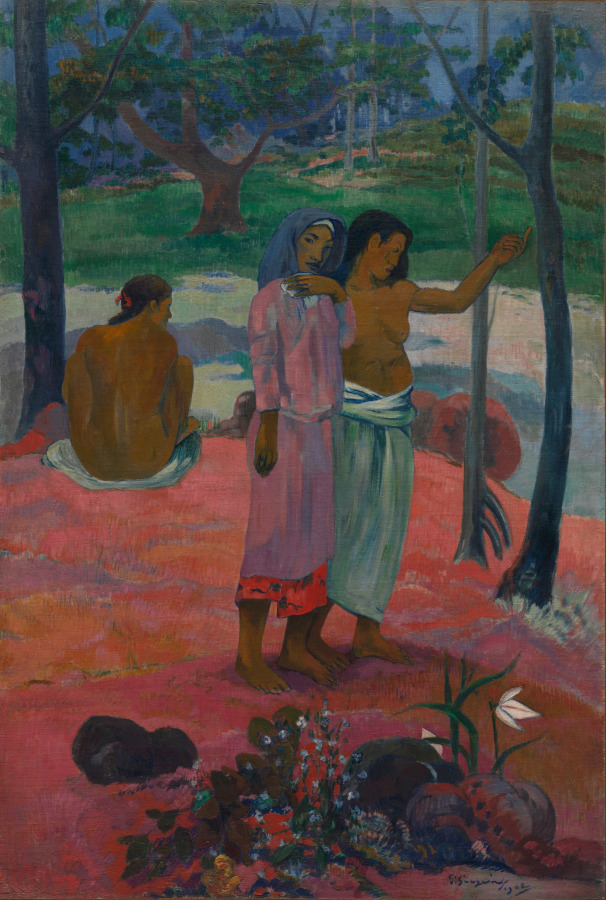 The CallPaul Gauguin · 1902
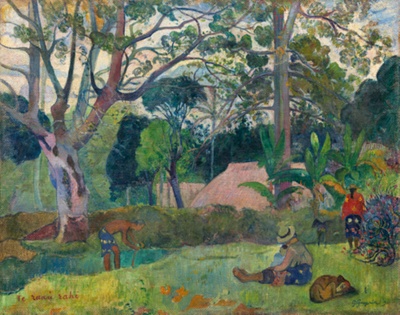 Te raau rahi (The Big Tree)Paul Gauguin · 1891
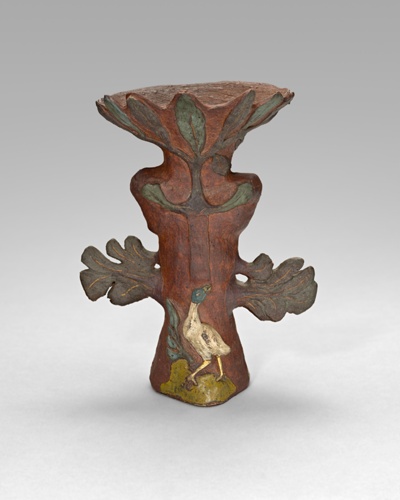 Vase in the Form of a Tropical Plant with Bird and DeityPaul Gauguin · 1887–88
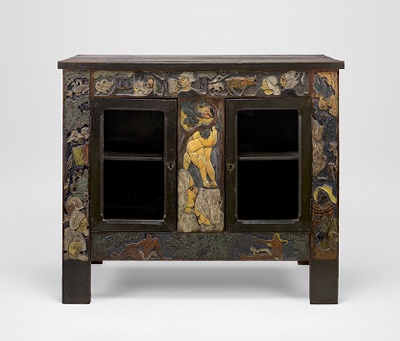 Earthly ParadisePaul Gauguin · 1888
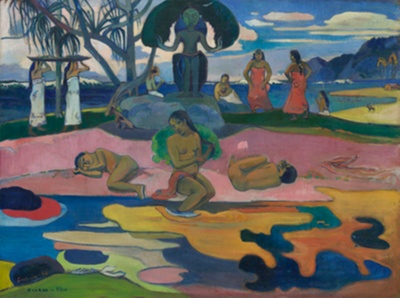 Mahana no atua (Day of the God)Paul Gauguin · 1894