
Just a moment
Just a moment
Ancient Etruscan · 3rd century BCE · Art Institute of Chicago
A closer look, connecting key details with the work’s background.
Looking for this guide.
In Etruria, bronze mirrors were luxury objects designed primarily for women, who were buried with them for use in the afterlife. The front of the bronze disk would have been highly polished in order to reflect the viewer’s image. This example has a handle in the form of a winged Lasa, a minor deity associated with Turan, the Etruscan goddess of love. Lasa holds an alabastron (container for scented oil) in her left hand. Because Lasa is thought to have been associated with funerary rites, the alabastron might evoke the ceremonial anointing of the dead. An image of Eros, the god of love, is engraved on the back of this reflective disk. Eros was a fitting subject for bronze mirrors, which were given primarily to women, likely as wedding presents. Here, with hammer firmly in hand, Eros stands among carpentry tools, including a second hammer, an adze, a double axe, a chisel, and possibly a double saw. On the left is an amphora (storage jar) and a table. The significance of this unusual scene is not yet understood, but its selection might reflect the Etruscan taste for obscure and rarely illustrated mythological episodes.
The museum’s own description, in English. Licence: CC BY 4.0
Save this work’s image and museum information on this device to read without a connection.
Ask in your own words. The answer comes from what the museum has written about the work, and says so when that does not hold it.
Image: Art Institute of Chicago, CC0
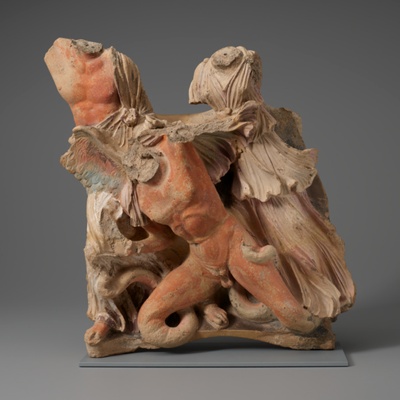 Architectural Relief Depicting the Gigantomachy (Battle Between Gods and Giants)Ancient Etruscan · 3rd-2nd century BCE
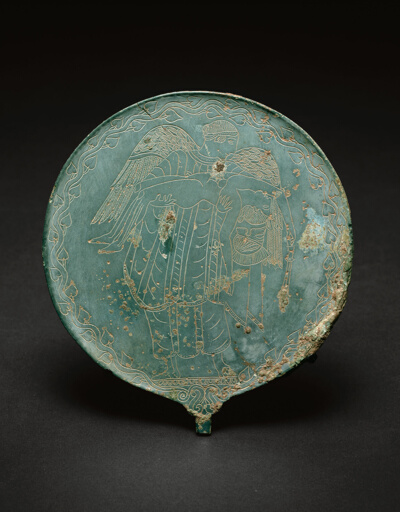 Hand MirrorAncient Etruscan · 470-450 BCE
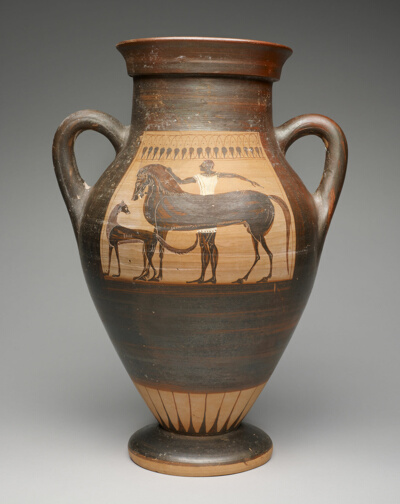 Amphora (Storage Jar)Ancient Etruscan · 530-520 BCE
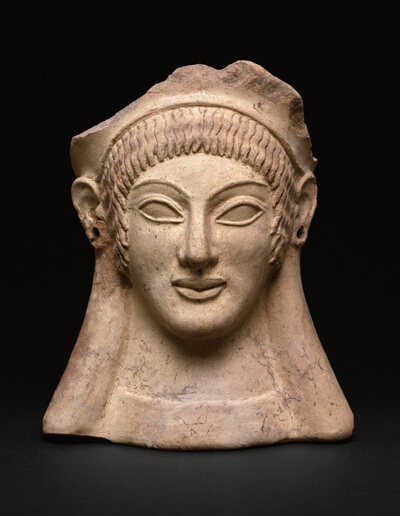 Votive (Gift) in the Shape of a Woman's HeadAncient Etruscan · about 500 BCE
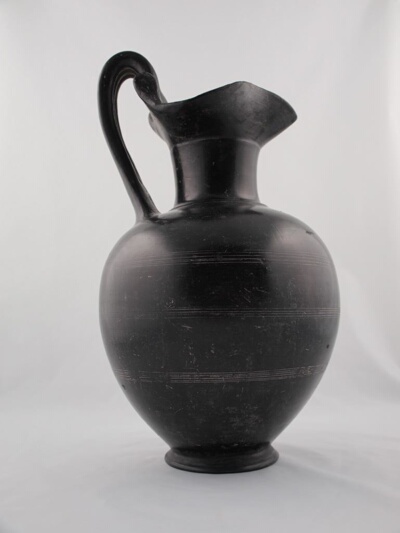 Oinochoe (Pitcher)Ancient Etruscan · 550-500 BCE
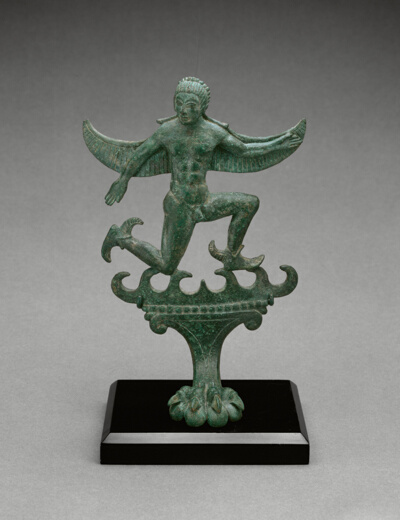 Foot of a Cista (Storage Box)Ancient Etruscan · early 5th century BCE
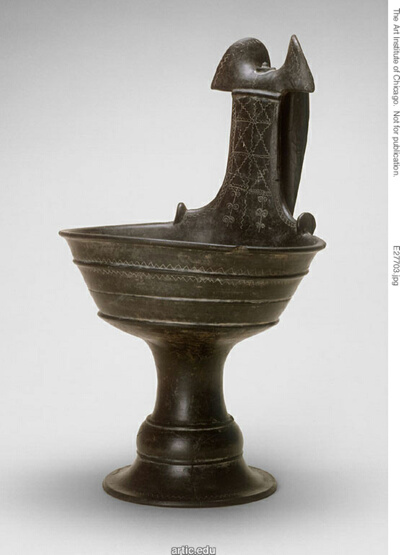 Stemmed Kyathos (Drinking Cup)Ancient Etruscan · 550-525 BCE
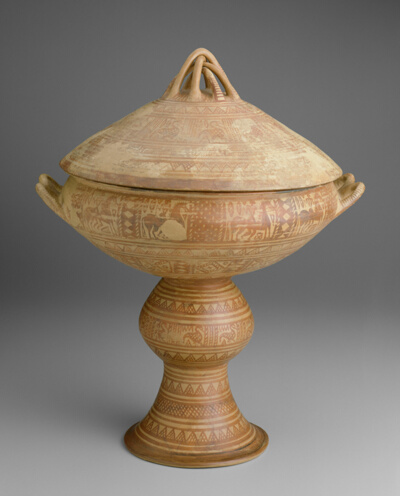 Lebes (Stemmed Bowl with Lid)Ancient Etruscan · 725-700 BCE