
Paris Street; Rainy Day
What did you think?
Guide
4 chapters · about 2 minAdjust the guideNew to it · Medium
A Rainy Paris Crossing
This is an enormous painting, about two and three quarter metres wide, made with oil paint on canvas. It shows a busy Paris intersection on a wet day. Men and women in dark coats and hats walk across the foreground, many of them holding umbrellas. The two figures at the centre, a man and a woman arm in arm, are life-size and seem to be walking straight toward you. Behind them, grey buildings and cobbled streets stretch away. It is the largest painting Gustave Caillebotte ever made.
Where to Look
Start with the two central figures, then notice how the picture cuts them off. A man at the far right is sliced by the edge of the frame, and the central pair seem to be looking at something beyond the picture on the left. Next, look at the ground. There are no painted raindrops anywhere. Instead, find the soft shine on the cobblestones, especially in the middle distance. Finally, study the smaller figures farther back. Each one is placed with care, so the crossing feels full of people coming and going.
A Painter's Home Ground
Gustave Caillebotte, a French artist, painted this in 1877. The intersection was only a short walk from his home, and his Paris paintings rarely show anywhere outside the neighbourhoods he knew well. He exhibited with the Impressionists, a group of artists interested in everyday modern life and the feel of a moment. Yet his technique here is more Realist, meaning it is carefully observed and precise rather than loose and sketchy. The sharp cropping of the scene may have been inspired by photography, which was then newly popular.
Weather Without Raindrops
At the time, artists rarely tried to show people in motion, and Caillebotte worked hard to give the street a sense of bustle. He also wanted to capture atmosphere. Rather than paint rain itself, he hinted at it through the newly available retractable umbrellas, which could be folded and opened, and through the gentle reflections on the stones. The painting joined the Art Institute of Chicago in 1964, before Caillebotte's role in Impressionism was widely recognised, and visitors have loved it ever since. Look once more at the pavement beneath the central couple's feet.
This guide was written by AI from the description published by Art Institute of Chicago. Licence: CC BY 4.0
Ask about this work
Ask in your own words. The answer comes from what the museum has written about the work, and says so when that does not hold it.
Details
- Maker
- Gustave Caillebotte (French, 1848–1894)
- Date
- 1877
- Medium
- Oil on canvas
- Dimensions
- 212.2 × 276.2 cm (83 1/2 × 108 3/4 in.); Framed: 241.3 × 306.1 × 10.2 cm (95 × 120 1/2 × 4 in.)
- Place of origin
- Paris
- Held by
- Art Institute of Chicago, Chicago · On view · Gallery 201
- Credit line
- Charles H. and Mary F. S. Worcester Collection
Image: Art Institute of Chicago, CC0
More by Gustave Caillebotte
 Calf's Head and Ox TongueGustave Caillebotte · c. 1882
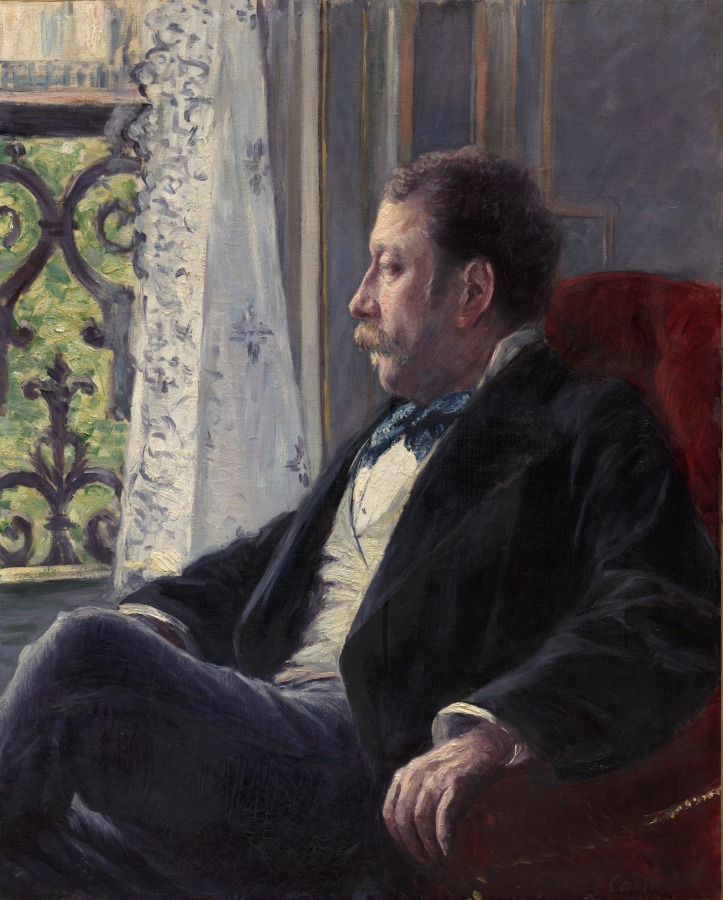 Portrait of a ManGustave Caillebotte · 1880
 Study for Paris Street; Rainy DayGustave Caillebotte · 1877
 SketchbookGustave Caillebotte · June 1883–September 1887
 Self-Portrait with a HatGustave Caillebotte · c. 1879
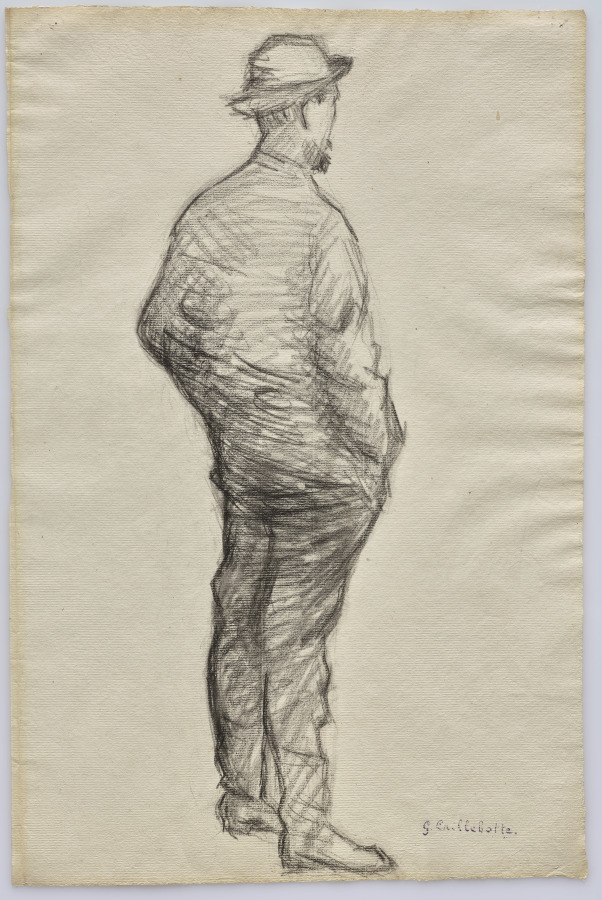 Study of a Man with Hands in His PocketsGustave Caillebotte · 1893
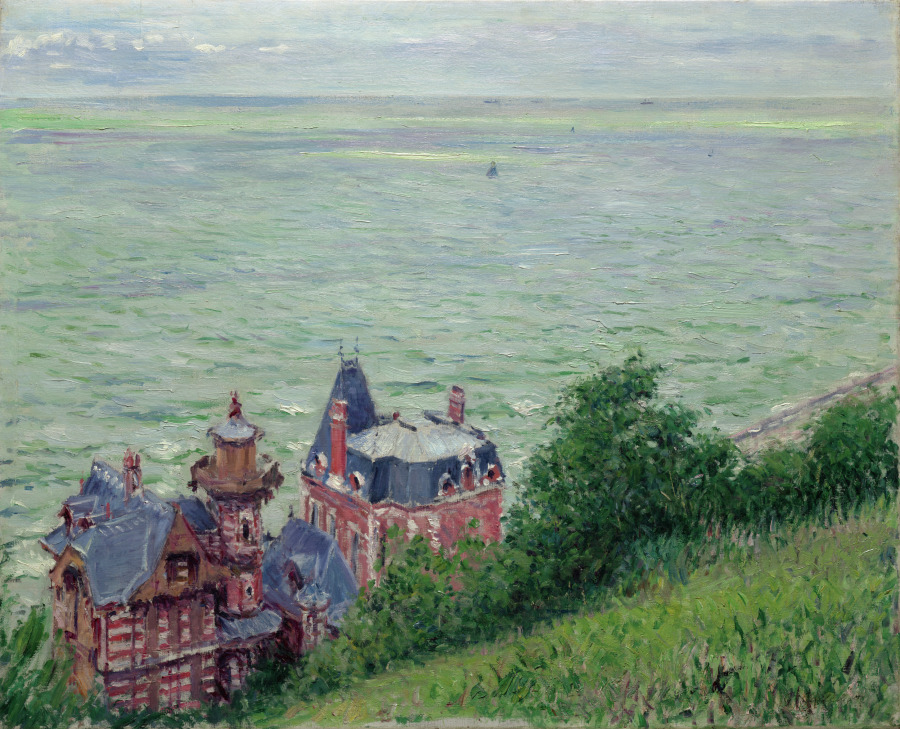 Villas at TrouvilleGustave Caillebotte · 1884