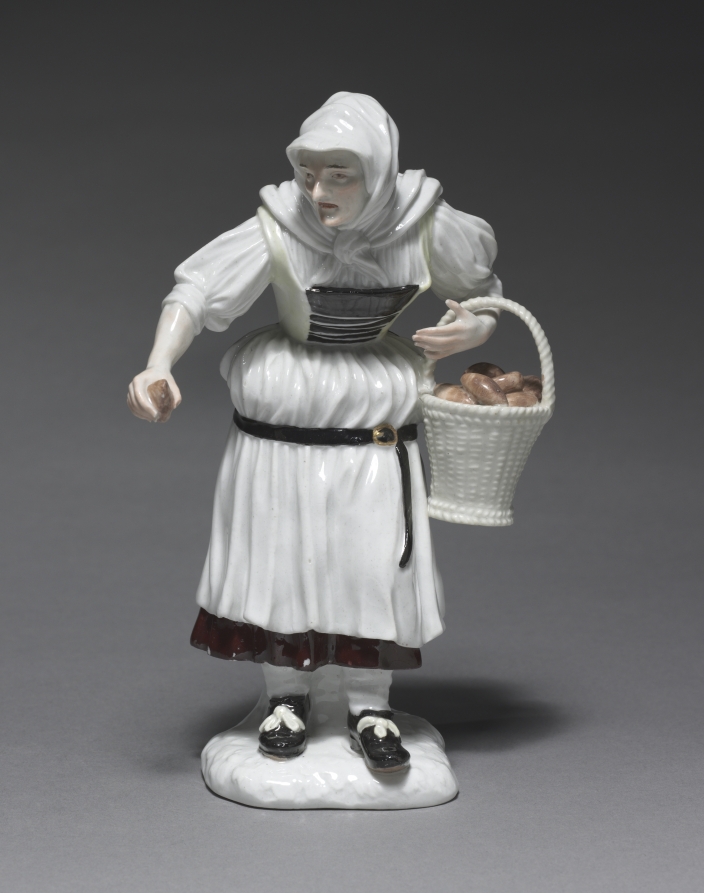
Pilgrim Bottle
Meissen Porcelain Factory · c. 1715 · Cleveland Museum of Art
Guide
Adjust the guideNew to it · Medium
Nobody has listened to this guide yet. Making it takes about twenty seconds, and after that anyone can hear it straight away.
From the museum
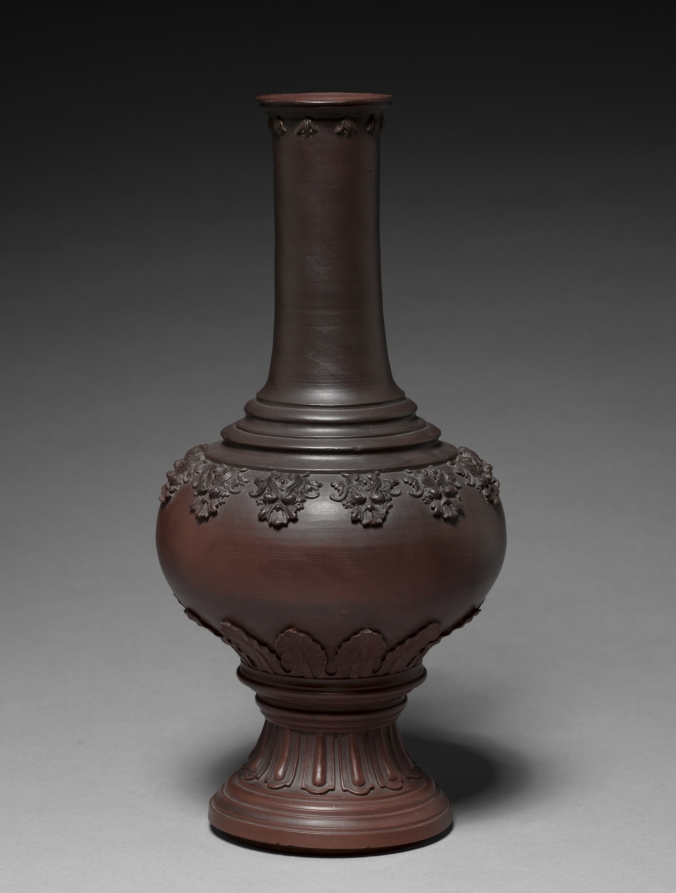
Throughout the early 1700s porcelain was imported to Europe from China and Japan, until the correct formula to produce it was developed by Johann Friedrich Böttger and a collaborator, which led to the establishment of the Meissen factory in 1710. Red stoneware inspired by Chinese Yixing ware and white porcelain were produced in Meissen under Böttger. Its fine red stoneware was so hard that it could be polished on a lapidary’s wheel—as was the body of this bottle.
The museum’s own description, in English. Licence: CC0
What did you think?
Save this work’s image and museum information on this device to read without a connection.
Ask about this work
Ask in your own words. The answer comes from what the museum has written about the work, and says so when that does not hold it.
Details
- Maker
- Meissen Porcelain Factory (German, est. c. 1710)
- Date
- c. 1715
- Medium
- polished red stoneware, silver-gilt mounts
- Dimensions
- Overall: 15.9 x 9.6 cm (6 1/4 x 3 3/4 in.)
- Place of origin
- Germany
- Held by
- Cleveland Museum of Art, Cleveland · On view · 216A French and German
- Credit line
- Purchase from the J. H. Wade Fund
Image: Cleveland Museum of Art, CC0