Printed Fabric
What did you think?
Guide
Adjust the guideNew to it · Medium
Nobody has listened to this guide yet. Making it takes about twenty seconds, and after that anyone can hear it straight away.
From the museum
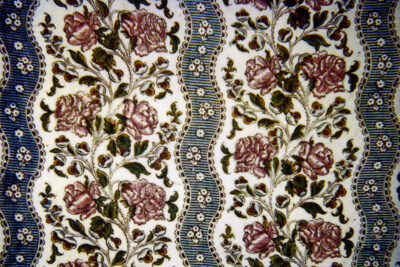
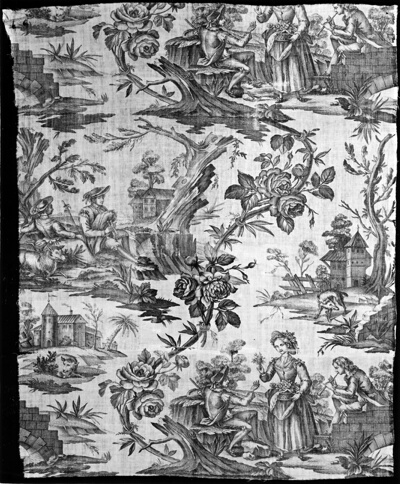
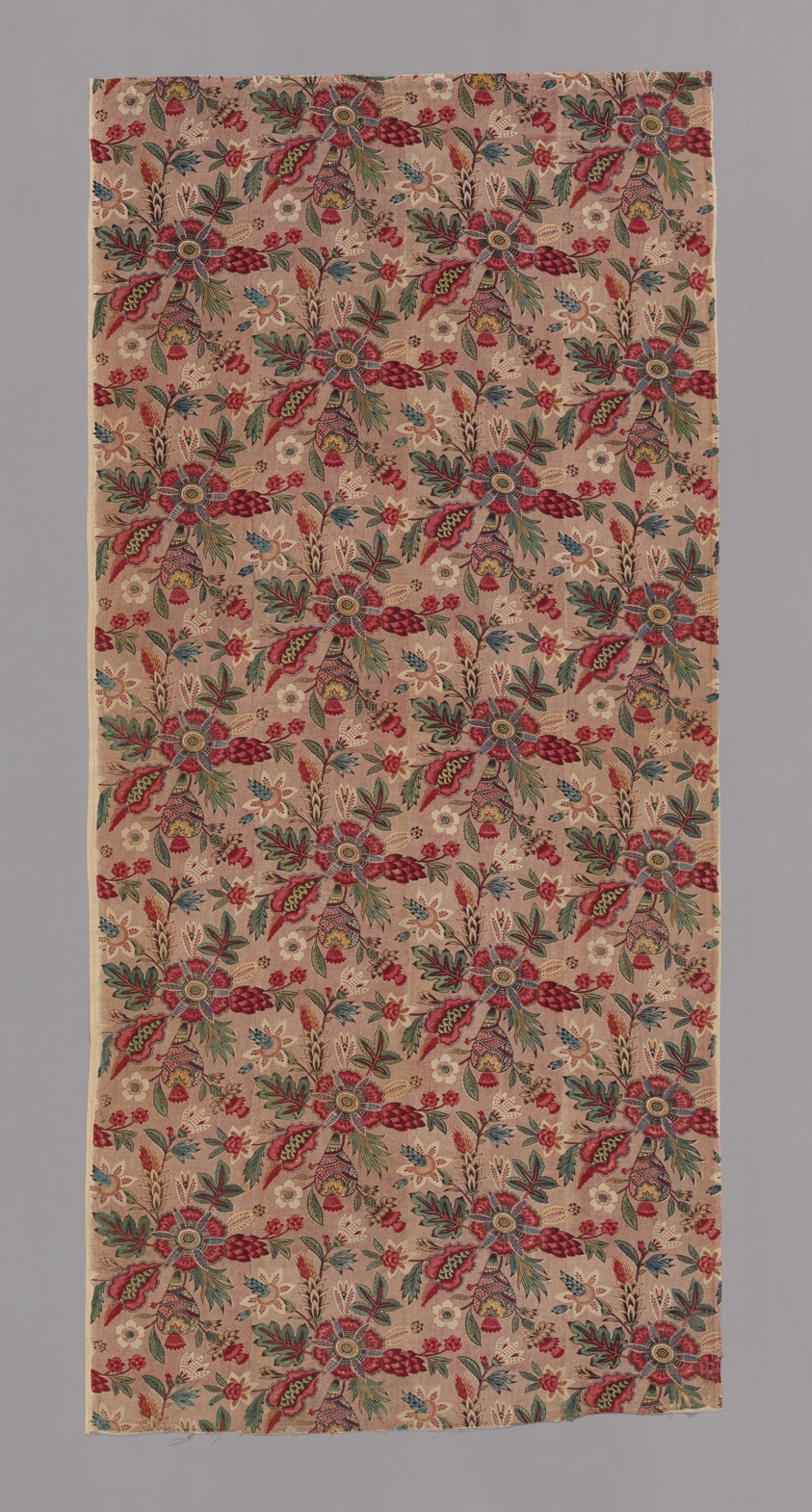
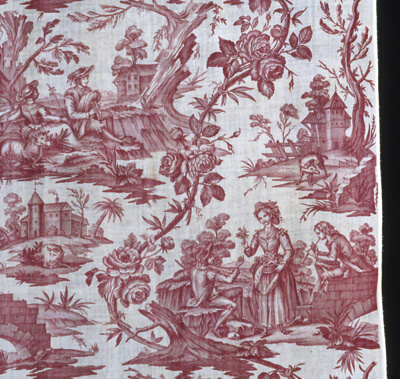
European manufacturers never successfully replicated Indian techniques for hand painting chintz (derived from the Hindi name for them, chint) fabrics, which were labor intensive and required thorough knowledge of the complex chemistry of natural dyes. After struggling with technical challenges for decades, Europeans improved color block printing techniques during the late 18th century. These advances enabled manufacturers to print multiple colors on a single fabric to more successfully imitate the brilliantly colored chintzes made in India.
The museum’s own description, in English. Licence: CC BY 4.0
Ask about this work
Ask in your own words. The answer comes from what the museum has written about the work, and says so when that does not hold it.
Details
- Maker
- Possibly manufactured by Oberkampf Manufactory (French, 1760–1843), Jouy-en-Josas, France
- Date
- 1780s
- Medium
- Linen and cotton plain weave; block printed
- Dimensions
- 173.7 × 81.7 cm (68 3/8 × 32 1/8 in.); Repeat: 31.3 × 40.2 cm (12 3/8 × 15 7/8 in.)
- Place of origin
- Jouy-en-Josas
- Held by
- Art Institute of Chicago, Chicago · Not on view
- Credit line
- Purchased with funds provided by Mrs. Chauncey B. Borland
Image: Art Institute of Chicago, CC0
More by Oberkampf Manufactory
Shown in
- Fabricating FashionAug 20, 2022 – Jan 2, 2023
- Rooted in Chicago: Textile Design Traditions: Robert D. Sailors, Angelo Testa, Ben Rose, Eleanor and Henry Kluck, Else Regensteiner and Julia McVickerFeb 12, 1997 – Jun 22, 1997
- Printed Fabrics from the Permanent CollectionAug 8, 1981 – Jan 31, 1982
- Fashion Items and Textiles Pertaining to FashionApr 29, 1978 – Jul 17, 1978