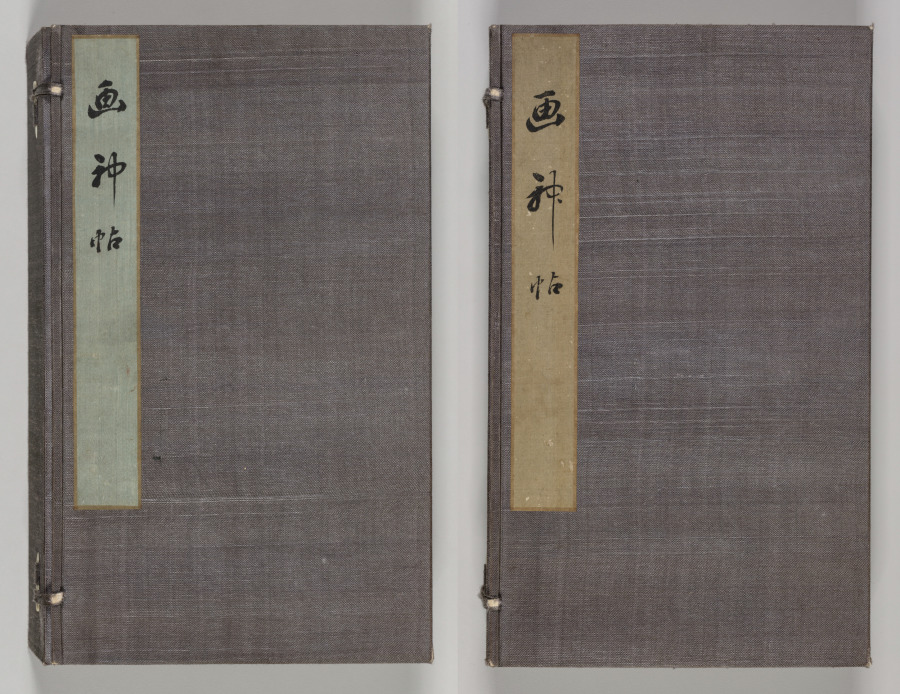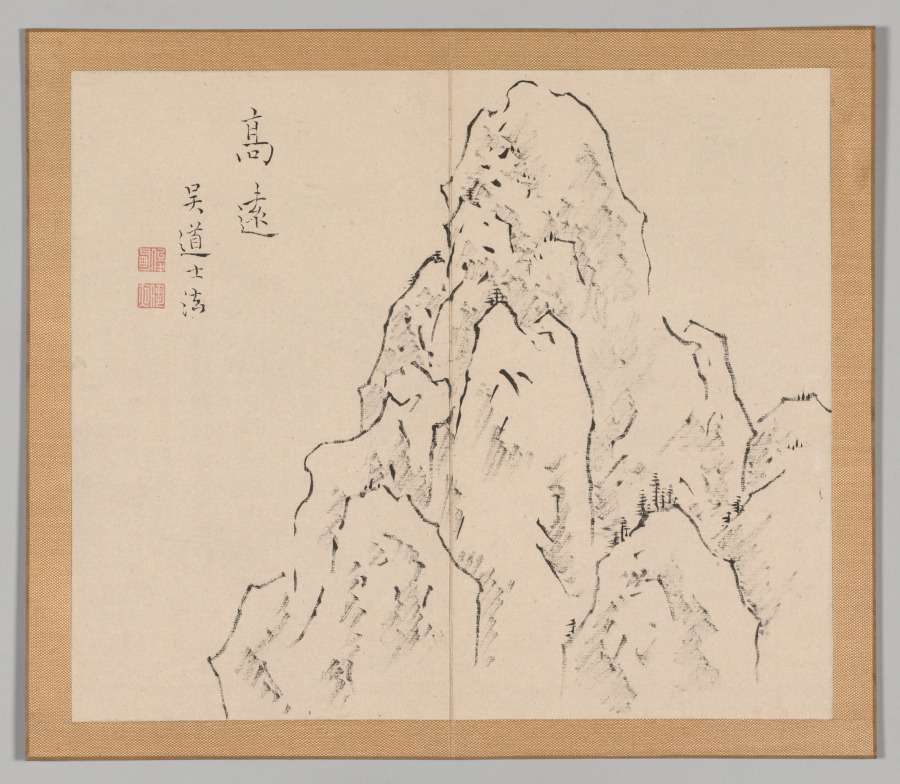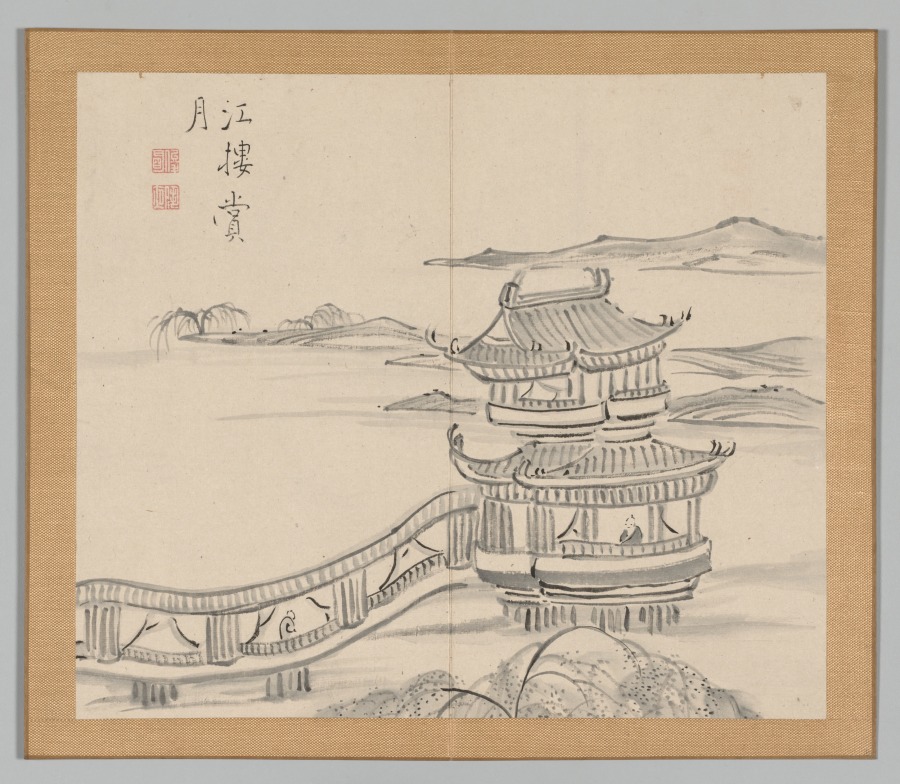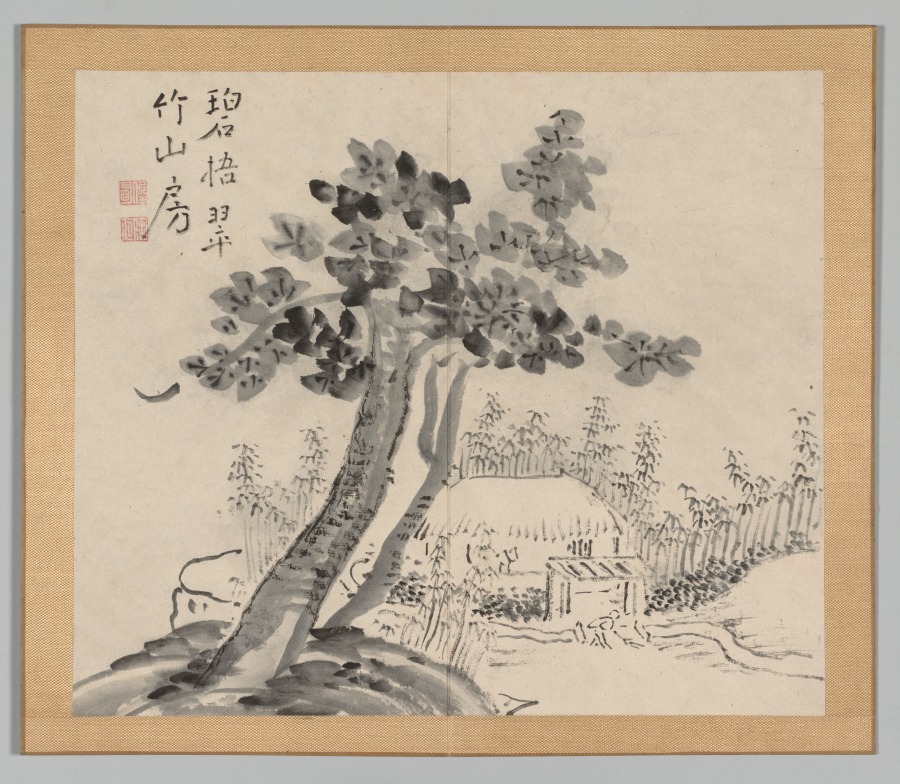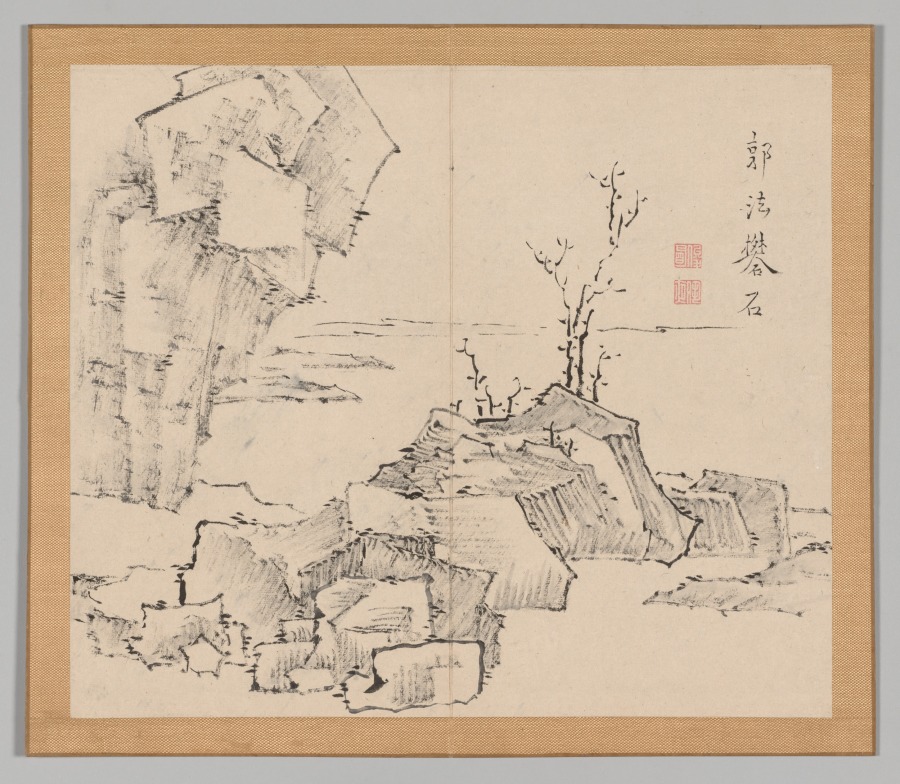
Reverberations of Taiga, Volume 1 (leaf 23)
Aoki Shukuya · mid-1700s–1802 · Cleveland Museum of Art
What did you think?
Guide
Adjust the guideNew to it · Medium
Nobody has listened to this guide yet. Making it takes about twenty seconds, and after that anyone can hear it straight away.
From the museum
Aoki Shukuya was a top student of painter Ike Taiga and took responsibility for Taiga’s stylistic legacy. A painting album by Taiga, part of which survives today in Kyoto in hanging scroll format, served as the source for this painting by Shukuya and the matching designs from a set of wood-block–printed volumes published in 1804. The postscript to the books, written and carved by the scholar Minagawa Kien (皆川淇園) (1735–1807), explains that Taiga produced the original album for his wife and fellow painter Tokuyama Gyokuran (徳山玉瀾) (1727/28–1784). Complex rock formations are accompanied by the text “Guo’s method for alunite” (郭法礬石) in a design from the second volume of the wood-block–printed set and Shukuya’s painting. This is a reference to the Northern Song–dynasty (960–1127) painter Guo Xi (郭熙) (Chinese, about 1020–1090) and a pale, often whitish mineral that forms naturally when volcanic rocks are altered by hot, acidic water. Traditionally, young painters in Japan began their studies with an established master painter. The master's compositions invariably became models that the apprentice copied to learn various ink and brush techniques.
Ask about this work
Ask in your own words. The answer comes from what the museum has written about the work, and says so when that does not hold it.
Details
- Maker
- Aoki Shukuya (Japanese, d. 1802)
- Date
- mid-1700s–1802
- Medium
- double-leaf from a pair of albums; ink and light color on paper
- Dimensions
- Album, closed: 28.3 x 33 cm (11 1/8 x 13 in.)
- Place of origin
- Japan
- Held by
- Cleveland Museum of Art, Cleveland · On view · 235A Japanese
- Credit line
- Andrew R. and Martha Holden Jennings Fund
Image: Cleveland Museum of Art, CC0