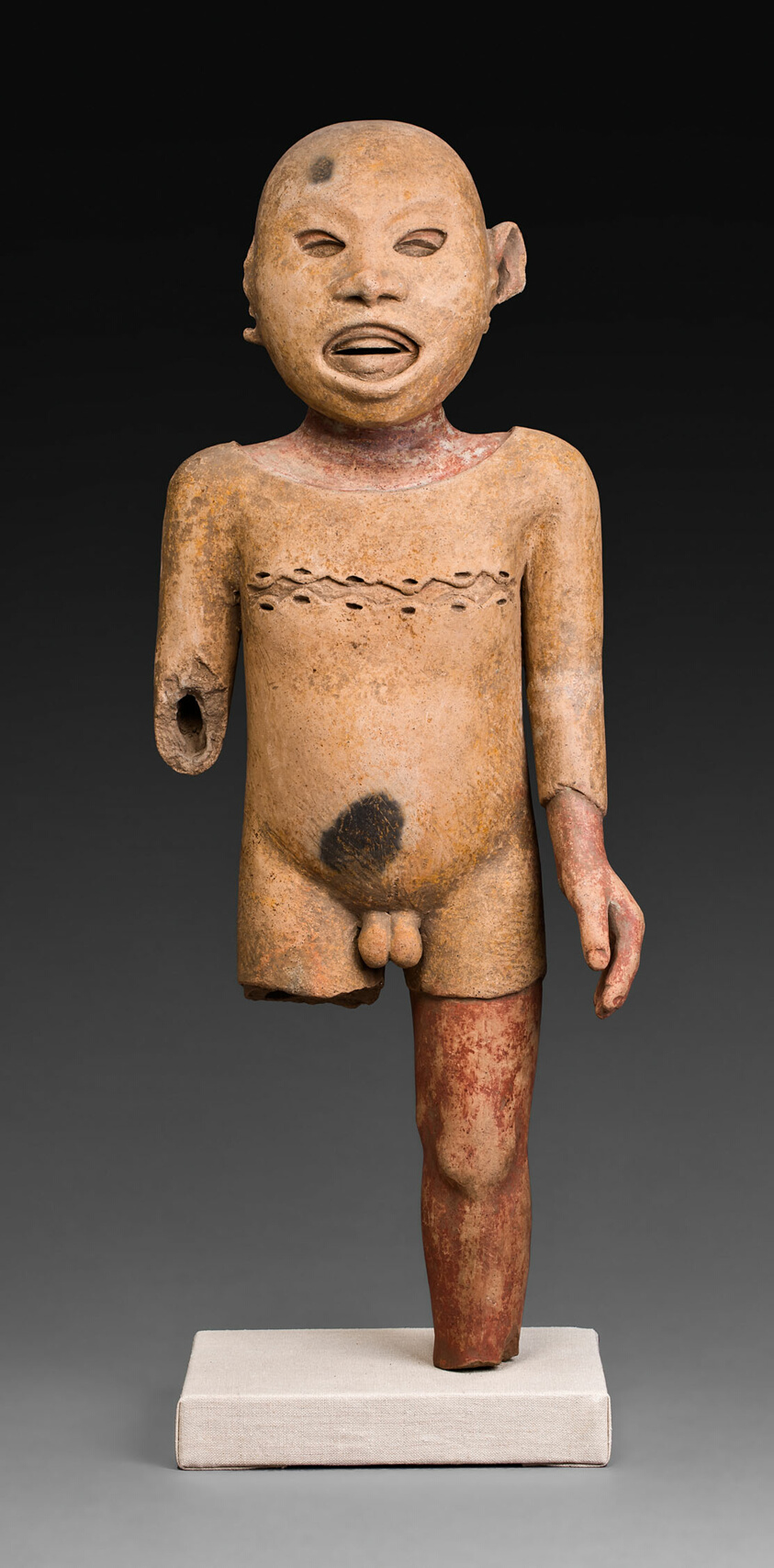
Ritual Impersonator of the Deity Xipe Totec
Mexica (Aztec) · 1450–1500 · Art Institute of Chicago
What did you think?
Guide
Adjust the guideNew to it · Medium
Nobody has listened to this guide yet. Making it takes about twenty seconds, and after that anyone can hear it straight away.
From the museum
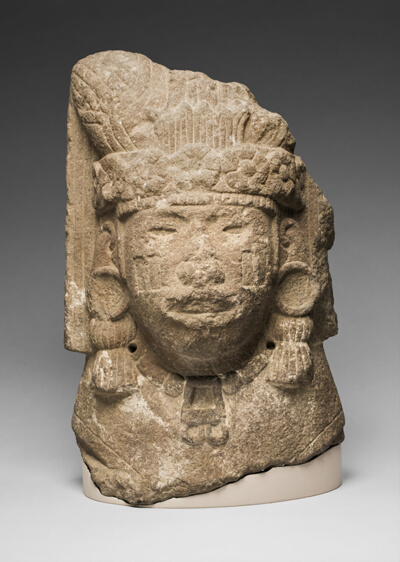
As a god of the late dry season and early rainy season (May–June), Xipe Totec (“The Flayed One”) expresses regeneration. By the time of Spanish contact in 1519, the cult of this deity was widespread throughout Mesoamerica. This figure depicts a young male wearing the skin of a sacrificed victim, a primary symbolic aspect of rituals conducted during agricultural fertility ceremonies dedicated to this deity. The lines across the chest represent stitched seams where the skin was fastened. Like living seed within a dried husk, the deity impersonator embodies the relationship between death and the renewal of life.
The museum’s own description, in English. Licence: CC BY 4.0
Ask about this work
Ask in your own words. The answer comes from what the museum has written about the work, and says so when that does not hold it.
Details
- Maker
- Aztec (Mexica), Possibly central Veracruz, Mexico
- Date
- 1450–1500
- Medium
- Ceramic and pigment
- Dimensions
- H.: 58.4 cm (23 in.)
- Place of origin
- Veracruz state
- Held by
- Art Institute of Chicago, Chicago · Not on view
- Credit line
- Gift of Mr. and Mrs. Samuel A. Marx
Image: Art Institute of Chicago, CC0