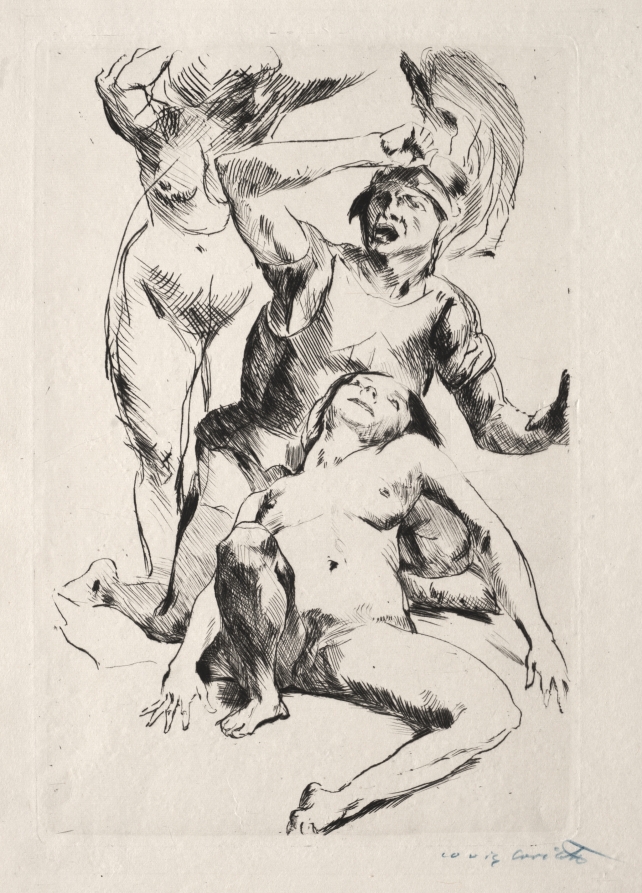
Self-Portrait
Lovis Corinth · 1924 · Art Institute of Chicago
Guide
4 chapters · about 2 minAdjust the guideNew to it · Medium
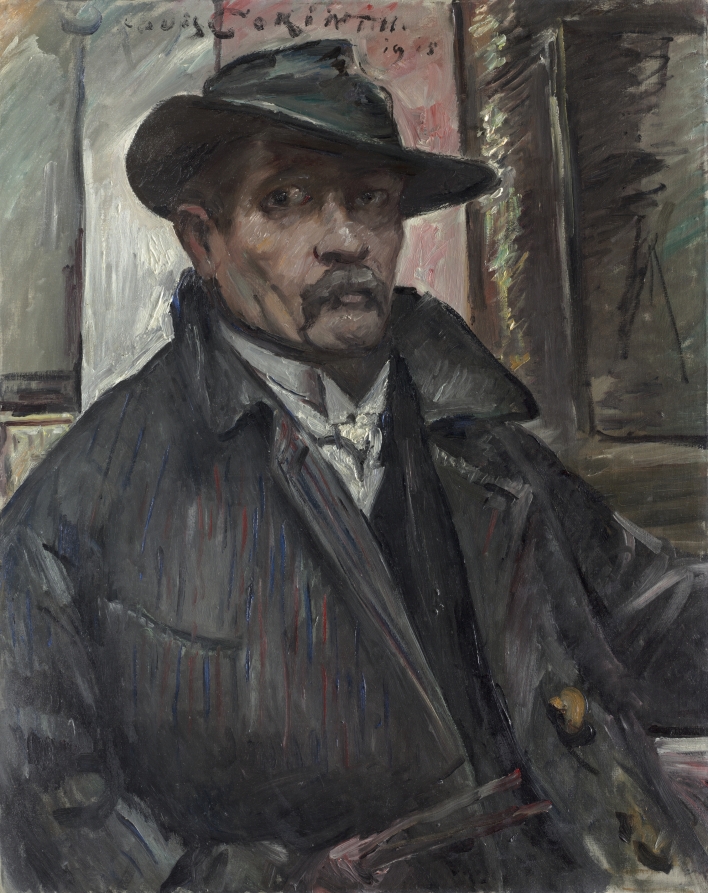
This is a self-portrait by the German artist Lovis Corinth, made in 1924. It is a little under twenty inches tall and about a foot wide, and the head and shoulders fill the sheet. The paint is gouache, which is a thick, opaque kind of watercolor, and the museum notes that some oil paint may have been added as well. It sits on heavy, ivory-colored paper. A man looks straight out at you from the page. The colors are dark and brooding, and the mood is heavy from the very first moment.
Start with the face. It is deeply shadowed, and it looks contorted and haggard, as if worn down by long strain. Then look at the shoulders along the bottom of the picture. They are hunched, and the head seems to sink down into them, which makes the figure look weighed down. Finally, find the eyes. The artist gazes directly at you, and the look is one of anguish. The dark palette, the sunken posture and that steady stare all work together, so the whole image feels like a single expression of pain.
Lovis Corinth made this when he was sixty-five, with one year left to live. He had suffered a stroke in 1911 and never quite recovered. In a diary entry from 1923, he wrote that the times were no longer the same for old folk, and that they had lost their way. Corinth was an inveterate self-portraitist, which means he turned to his own face again and and again. He produced more images of himself than almost any other artist except Rembrandt van Rijn. This gouache is one of those many self-images, and a tortured one.
The pain in this portrait sits oddly beside Corinth's career, which had been successful. His early figure compositions, with their open sexuality and theatrical movement, challenged traditional approaches to art and made his name. Later came intensely colored, windswept landscapes, which became his most popular works. But Corinth was deeply patriotic, and his own achievements could not ease his torment after Germany's humiliation in World War I. He also despaired over the values of the Weimar Republic that followed. Look once more at the eyes, and ask what a man with so much success might be seeing.
This guide was written by AI from the description published by Art Institute of Chicago. Licence: CC BY 4.0
Save this version (English · New to it · Medium) with all its audio, guide text and work image. It replaces the saved guide for this work and language.
Audio storage: about 40 MB per guide and 150 MB on this device. Audio expires 7 days after it is downloaded.
What did you think?
Save this work’s image and museum information on this device to read without a connection.
Ask about this work
Ask in your own words. The answer comes from what the museum has written about the work, and says so when that does not hold it.
Details
- Maker
- Lovis Corinth, German, 1858-1925
- Date
- 1924
- Medium
- Gouache, with possible additions in oil, on heavy ivory wove paper
- Dimensions
- 48.6 × 30.5 cm (19 3/16 × 12 1/16 in.)
- Place of origin
- Germany
- Held by
- Art Institute of Chicago, Chicago · Not on view
- Credit line
- Clarence Buckingham Collection