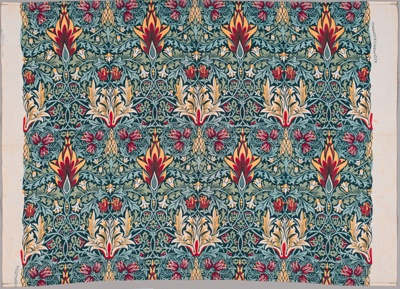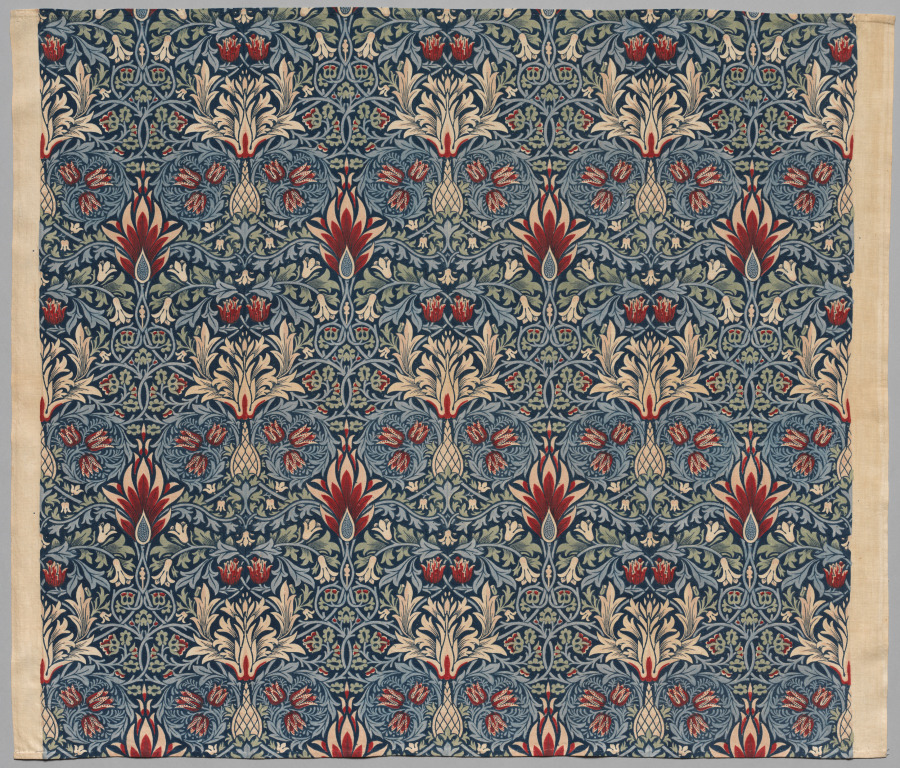
Snakeshead
William Morris · Early 20th century · Cleveland Museum of Art
What did you think?
Save this work’s image and museum information on this device to read without a connection.
Guide
Adjust the guideNew to it · Medium
Nobody has listened to this guide yet. Making it takes about twenty seconds, and after that anyone can hear it straight away.
From the museum
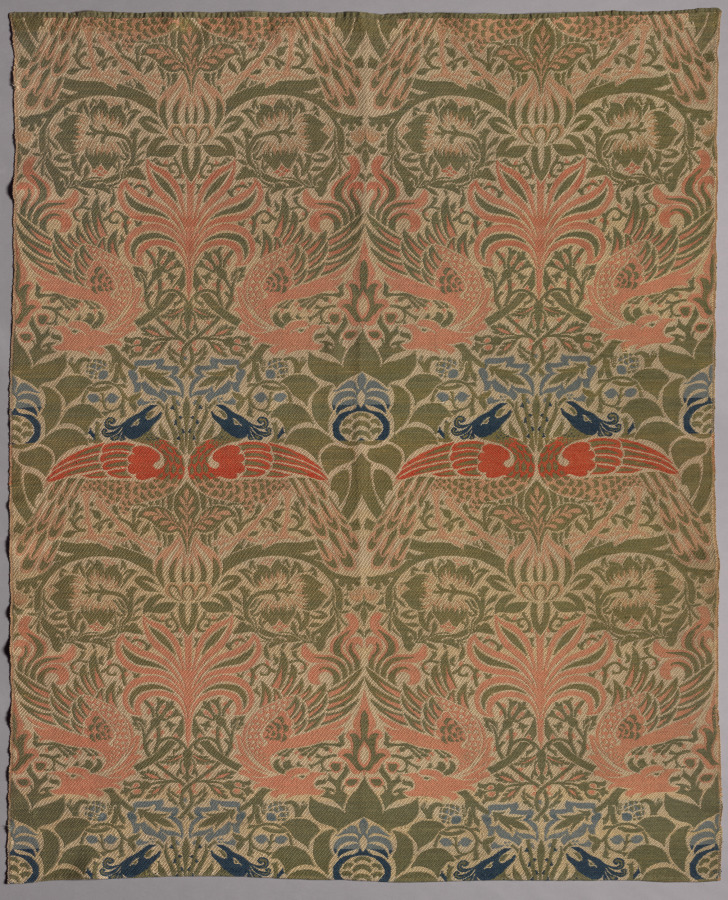
When Morris designed Snakeshead in 1877, Indian silks were in style and widely imported from British India. This design stands out for its diminutive motifs and the strong red and black colors, which were fashionable only for a short time before paler hues regained favor with clients. While its color scheme suggests distant lands with warmer climates, the pattern showcases one of Morris’s favorite flowers: the fritillary, a wildflower that he remembered growing in the meadows near Oxford.
The museum’s own description, in English. Licence: CC0
Ask about this work
Ask in your own words. The answer comes from what the museum has written about the work, and says so when that does not hold it.
Details
- Maker
- William Morris (British, 1834–1896)
- Date
- Early 20th century
- Medium
- plain weave cotton, printed
- Dimensions
- Overall: 85.1 x 100.3 cm (33 1/2 x 39 1/2 in.)
- Place of origin
- England
- Held by
- Cleveland Museum of Art, Cleveland · Not on view
- Credit line
- Gift of Mrs. Henry Chisholm
Image: Cleveland Museum of Art, CC0