
Just a moment
Just a moment
Byzantine · 751-775 (reigned 741–775) · Art Institute of Chicago
A closer look, connecting key details with the work’s background.
Looking for this guide.
The purpose of the first portrait coins was to identify the ruler. The front side became a mirror of the sovereign’s self-image. The back was often used to communicate the ruler’s accomplishments or intentions. The profile portrait was used because it suited the very shallow depth and limited surface of the coin. The tiny images were carved by engravers into bronze dies, one for the front and another for the back. The coins were then struck, one by one, in a process similar to how modern coins are created today. Portraits with Royal Regalia Since few citizens actually saw their sovereign, recognizable symbols such as crowns, robes, and regalia served to identify the ruler. This image of an emperor can no longer be thought of as a likeness of the man, but instead a portrait of kingship in the regalia of royalty.
The museum’s own description, in English. Licence: CC BY 4.0
Save this work’s image and museum information on this device to read without a connection.
Ask in your own words. The answer comes from what the museum has written about the work, and says so when that does not hold it.
Image: Art Institute of Chicago, CC0
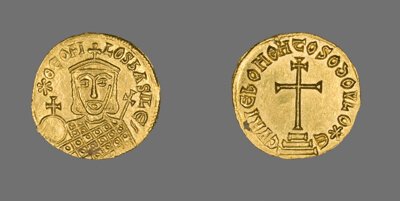 Solidus (Coin) of TheophilusByzantine · 829-831
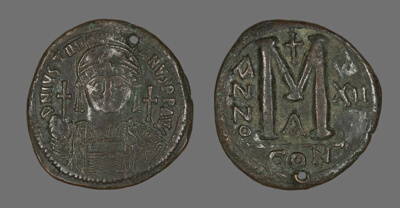 Follis (Coin) Portraying the Emperor Justinian IByzantine · 538-539
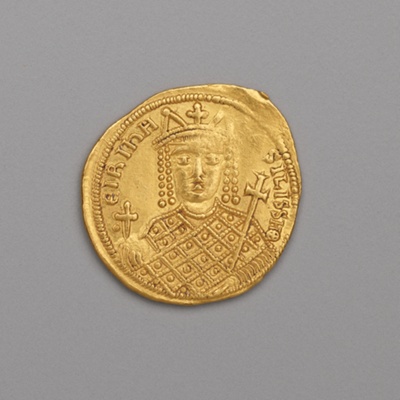 Solidus (Coin) of Empress IreneByzantine · 797-802
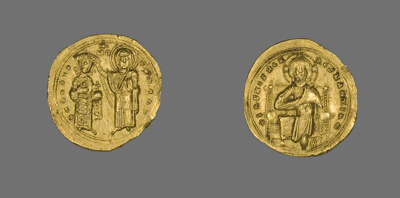 Histamenon (Coin) of Romanus III Argyrus with Christ EnthronedByzantine · 1028-34
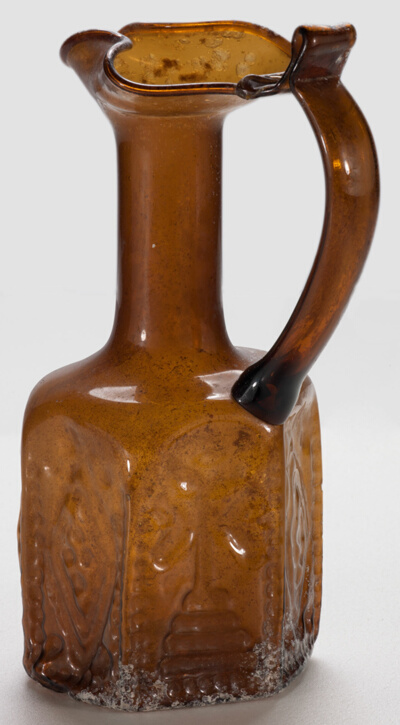 Pilgrimage Jug with Christian SymbolsByzantine · 578–636
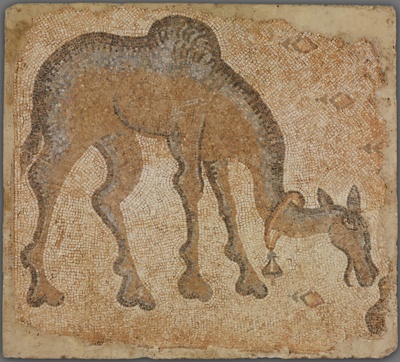 Mosaic Fragment with Grazing CamelByzantine · 5th century
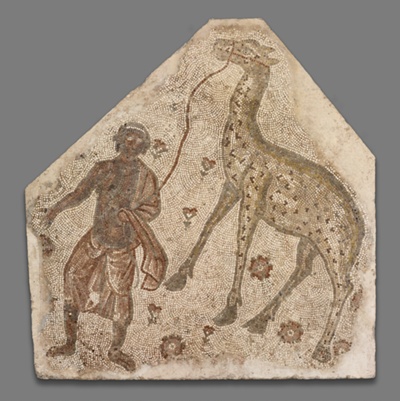 Mosaic Fragment with a Man Leading a GiraffeByzantine · 5th century
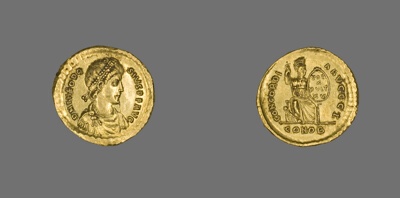 Solidus (Coin) of Emperor Theodosius IByzantine · 383 (25 August)-388 (28 August)