
Stacks of Wheat (End of Summer)
Claude Monet · 1890–91 · Art Institute of Chicago
What did you think?
Guide
4 chapters · about 2 minAdjust the guideNew to it · Medium
Haystacks at Giverny
This is a landscape painted in oil on canvas, about two feet tall and a little over three feet wide. It shows huge stacks of harvested wheat standing in a field. The stacks were real. They rose fifteen to twenty feet and stood just outside Claude Monet's farmhouse at Giverny, in France. Look for the rounded, cone-shaped tops of the stacks. The painting is built from soft patches of colour, with pink and green especially strong. Around the stacks you can also find trees, bushes, hills and a building, all suggested rather than drawn in sharp detail.
Where to Look
Start with the tops of the stacks. In this view the pointed tops break the horizon line, which is the line where land meets sky, and push up into the sky. That makes the stacks feel tall and upright. Then let your eye move across the fields and hills around them, where the pinks and greens sit side by side. Finally, look for the trees, bushes and the building in the distance. Notice how they are made of loose touches of paint rather than clear outlines.
A Year in the Field
Monet painted his Stacks of Wheat series through 1890 and 1891. He worked in two places. Out in the field, he painted at several easels at once, moving between canvases. Back in the studio, he refined what he called the harmonies of the pictures, meaning how the colours work together. In May 1891, he hung fifteen of these canvases side by side in one small room at the Galerie Durand-Ruel in Paris. The exhibition was an unprecedented success, both with critics and in sales, and it marked a breakthrough in his career.
Sustenance and Survival
For Monet, the stack of wheat was a powerful symbol of sustenance and survival, of food stored up to last through the year. Most of the autumn views, like this one, show the stacks pushing into the sky. In the winter views, which are the heart of the series, the stacks seem wrapped in bands of hill and field, as if bedded down for the season. After this series, Monet went on to paint poplars, Rouen Cathedral, and later his own garden at Giverny. Look once more at how the stack rises against the horizon here.
This guide was written by AI from the description published by Art Institute of Chicago. Licence: CC BY 4.0
Ask about this work
Ask in your own words. The answer comes from what the museum has written about the work, and says so when that does not hold it.
Details
- Maker
- Claude Monet (French, 1840–1926)
- Date
- 1890–91
- Medium
- Oil on canvas
- Dimensions
- 60 × 100.5 cm (23 5/8 × 39 9/16 in.); Framed: 75.6 × 116.6 × 7.4 cm (29 3/4 × 45 7/8 × 2 7/8 in.)
- Place of origin
- France
- Held by
- Art Institute of Chicago, Chicago · On view · Gallery 243
- Credit line
- Gift of Arthur M. Wood, Sr. in memory of Pauline Palmer Wood
Image: Art Institute of Chicago, CC0
More by Claude Monet
 GuideWater LiliesClaude Monet · 1906
 GuideThe Beach at Sainte-AdresseClaude Monet · 1867
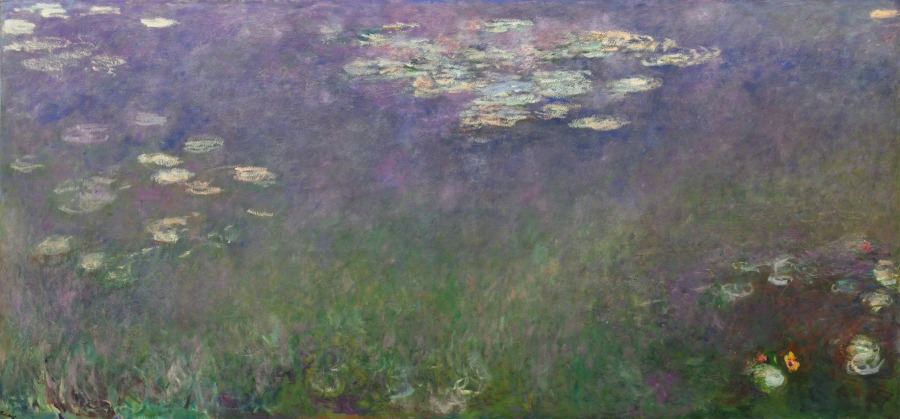 Water Lilies (Agapanthus)Claude Monet · c. 1915–26
 The Red KerchiefClaude Monet · c. 1868–73
 Arrival of the Normandy Train, Gare Saint-LazareClaude Monet · 1877
 Spring FlowersClaude Monet · 1864
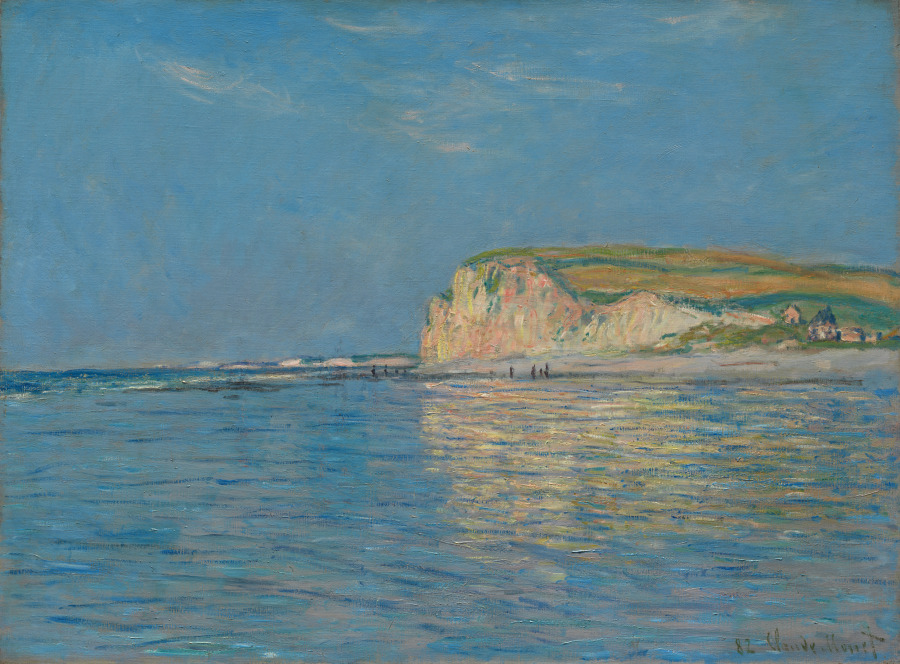 Low Tide at Pourville, near Dieppe, 1882Claude Monet · 1882
 Stacks of Wheat (Sunset, Snow Effect)Claude Monet · 1890–91