Just a moment
Just a moment
Giovanni Benedetto Castiglione · c. 1645/50 · Art Institute of Chicago
A closer look, connecting key details with the work’s background.
This small print, about thirty centimeters tall, shows the moment in the Book of Genesis when God creates the first man, Adam. It is made with black ink on cream-colored paper, and most of the surface is a deep, velvety black. Out of that darkness come figures drawn in white. God appears in a cloud, shown with broad, angular strokes. Adam's relaxed, limp body is built from thin, flowing lines. The image feels sudden and dramatic, as if light is being switched on in an empty space.
Compare the two figures by the kind of line used to make them. God, emerging from a cloud, is drawn with broad, angular strokes of white. They look bold and forceful, like quick cuts through the dark. Adam is different. His body is made from thin, fluid lines, and it looks languid, almost drowsy, as if he is only just coming to life. Notice how the soft blackness around him seems to hold him. His form is pulled out of the dark rather than drawn on top of it.
Giovanni Benedetto Castiglione, an Italian artist from Genoa, is credited with inventing the monotype. This is his earliest known one, made around 1645 to 1650. He covered a copper plate with ink, then removed the design from the ink with a blunt tool, such as a stick or the handle of a paintbrush. Then he pressed a sheet of paper onto the plate to print it. He also worked the other way, drawing in ink on a clean plate. Either method gives only one good impression, which is why it is called a monotype, meaning one print.
The museum sees a perfect match between method and subject. Genesis tells of light being separated from darkness and of form arising from chaos, and Castiglione did just that, literally, by clearing light from a field of black. He was considered one of the most original Italian artists of the Baroque period. His invention took time to be appreciated. Not until the nineteenth century did artists such as Edgar Degas explore what the monotype could do. Look once more at Adam's pale, stretched body, and notice how it seems to rise out of the black.
This guide was written by AI from material published by Art Institute of Chicago. Licence: CC BY 4.0
Save this version (English · New to it · Medium) with all its audio, guide text and work image. It replaces the saved guide for this work and language.
Audio storage: about 40 MB per guide and 150 MB on this device. Audio expires 7 days after it is downloaded.
Save this work’s image and museum information on this device to read without a connection.
Ask in your own words. The answer comes from what the museum has written about the work, and says so when that does not hold it.
Image: Art Institute of Chicago, CC0
 Diogenes Seeking an Honest ManGiovanni Benedetto Castiglione · 1645–47
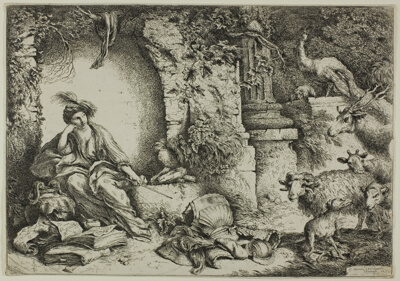 Circe with Companions of Ulysses Changed into AnimalsGiovanni Benedetto Castiglione · 1650–51
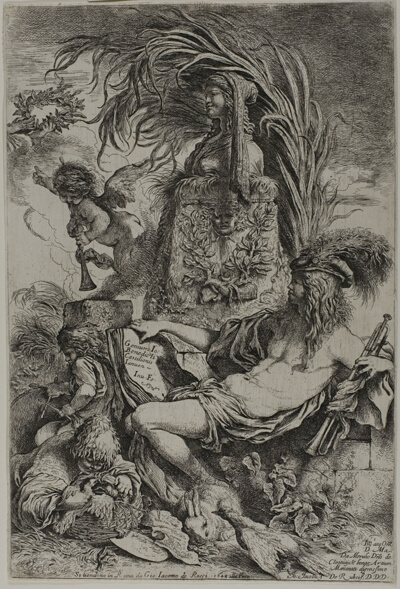 The Genius of CastiglioneGiovanni Benedetto Castiglione · 1645–47, published 1648
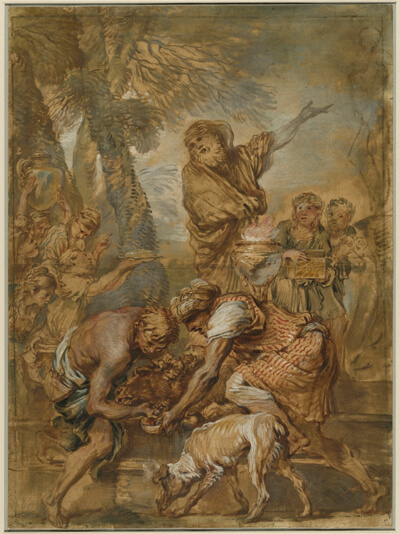 A Pagan SacrificeGiovanni Benedetto Castiglione · c. 1645–50