Just a moment
Just a moment
Claude Gillot · c. 1693–1715 · Cleveland Museum of Art
A closer look, connecting key details with the work’s background.
Looking for this guide.
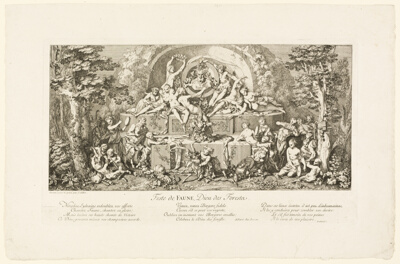
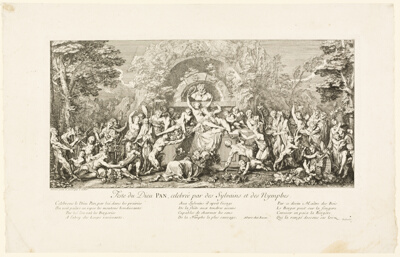
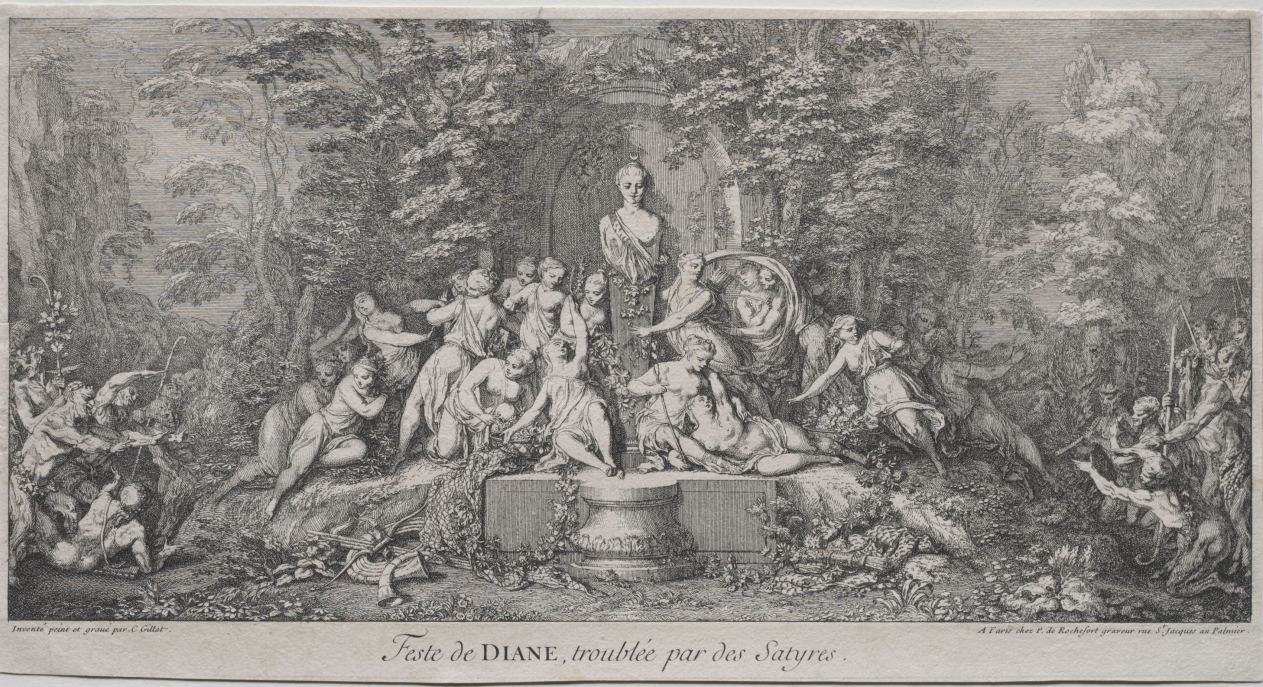
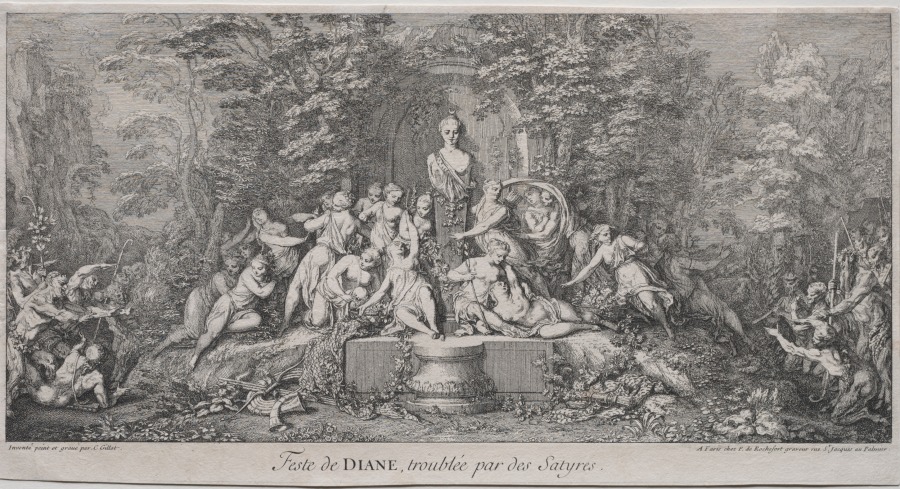
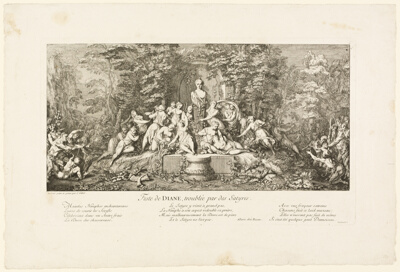
The principal source of inspiration for Claude Gillot, while working in Paris during the final years of the reign of Louis XIV (r. 1643–1715), was popular theater. His staged and precisely choreographed bacchanalia scene consists of music, dancing bacchants, drinking, and plentiful food, all symmetrically composed around a herm (a stone pillar topped by the head of Bacchus). According to written sources in Gillot’s time, a herm marked a site in ancient Greece where rites to Bacchus occurred. At the far right, a young satyr holds a thyrsus—a wand decorated with grape leaves and ivy—a bacchanalian symbol of fertility and hedonism. The lovely bacchantes (female followers of Bacchus) dancing throughout the composition appear in contrast with the beastly satyrs and fauns. The term bacchante could also be used to describe an intoxicated and libidinous woman in less mythological contexts.
The museum’s own description, in English. Licence: CC0
Save this work’s image and museum information on this device to read without a connection.
Ask in your own words. The answer comes from what the museum has written about the work, and says so when that does not hold it.
Image: Cleveland Museum of Art, CC0