
Just a moment
Just a moment
A closer look, connecting key details with the work’s background.
Looking for this guide.
The double-storied exterior base of one of the largest temples constructed and still standing on the Indian subcontinent is articulated with niches containing images of Hindu gods. Within these walls is an inner sanctum containing a monolithic linga (the phallic emblem marking the sacred presence of the god Shiva). Tripe used waxed paper instead of glass negatives, possibly because he was concerned about breakage and weight. When printing the photograph, he laid the negative on a paper treated with a light-sensitive emulsion of sodium chloride (table salt) and silver nitrate and exposed it to light, to create a “salt print.” This is thought to have been the tallest structure in the world when it was constructed around 1000.
The museum’s own description, in English. Licence: CC0
Save this work’s image and museum information on this device to read without a connection.
Ask in your own words. The answer comes from what the museum has written about the work, and says so when that does not hold it.
Image: Cleveland Museum of Art, CC0
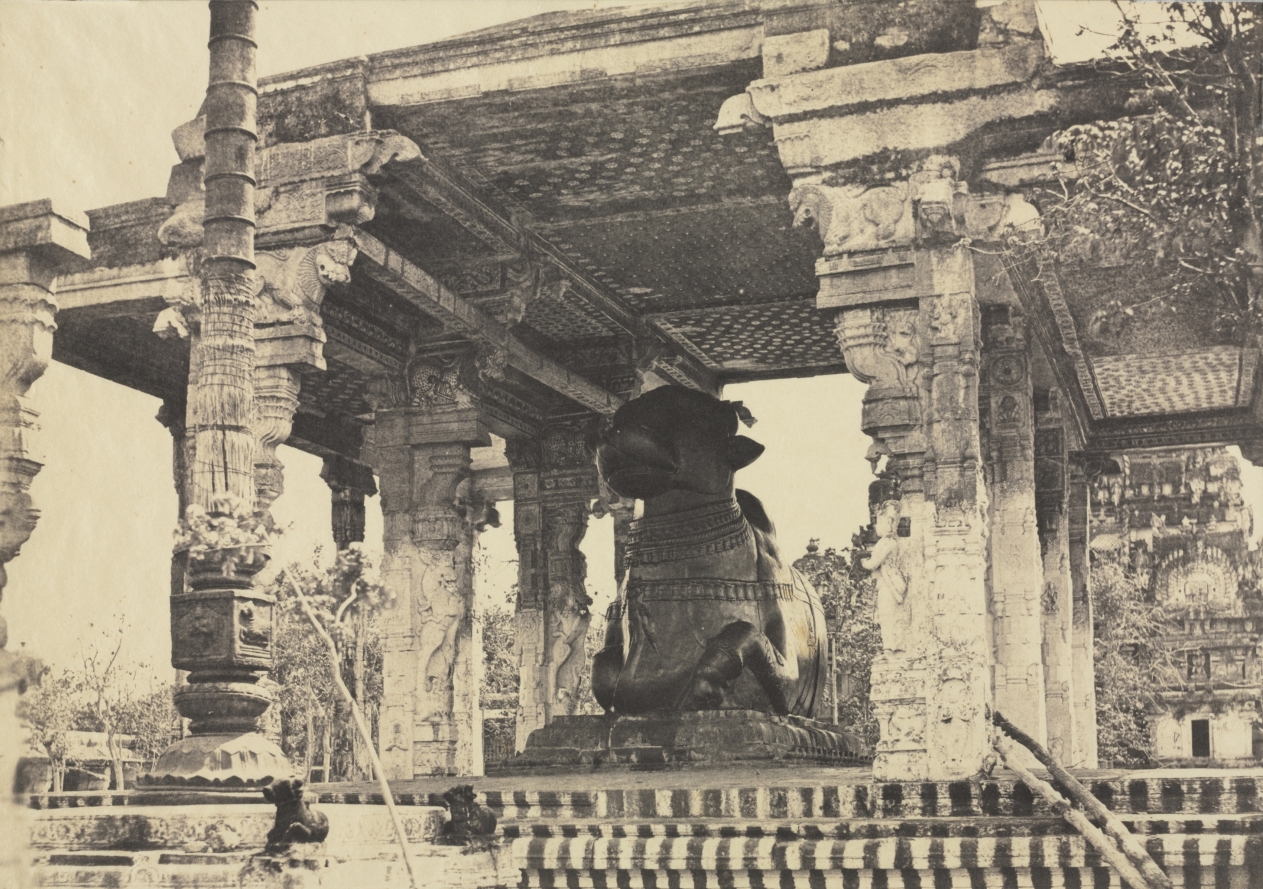 Great Pagoda, Great Bull, Front View, Tanjore, India (Rajarajeshvara Temple), plate 12 from Photographic Views of Tanjore and Trivady (Madras: Madras Presidency)Captain Linnaeus Tripe · 1857
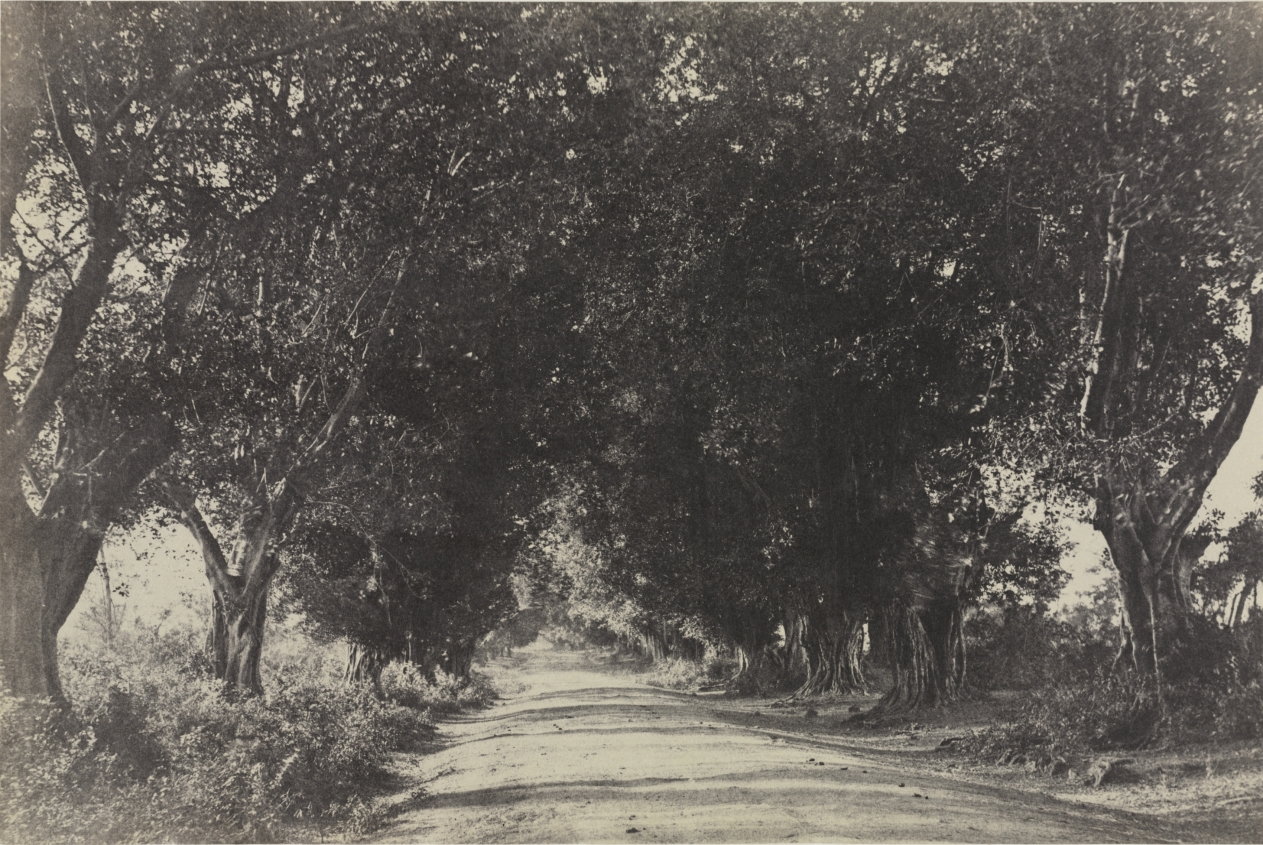 Avenue of the Banian Trees, Seringham, IndiaCaptain Linnaeus Tripe · 1858
 Entrance to the Minakshi Sundareshvara Temple, MaduraiCaptain Linnaeus Tripe · 1858
 Western Gateway (Gopuram) of the Minakshi Sundareshvara Temple, MaduraiCaptain Linnaeus Tripe · 1858
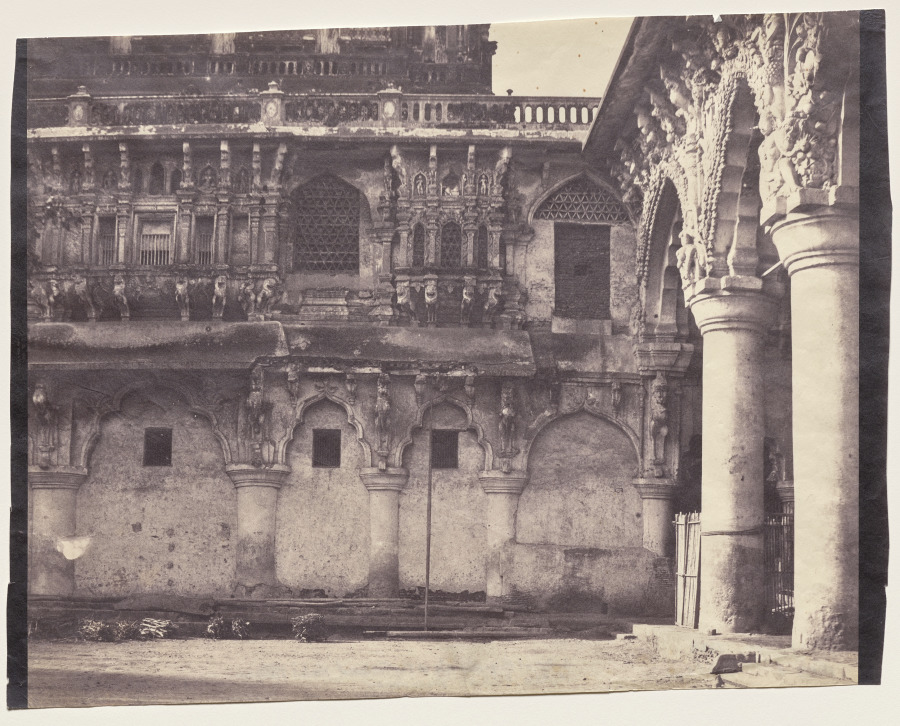 South Façade of the Quadrangle of the Nayak Darbar Hall, ThanjavurCaptain Linnaeus Tripe · 1858
 Pudhu Mandapa of Tirumal Nayak (r. 1623–59), Minakshi Sundareshvara Temple, MaduraiCaptain Linnaeus Tripe · 1858
 Perumal Temple Vimana from Corner of Court, MaduraiCaptain Linnaeus Tripe · 1858
 Amerapoora. Gautama's ShrineCaptain Linnaeus Tripe · 1855