Un momento, por favor
Un momento, por favor
Shri Gobinda Chandra Roy · c. 1890 · Museo de Arte de Cleveland
Una mirada más cercana que conecta los detalles principales con el contexto de la obra.
Buscando esta guía.
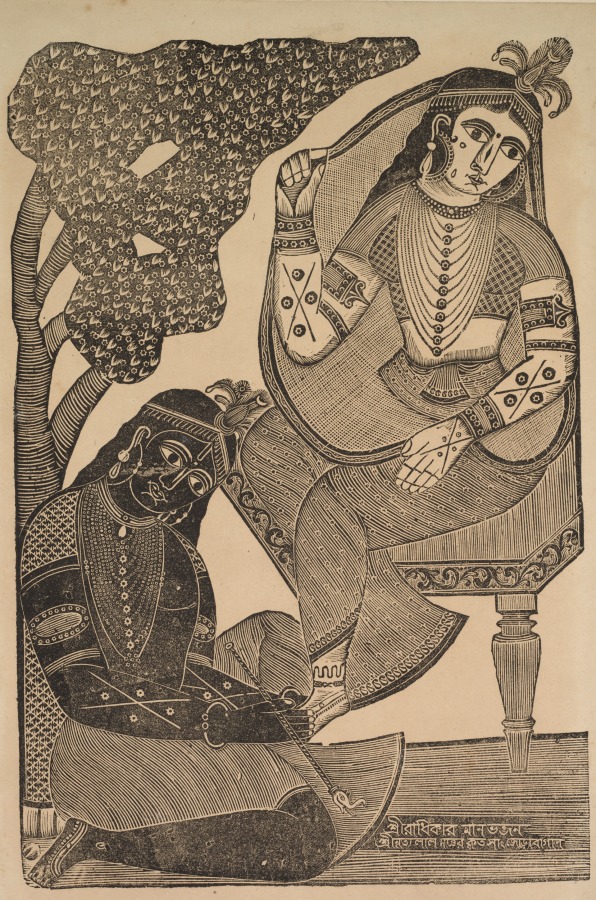
Popular Kalighat paintings were made into woodcuts for mass printing and distribution. This image reveals the lifestyle of a new middle class of Indians who prospered under British rule. Holding a fancy hookah for pleasurable smoking, draped with jewels, wearing a glamorous sari, and with a flower tucked in her hair, she has the luxury of going to a barber to have her ears cleaned. The age of mechanical reproduction made a heavy impact on the new Indian middle class during the last decades of the 1800s. British magazines and periodicals were fashionable among Indian households, and they served to shape their taste for British and Western styles and commodities. Cheaper prints such as this woodcut were made for more popular distribution. They spoke to aspirations or observations by a broader, less privileged community.
Descripción original del museo, en inglés. Licencia: CC0
Guarda la imagen y la información del museo en este dispositivo para leerlas sin conexión.
Pregunta con tus propias palabras. La respuesta sale de lo que el museo ha escrito sobre la obra, y lo dice cuando ahí no está.
Imagen: Cleveland Museum of Art, CC0
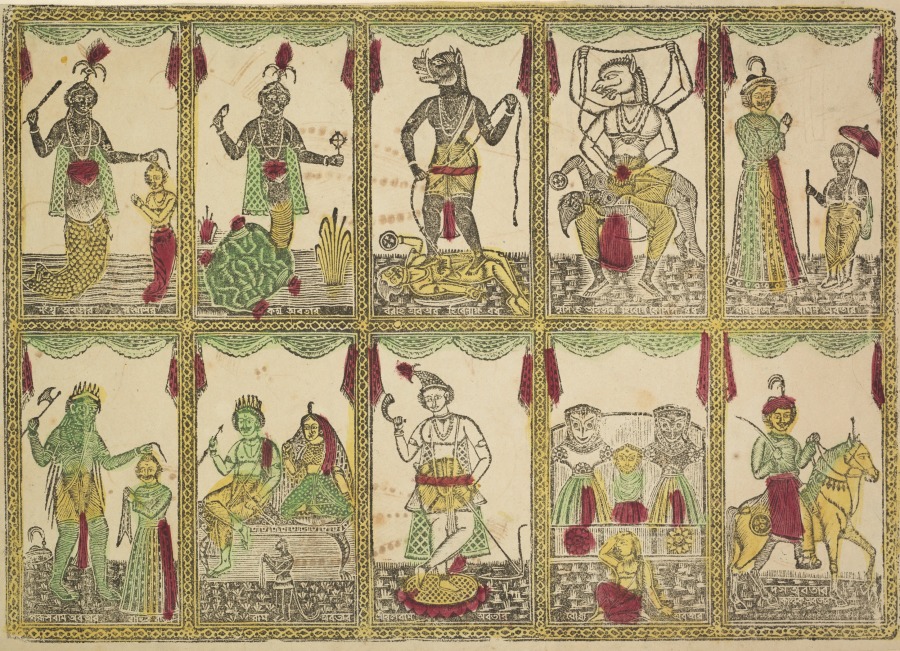 Das Avataras, Ten Incarnations of Vishnu (verso), from a Kalighat albumShri Gobinda Chandra Roy · c. 1890
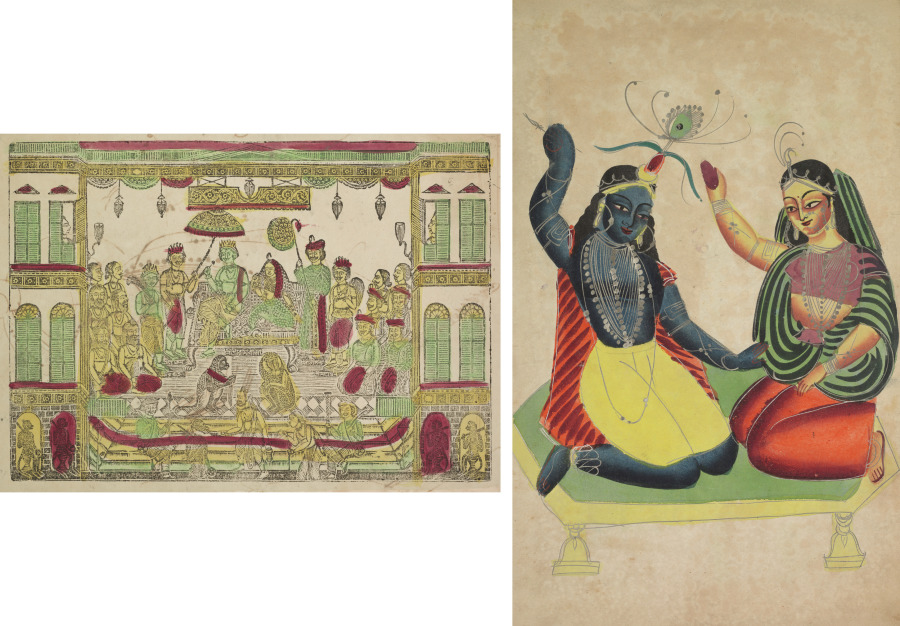
 Rama and Sita in the royal palace (recto), from a Kalighat albumShri Gobinda Chandra Roy · c. 1890
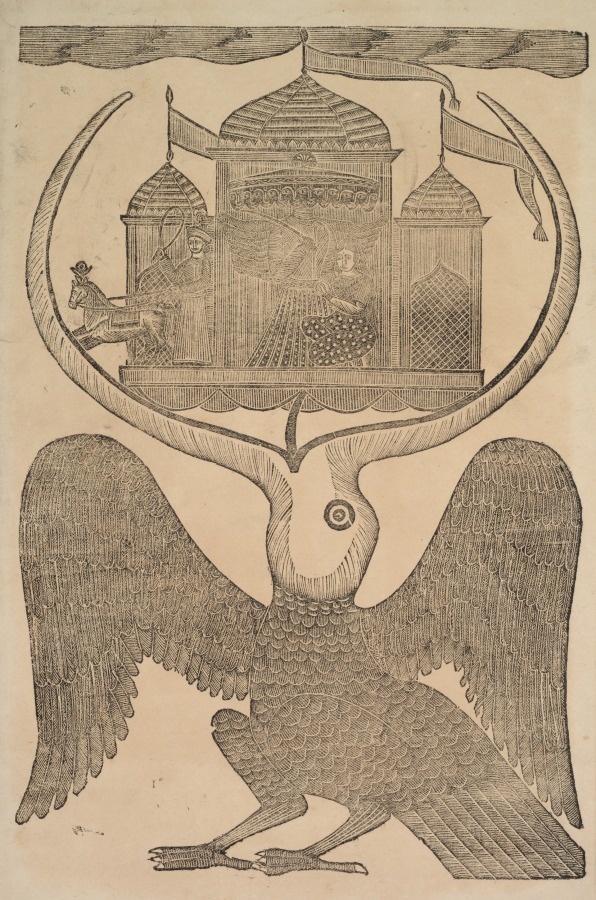 Jatayu hinders Ravana’s chariot trying to prevent Sita’s abduction (recto), from a Kalighat albumShri Gobinda Chandra Roy · c. 1890