Un momento, por favor
Un momento, por favor
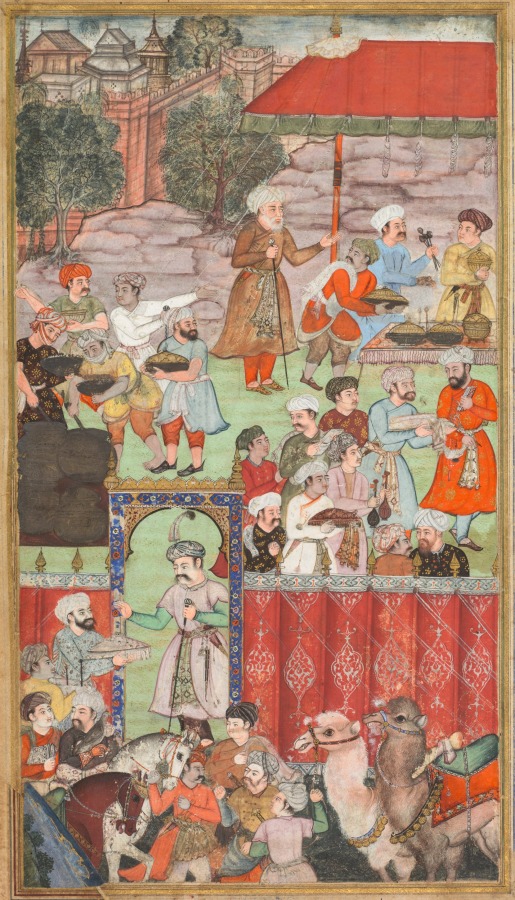
Basavana · c. 1585; inner border added in Allahabad c. 1602; outer border added probably 1900s · Museo de Arte de Cleveland
Una mirada más cercana que conecta los detalles principales con el contexto de la obra.
Buscando esta guía.
As the Mughal atelier grew into the 1580s, Indian artists become increasingly adept at incorporating Persian styles with a new dimensionality and naturalism that Akbar promoted, possibly based on his appreciation of European prints and paintings. Here, a sincere holy man wears robes tinged lightly with blue. He stands beneath a tree in the wilderness with a loyal jackal by his side. A devotee touches his head to his feet. The artist’s tiny signature is written on the alms bowl. Connoisseurs of Persian art in the Islamic world praised an artist’s virtuoso ability to work on a microscopic scale. The dog stares hungrily at the mendicant’s alms bowl, with the artist’s signature.
Descripción original del museo, en inglés. Licencia: CC0
Guarda la imagen y la información del museo en este dispositivo para leerlas sin conexión.
Pregunta con tus propias palabras. La respuesta sale de lo que el museo ha escrito sobre la obra, y lo dice cuando ahí no está.
Imagen: Cleveland Museum of Art, CC0
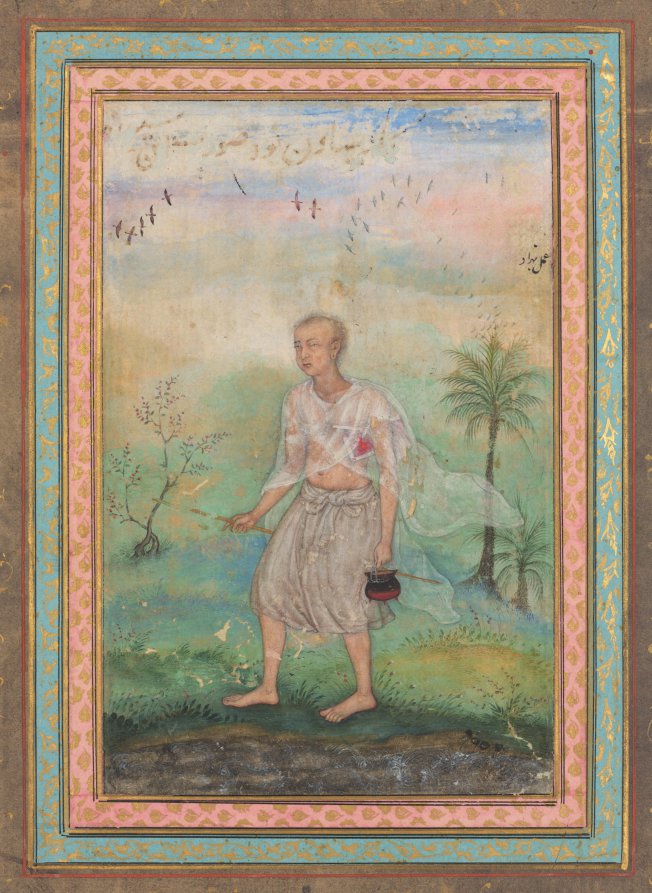 Jain Ascetic Walking Along a RiverbankBasavana · c. 1600
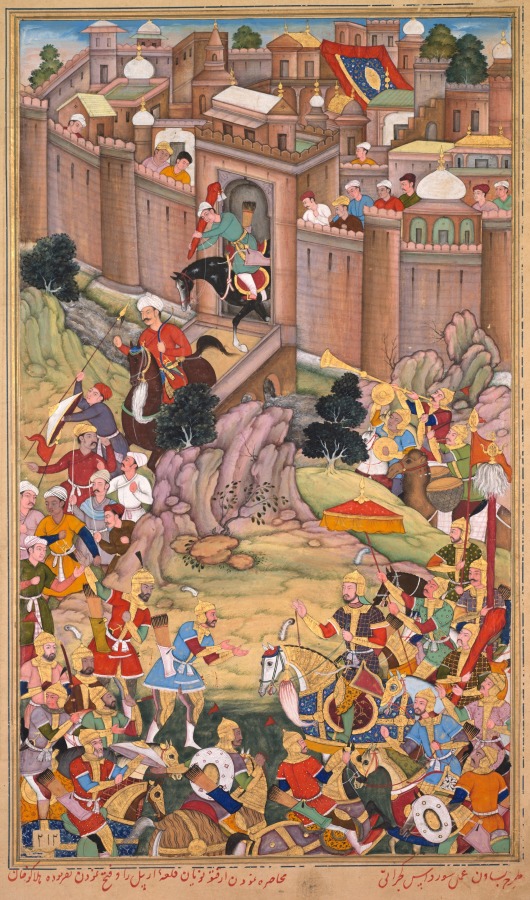
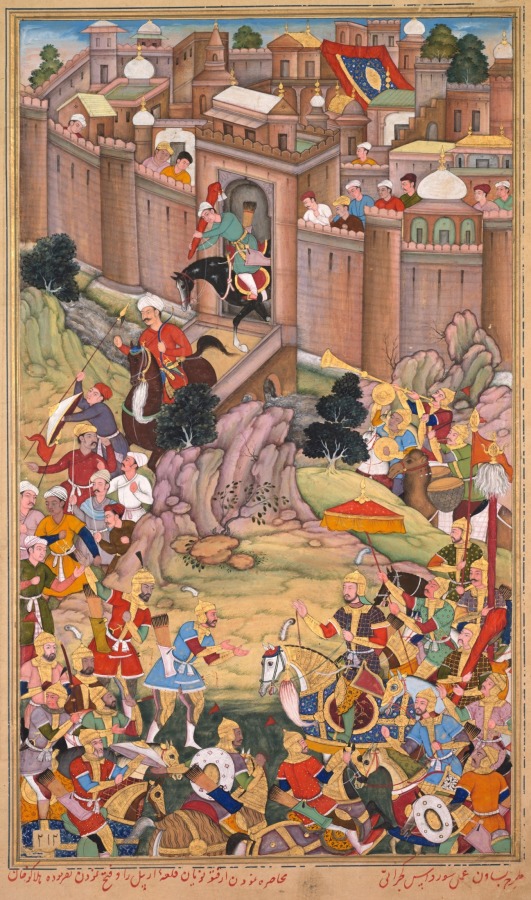 The siege of Arbela in the era of Hulagu Khan, from a Chingiz-nama (Book of Chingiz Khan) of the Jami al-tavarikh (Compendium of Chronicles) of Rashid al-Din (Persian, 1247–1318)Basavana · c. 1596
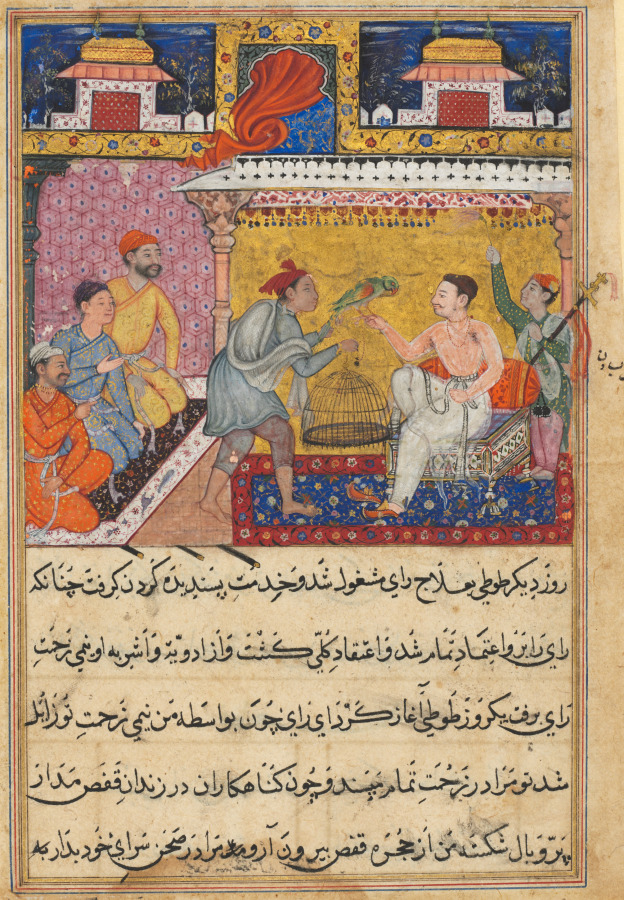 The hunter offers the mother parrot to the king of Kamarupa, from a Tuti-nama (Tales of a Parrot): Fifth NightBasavana · c. 1560