
Un momento, por favor
Un momento, por favor
Ancient Etruscan · 530-520 BCE · Instituto de Arte de Chicago
Una mirada más cercana que conecta los detalles principales con el contexto de la obra.
Buscando esta guía.
During the sixth and fifth centuries BC, the Etruscans, who lived north of Rome, increasingly imported Athenian ceramics decorated with scenes of Greek mythology, religion, and daily life. Made of fine, iron-rich clay that fired orange, decorated with a rich black gloss, and sometimes embellished with white and purple-red details, the ceramic vessels produced in Athens were the finest of Classical antiquity. Etruscan artists, no doubt eager to capitalize on the high demand for Greek vases, and perhaps also hoping to attract customers unable to afford the imported wares, set up a workshop, probably at Vulci, to produce facsimiles of the Athenian vases. This vessel’s attenuated proportions and symmetrical profile create an especially elegant shape that belies the somewhat coarse texture of the local Etruscan clay from which it is made. The clay’s poor quality also stymied attempts to replicate the highly refined surface finishes of Athenian vases. Nevertheless, the painter of this vase skillfully composed his scenes within trapezoidal picture fields bounded above by a decorative pattern of interlacing lotus buds and dots and along its sides by a single line. On the front, a hound looks back at a horse and hunter, while a stag and hare flee for their lives on the back.
Descripción original del museo, en inglés. Licencia: CC BY 4.0
Guarda la imagen y la información del museo en este dispositivo para leerlas sin conexión.
Pregunta con tus propias palabras. La respuesta sale de lo que el museo ha escrito sobre la obra, y lo dice cuando ahí no está.
Imagen: Art Institute of Chicago, CC0
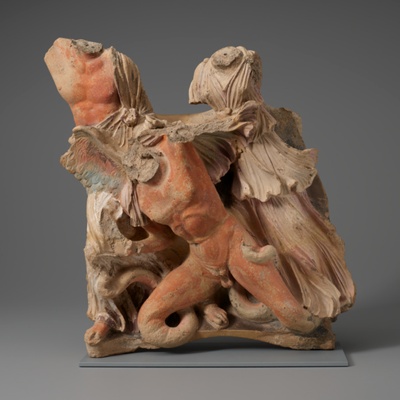 Architectural Relief Depicting the Gigantomachy (Battle Between Gods and Giants)Ancient Etruscan · 3rd-2nd century BCE
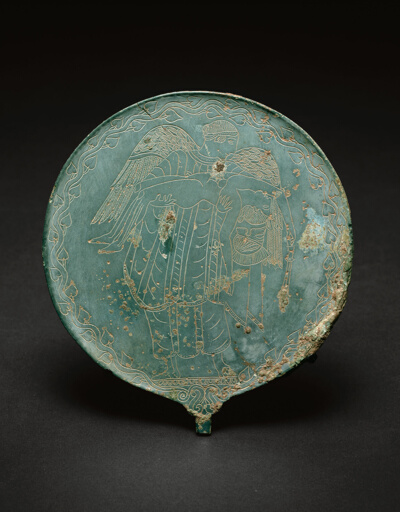 Hand MirrorAncient Etruscan · 470-450 BCE
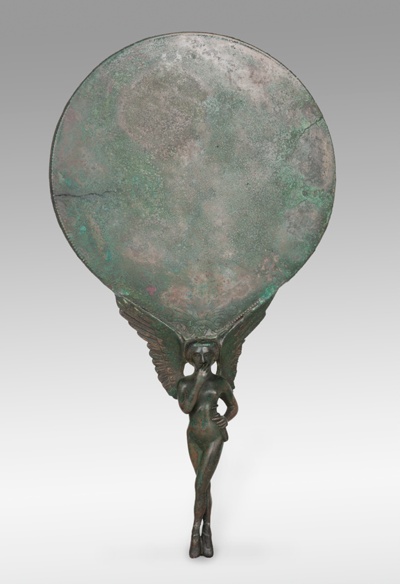 Mirror with a Handle in the Form of a Female FigureAncient Etruscan · 3rd century BCE
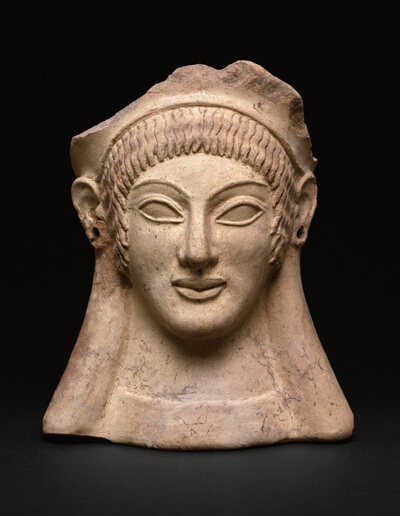 Votive (Gift) in the Shape of a Woman's HeadAncient Etruscan · about 500 BCE
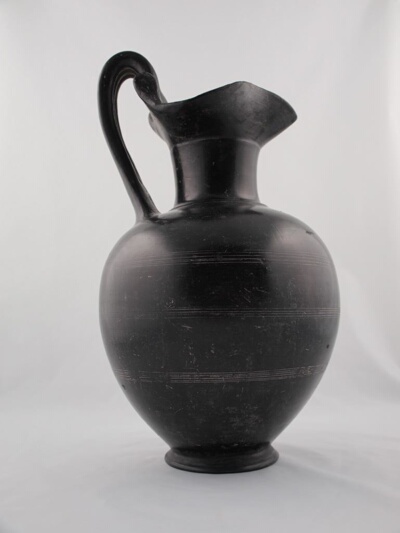 Oinochoe (Pitcher)Ancient Etruscan · 550-500 BCE
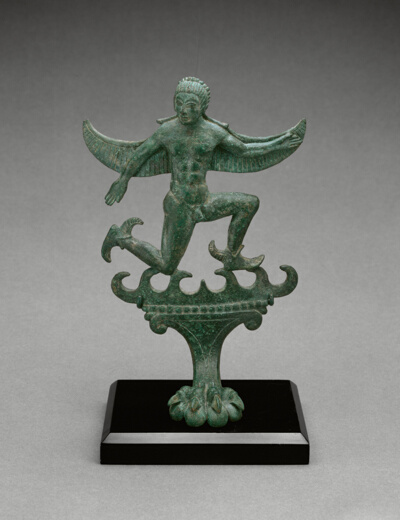 Foot of a Cista (Storage Box)Ancient Etruscan · early 5th century BCE
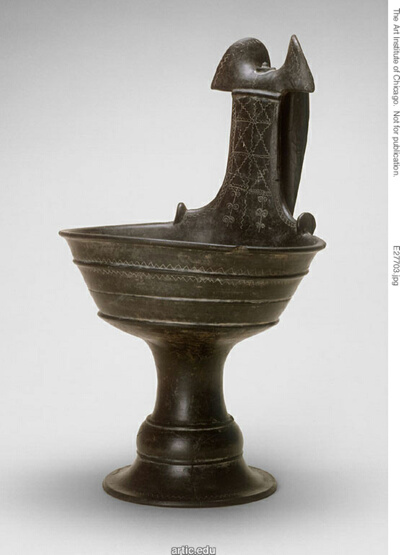 Stemmed Kyathos (Drinking Cup)Ancient Etruscan · 550-525 BCE
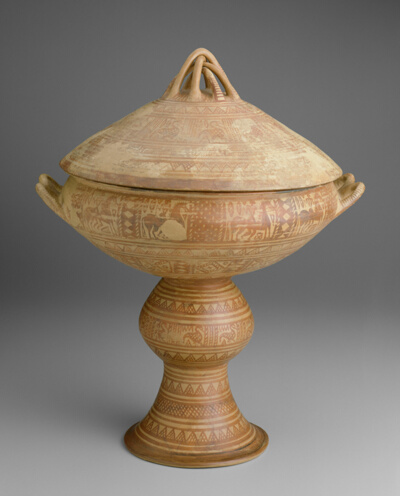 Lebes (Stemmed Bowl with Lid)Ancient Etruscan · 725-700 BCE