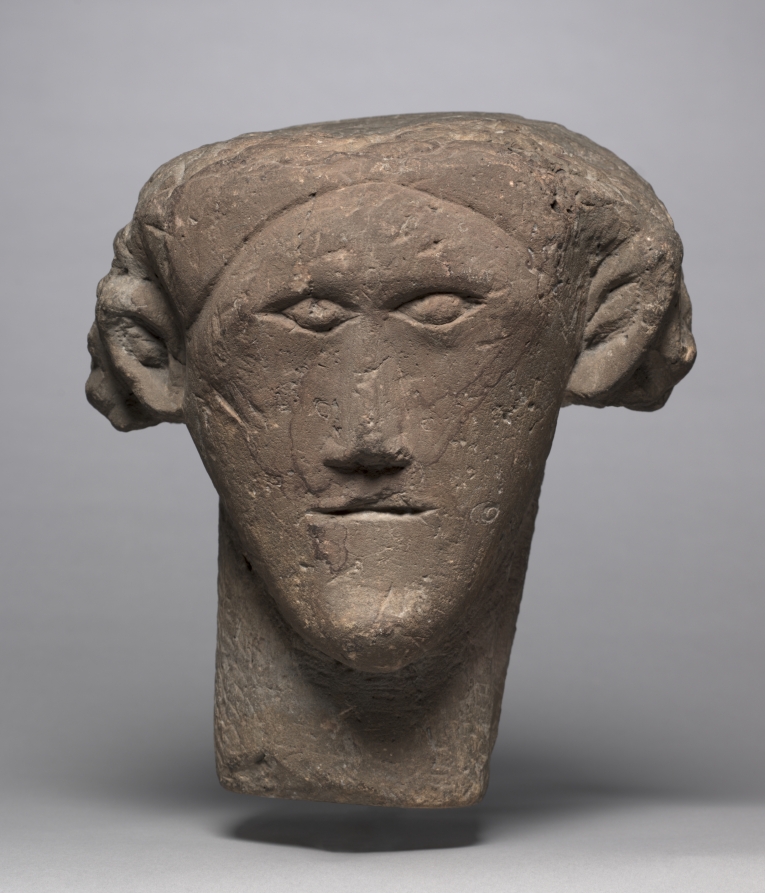
Celtic Head
Northern England (Romano-British), Migration period, 2nd-3rd centuries · 100–300 CE · Museo de Arte de Cleveland
¿Qué te ha parecido?
Guarda la imagen y la información del museo en este dispositivo para leerlas sin conexión.
Guía
Ajustar la guíaPrincipiante · Media
Nadie ha escuchado todavía esta guía. Prepararla lleva unos veinte segundos y, después, cualquiera podrá escucharla al momento.
Texto del museo
This stone head has never been attached to a torso. It is known from ancient literary sources that the Celts, who originally occupied most of northern Europe from Hungary to the British Isles, practiced ritualistic veneration of the human head. For the Celts, the human head represented the seat of mankind’s magical energy. Stone heads similar to this one have survived in large numbers, especially in the upland regions of northern England (the Pennines, the Peak District, and Cumbria) where this one was undoubtedly made by British Celts during the Roman occupation. Such stone heads were probably placed in religious shrines or grottos generally associated with springs, well heads, or natural landmarks for ritual veneration.
Pregunta sobre esta obra
Pregunta con tus propias palabras. La respuesta sale de lo que el museo ha escrito sobre la obra, y lo dice cuando ahí no está.
Detalles
- Autor
- Northern England (Romano-British), Migration period, 2nd-3rd centuries
- Fecha
- 100–300 CE
- Técnica
- sandstone with traces of original red paint
- Dimensiones
- Overall: 30 x 31 x 24 cm (11 13/16 x 12 3/16 x 9 7/16 in.)
- Lugar de origen
- Northern England (Romano-British)
- Colección
- Museo de Arte de Cleveland, Cleveland · En sala · 106A Migration Period & Coptic
- Procedencia
- Gift of Dr. and Mrs. Jacob Hirsch
Imagen: Cleveland Museum of Art, CC0