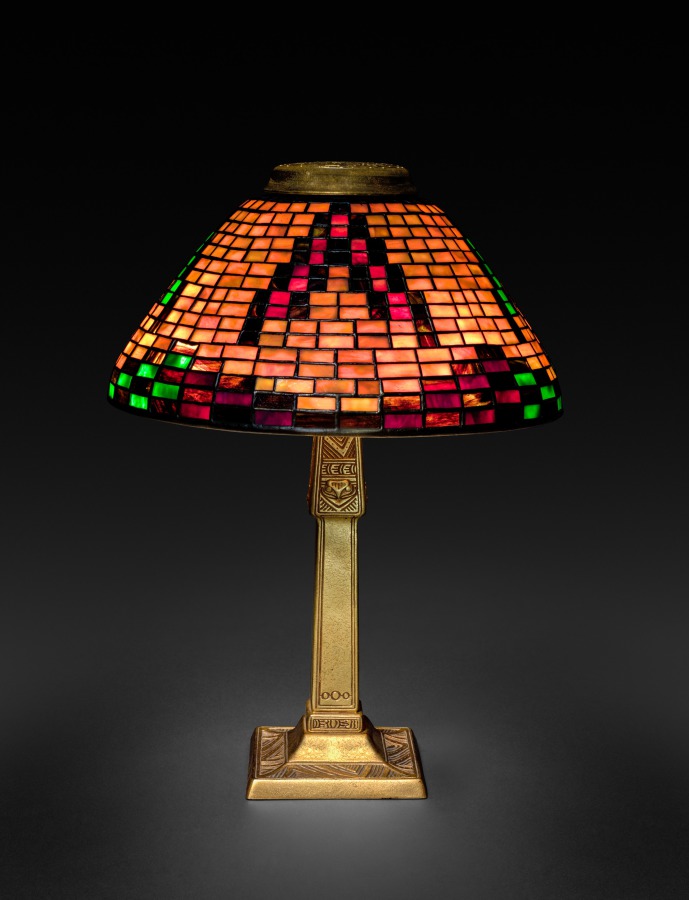
Daffodil Table Lamp
Tiffany Studios · c. 1910–13 · Museo de Arte de Cleveland
Guía
Ajustar la guíaPrincipiante · Media
Buscando esta guía.
Texto del museo
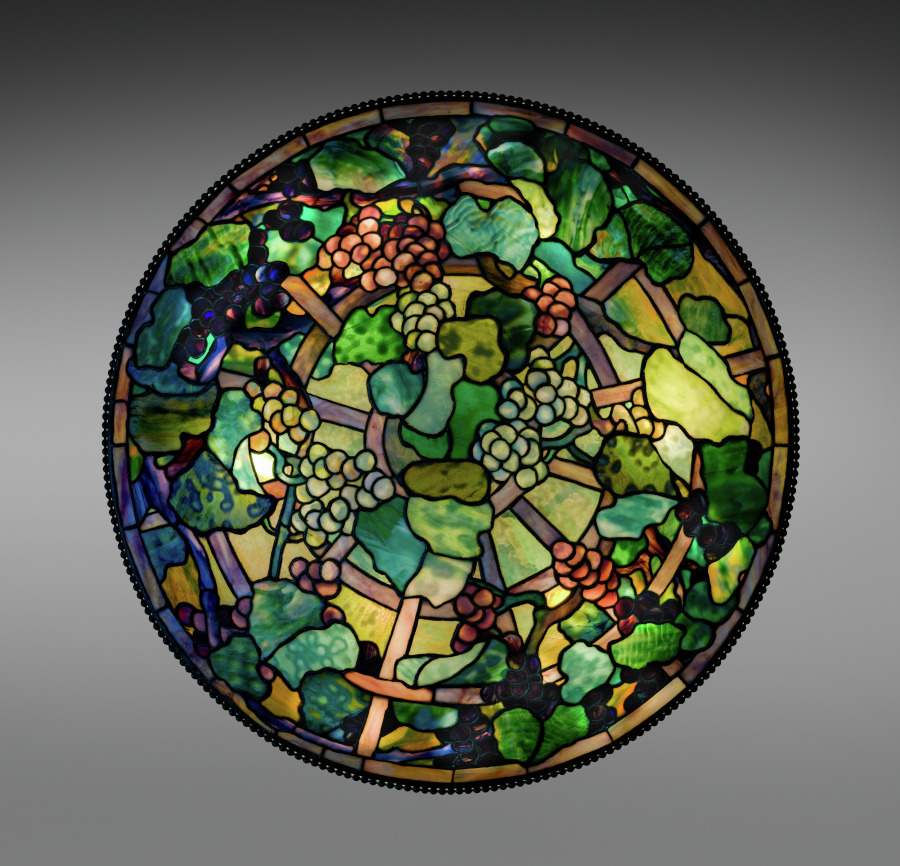
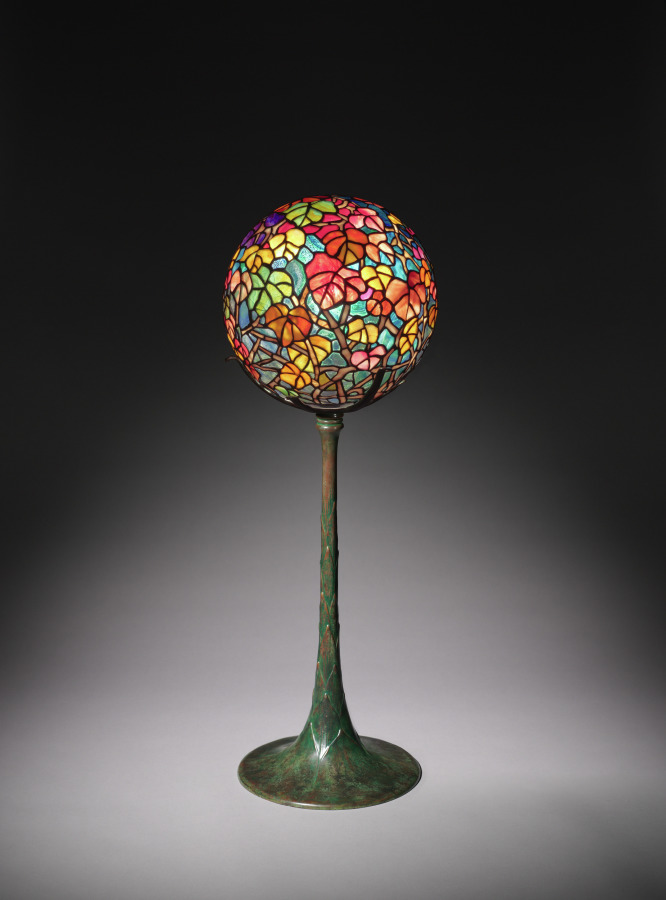
In the 1870s a renewed emphasis on natural landscapes ushered in a generation of cottage gardeners who delighted in planting perennials in large quantities. Louis Comfort Tiffany was among those who championed the lush, sometimes wild-looking displays of varied floral species in the garden at his Long Island estate, Laurelton Hall. Tiffany encouraged his designers to take inspiration from his garden by shipping fresh cuttings almost weekly to his studios. Ohio native Clara Wolcott Driscoll and her team of female designers created floral patterns for lamps and mosaics based on the colorful blooms of spring that became among the most sought after and commercially successful of Tiffany’s production. Giant bronze crabs, likely cast from a real crustacean, set the scene for this rare Tiffany Studios base in which green glass is blown into a bronze cage—a very difficult technique since glass and bronze cool at different temperatures risking a complete shatter if not executed correctly.
Descripción original del museo, en inglés. Licencia: CC0
¿Qué te ha parecido?
Guarda la imagen y la información del museo en este dispositivo para leerlas sin conexión.
Pregunta sobre esta obra
Pregunta con tus propias palabras. La respuesta sale de lo que el museo ha escrito sobre la obra, y lo dice cuando ahí no está.
Detalles
- Autor
- Tiffany Studios (United States, New York, 1902–32)
- Fecha
- c. 1910–13
- Técnica
- Leaded glass, blown glass, bronze
- Dimensiones
- Shade: 23.2 x 49.3 x 49.3 cm (9 1/8 x 19 7/16 x 19 7/16 in.)
- Lugar de origen
- America
- Colección
- Museo de Arte de Cleveland, Cleveland · En sala · 209 Tiffany
- Procedencia
- Bequest of Charles Maurer
Imagen: Cleveland Museum of Art, CC0