Un momento, por favor
Un momento, por favor
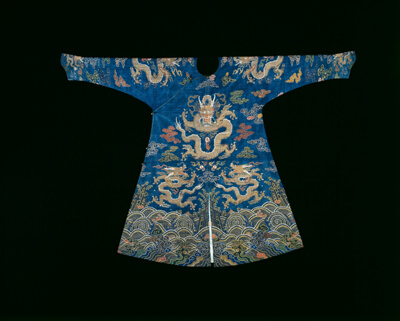
Manchu · Qing dynasty (1644–1911), 1825/50 · Instituto de Arte de Chicago
Una mirada más cercana que conecta los detalles principales con el contexto de la obra.
Buscando esta guía.
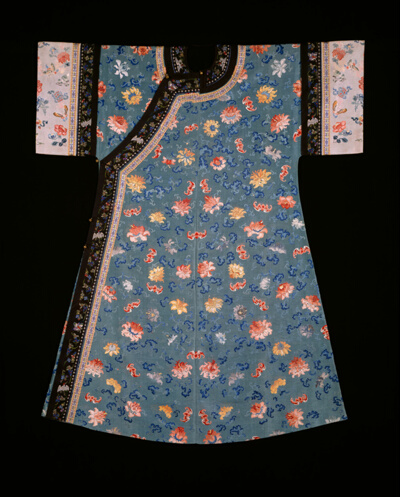
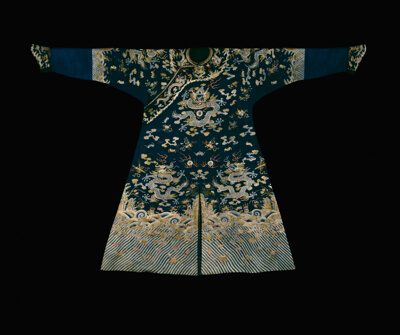
Some of the stylistic elements of this nineteenth-century jifu, such as the shaped overlap at the front, lower sleeves, and horse-hoof-shaped cuffs, emphasize Manchu forms and construction details. Overall, however, the eighteenth-century restyling which influenced this garment's design was linked to Chinese imperial precedent and reflected Han-Chinese tastes and aesthetics. During the re-evaluation of court attire initiated by the Qianlong emperor in 1748, this robe type, which had previously been called longpao, or "dragon robe," was renamed jifu, or "auspicious robe." This new name reflected Han-Chinese precedent, as it is a reference to a name for court garments that appeared in the Zhouli (Rituals of [the] Zhou [dynasty]). Its addition exemplifies the conscious reshaping of the Qing imperial image. Although by the 1650s the court had reserved minghuang (bright yellow) for the use of the emperor and his principal consort, ritual obligations often demanded that the royal couple wear different colors. Blue chaofu for exmaple were worn for the rites held during the winter solstice at the Alar of Heaven, located south of the Forbidden City. Semi-formal court garments like this rare, all-blue tapestry-wovern jifu were probably worn during the three-day period of fasting and purification that preceded the sacrifices. --John E. Vollmer, Clothed to Rule the Universe: Ming and Qing Dynasty Textiles at the Art Institute of Chicago (2000): 35-36, plate xv, cat. 28.
Descripción original del museo, en inglés. Licencia: CC BY 4.0
Guarda la imagen y la información del museo en este dispositivo para leerlas sin conexión.
Pregunta con tus propias palabras. La respuesta sale de lo que el museo ha escrito sobre la obra, y lo dice cuando ahí no está.
Imagen: Art Institute of Chicago, CC0