Un momento, por favor
Un momento, por favor
Inca · 1550-1625 · Instituto de Arte de Chicago
Una mirada más cercana que conecta los detalles principales con el contexto de la obra.
Buscando esta guía.
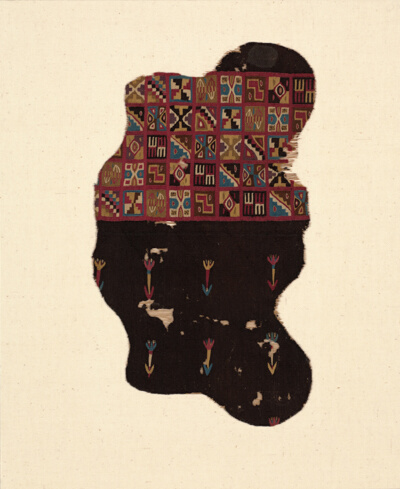
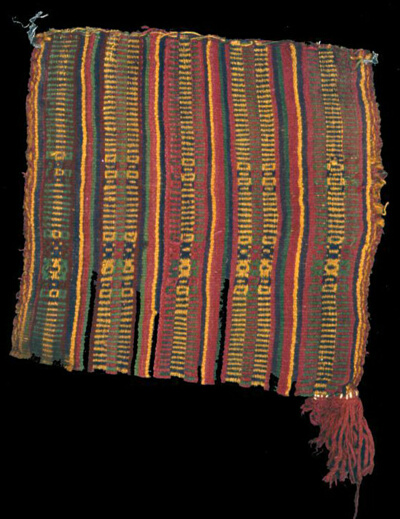
This textile was cut from the shoulder area of an Inca or Indigenous man’s tunic, called an uncu in Quechua. The maker wove the cantuta flowers in opposite directions so they would remain upright when the garment was worn. The cascades of rectangles that define the yoke were invented during the Spanish Colonial period, possibly reinventing a style from an earlier regional culture that had been conquered by the Incas. The faint line within the red threads is a diagonal break that reveals the cloth was woven in sections—a time-saving approach used after the Inca Empire’s strict rules for creating textiles waned. This tunic waistband fragment in our collection was also part of the same garment. A third piece of the same tunic is in the collection of The Textile Museum in Washington, DC (91.8).
Descripción original del museo, en inglés. Licencia: CC BY 4.0
Guarda la imagen y la información del museo en este dispositivo para leerlas sin conexión.
Pregunta con tus propias palabras. La respuesta sale de lo que el museo ha escrito sobre la obra, y lo dice cuando ahí no está.
Imagen: Art Institute of Chicago, CC0