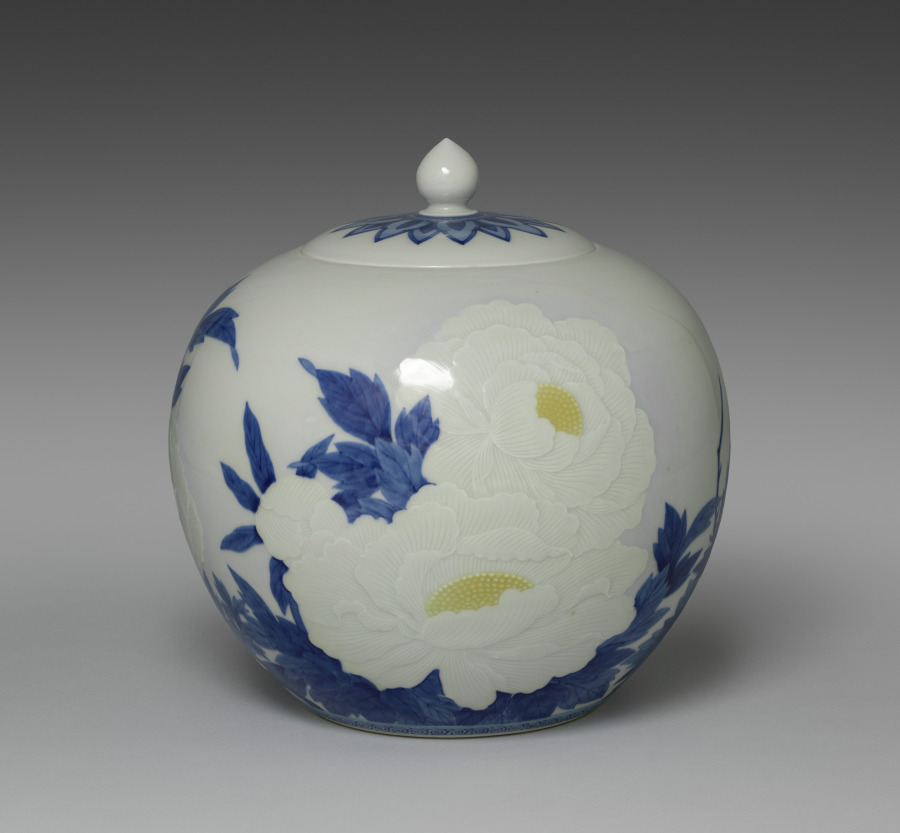
Gu-shaped Vase
Seifu Yohei III · 1912–14 · Museo de Arte de Cleveland
Guía
Ajustar la guíaPrincipiante · Media
Nadie ha escuchado todavía esta guía. Prepararla lleva unos veinte segundos y, después, cualquiera podrá escucharla al momento.
Texto del museo
Seifū Yohei III mined the repertoire of Chinese vessel types, from ceramics modeled after ancient ritual bronzes to shapes developed in the Yuan (1279–1368) and Ming (1368–1644) dynasties. His designs tended to be formal and restrained, often featuring creamy white glazes suggestive of the hue of Ding ware and green glazes resembling Longquan ware. This gu-shaped vase has a cracked-ice glaze, which was once customarily called Ge (Japanese pronunciation Ka), after the kiln where it purportedly originated during the Southern Song dynasty (1127–1279). The glaze’s double-crackle pattern, featuring both deeper and shallower cracks, is called “gold threads and iron lines.” The effect was enhanced here by coating the vessel with ink or another stain, which was allowed to seep into the cracks before the surface was wiped clean. Gu-shaped vases are relatively slender cylinders that flare at both the mouth and foot with orbs or drumlike forms partway up the vessel.
Descripción original del museo, en inglés. Licencia: CC0
¿Qué te ha parecido?
Guarda la imagen y la información del museo en este dispositivo para leerlas sin conexión.
Pregunta sobre esta obra
Pregunta con tus propias palabras. La respuesta sale de lo que el museo ha escrito sobre la obra, y lo dice cuando ahí no está.
Detalles
- Autor
- Seifū Yohei III (Japanese, 1851–1914)
- Fecha
- 1912–14
- Técnica
- Porcelain with crackled glaze
- Dimensiones
- 27.9 cm (11 in.); Diameter of top: 14.6 cm (5 3/4 in.)
- Lugar de origen
- Japan
- Colección
- Museo de Arte de Cleveland, Cleveland · No expuesta
- Procedencia
- Gift of James and Christine Heusinger
Imagen: Cleveland Museum of Art, CC0