Un momento, por favor
Un momento, por favor
Seifū Yohei IV · 1914–46 · Museo de Arte de Cleveland
Buscando esta guía.
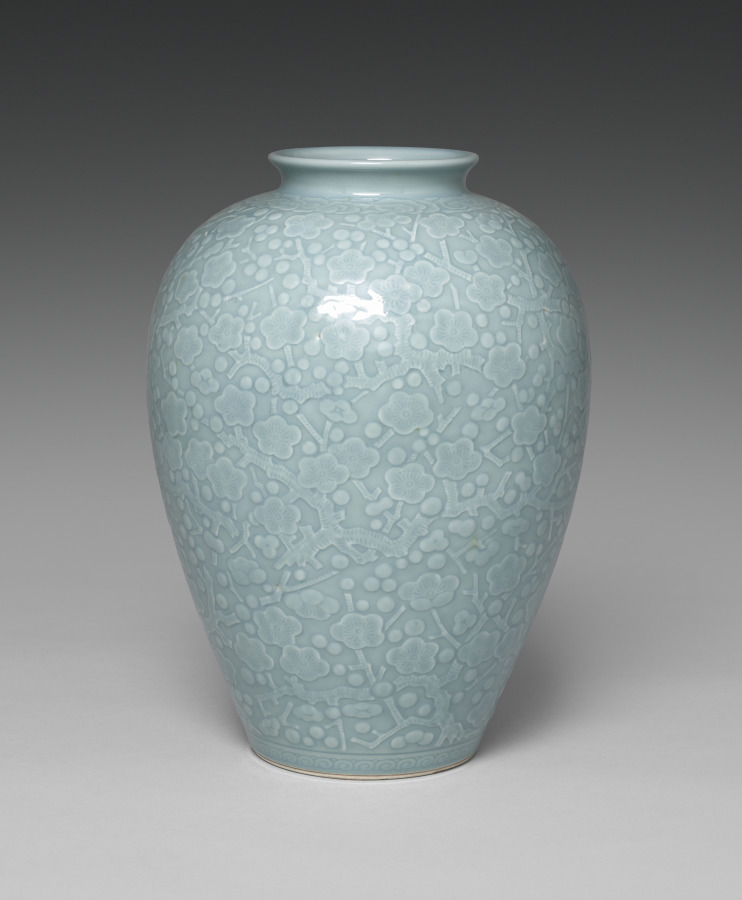
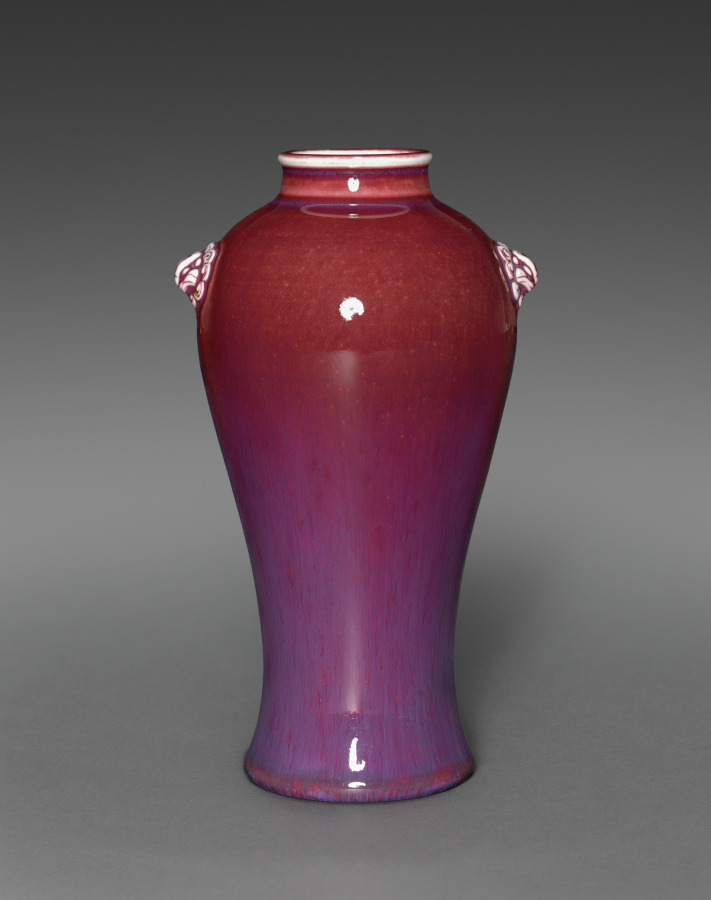
Many of the vases created by Yohei III and IV were made with reference to and in emulation of Chinese ceramics in both form and glazing. The Seifu studio was inspired by later Chinese copies of two other archaic vessel types, the hu (Japanese ko) and guan (Japanese kan). In simple terms, in their original contexts, the hu and guan were storage jars that also appeared in ritual contexts. This hefty guan-shaped vase by Yohei IV has a floral scrolling pattern known in Japanese as karakusa, or “Chinese grasses.” The flowers are generally identified as lotus or peony. This flower vase might alternately be categorized as having the form of what is called a shukaiko in Japan, or a large vessel for holding wine. Shukaiko were created as early as the latter part of the Kamakura period after Yuan dynasty examples. According to the box lid, the vase is a kanpakuji, "bright-jewel white porcelain," work.
Descripción original del museo, en inglés. Licencia: CC0
Guarda la imagen y la información del museo en este dispositivo para leerlas sin conexión.
Pregunta con tus propias palabras. La respuesta sale de lo que el museo ha escrito sobre la obra, y lo dice cuando ahí no está.
Imagen: Cleveland Museum of Art, CC0