Un momento, por favor
Un momento, por favor
Sultan 'Ali al-Mashadi · calligraphy: c. 1475–1500; border: c. 1550 · Museo de Arte de Cleveland
Una mirada más cercana que conecta los detalles principales con el contexto de la obra.
Buscando esta guía.
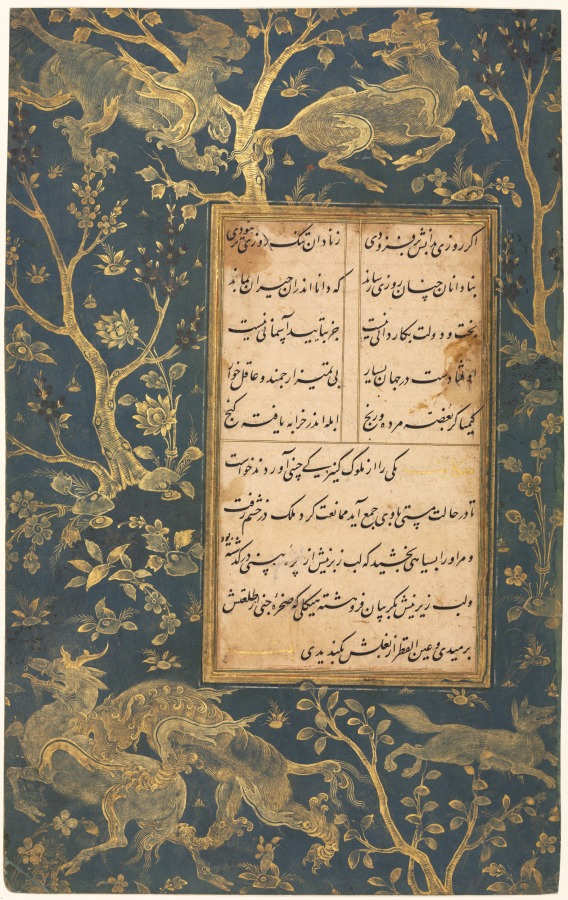
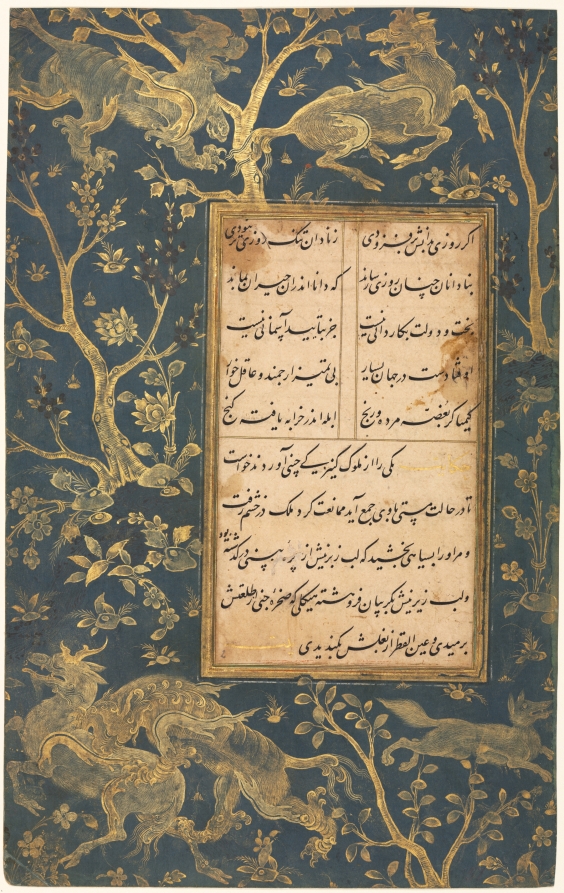
The border scene is set in a magical forest bursting with blossoms. At the top, a winged lion chases a winged deer, who is caught in the bottom border. The imagery of a lion biting down on its prey dates from the Achaemenid period in Iran (550–330 BCE) and references the valor of the king. A fox scurries off to the right. The verse is written in the Persian language using nastaliq script. Sultan ‘Ali Mashadi was widely renowned for perfecting the nastaliq script, and his calligraphy was a model for many followers across the Islamic world. Meaning “rose bush” in Persian, the Gulistan is a collection of anecdotes in both verse and prose.
Descripción original del museo, en inglés. Licencia: CC0
Guarda la imagen y la información del museo en este dispositivo para leerlas sin conexión.
Pregunta con tus propias palabras. La respuesta sale de lo que el museo ha escrito sobre la obra, y lo dice cuando ahí no está.
Imagen: Cleveland Museum of Art, CC0
 Illuminated folio (recto) from a Gulistan (Rose Garden) of Sa'di (c. 1213–1291)Sultan 'Ali al-Mashadi · calligraphy: c. 1475–1500; border: c. 1550
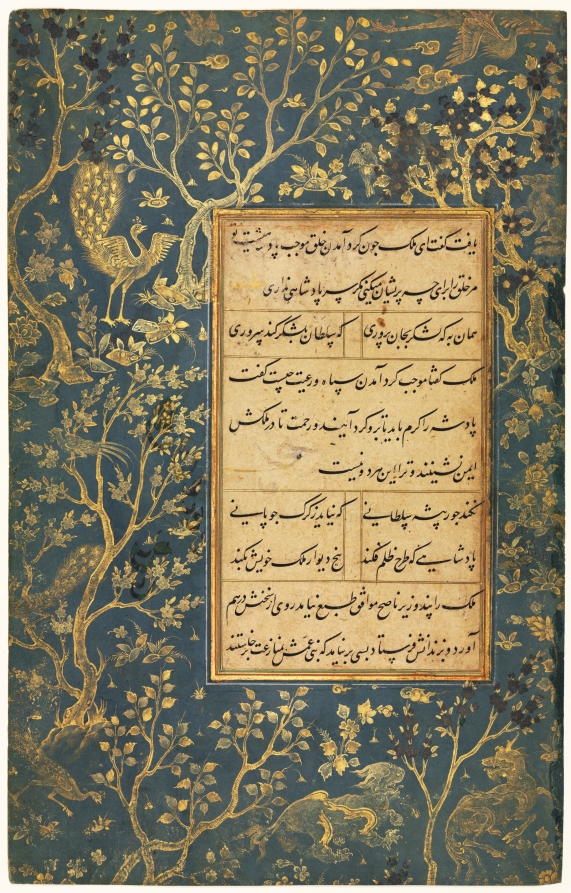 Illuminated Folio (recto) from a Gulistan (Rose Garden) of Sa'di (c. 1213–1291)Sultan 'Ali al-Mashadi · c. 1475–1500; border: c. 1550
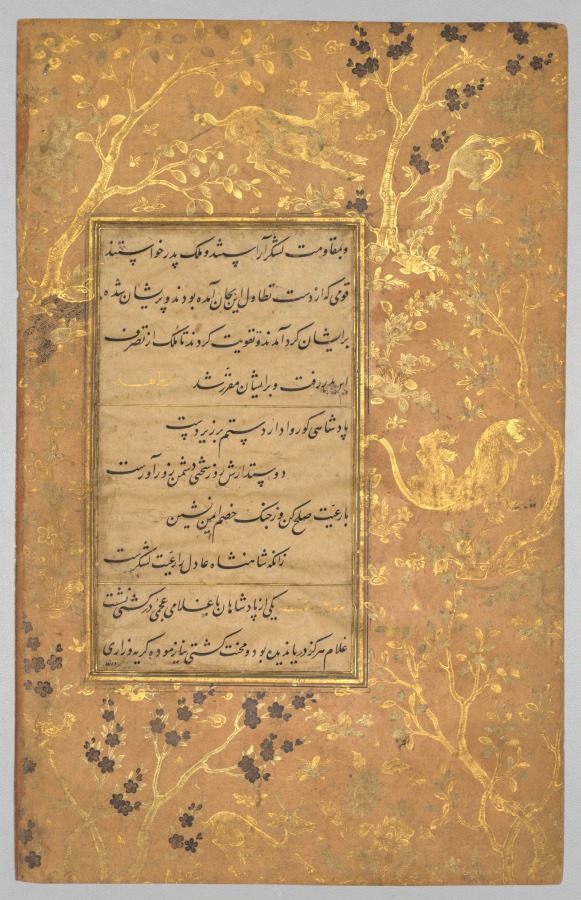 Illuminated folio from a Gulistan (Rose Garden) of Sa'di (c. 1213–1291)Sultan 'Ali al-Mashadi · about 1475–1500; border: about 1550