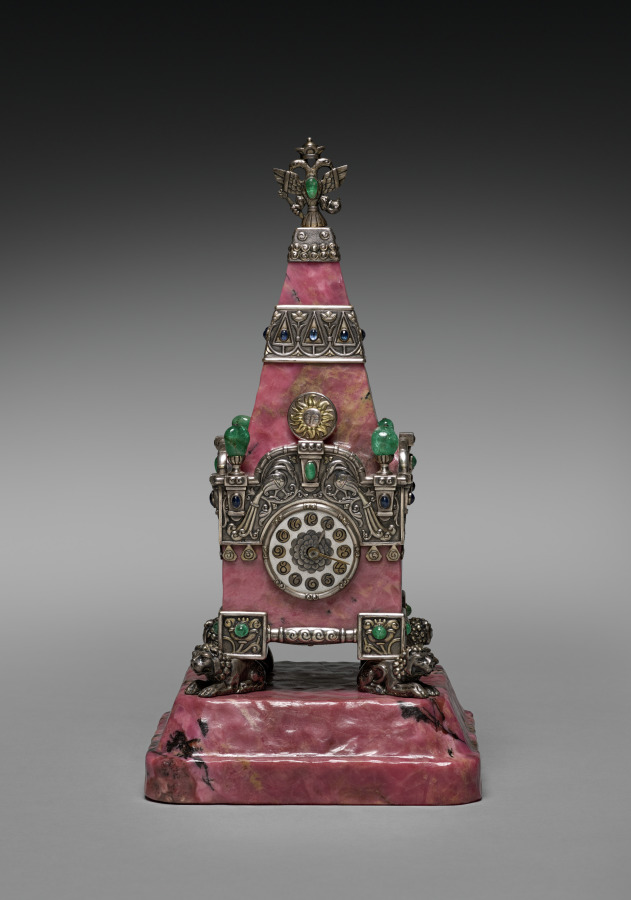
Kremlin Tower Clock
House of Fabergé · c. 1913 · Museo de Arte de Cleveland
¿Qué te ha parecido?
Guía
Ajustar la guíaPrincipiante · Media
Nadie ha escuchado todavía esta guía. Prepararla lleva unos veinte segundos y, después, cualquiera podrá escucharla al momento.
Texto del museo
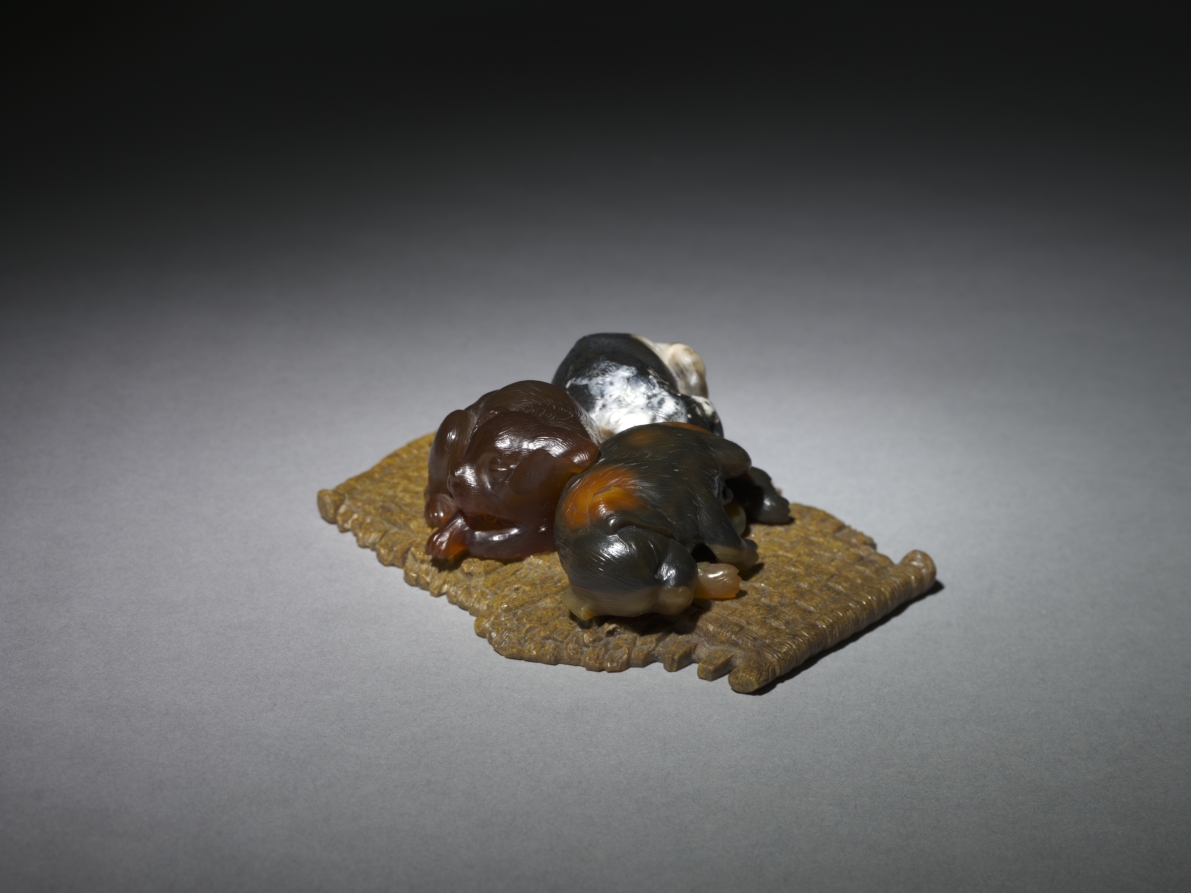
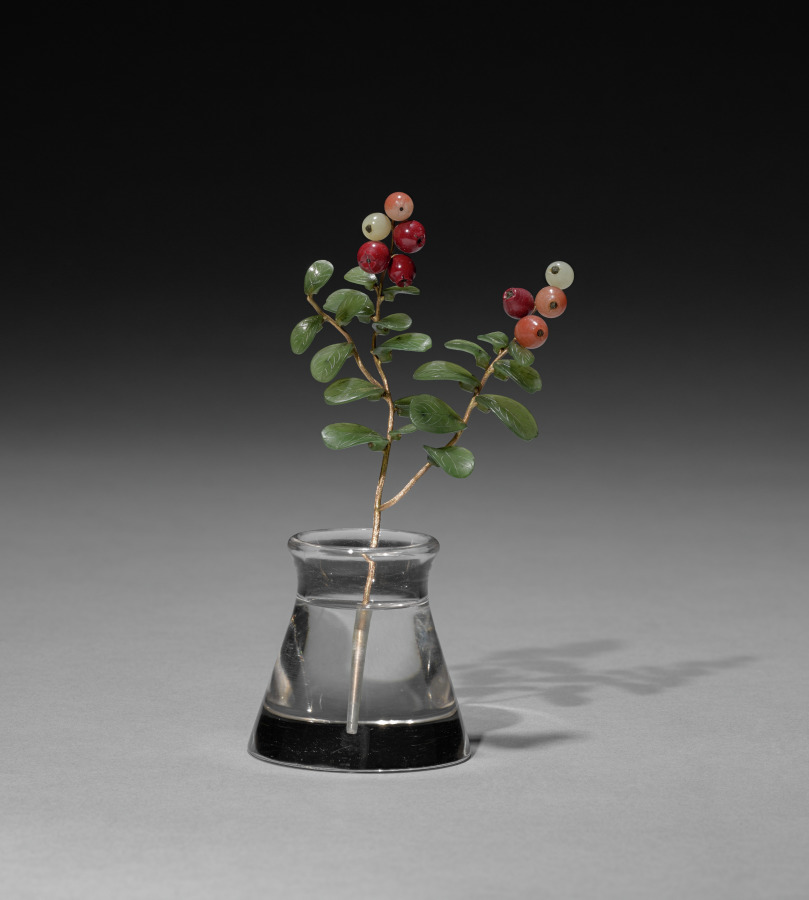
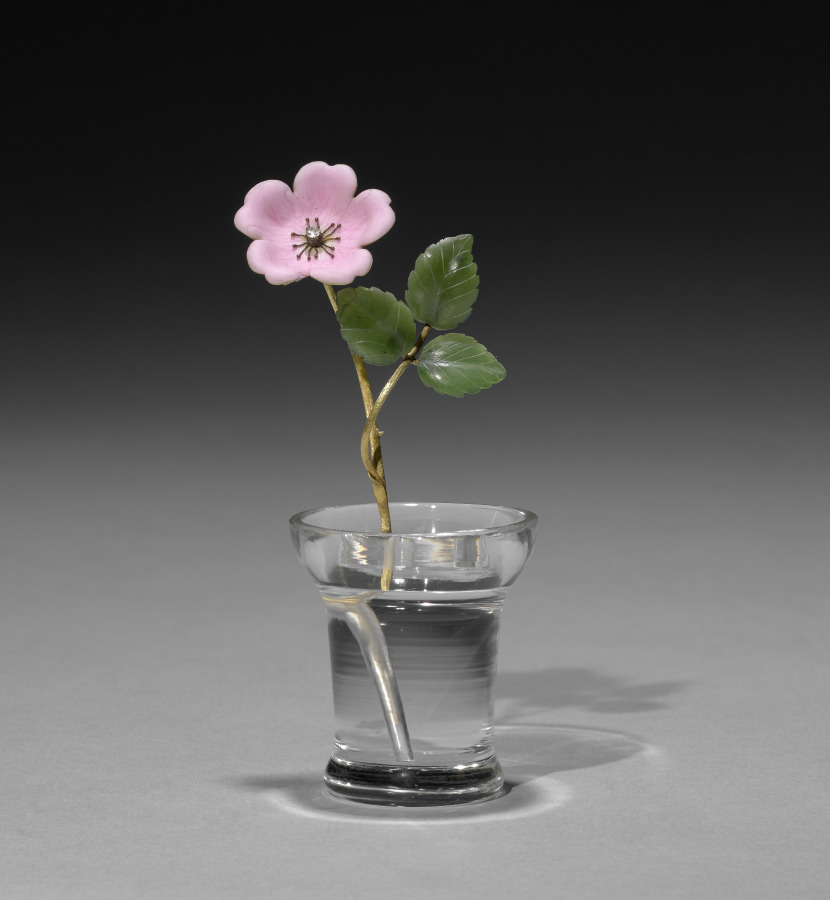
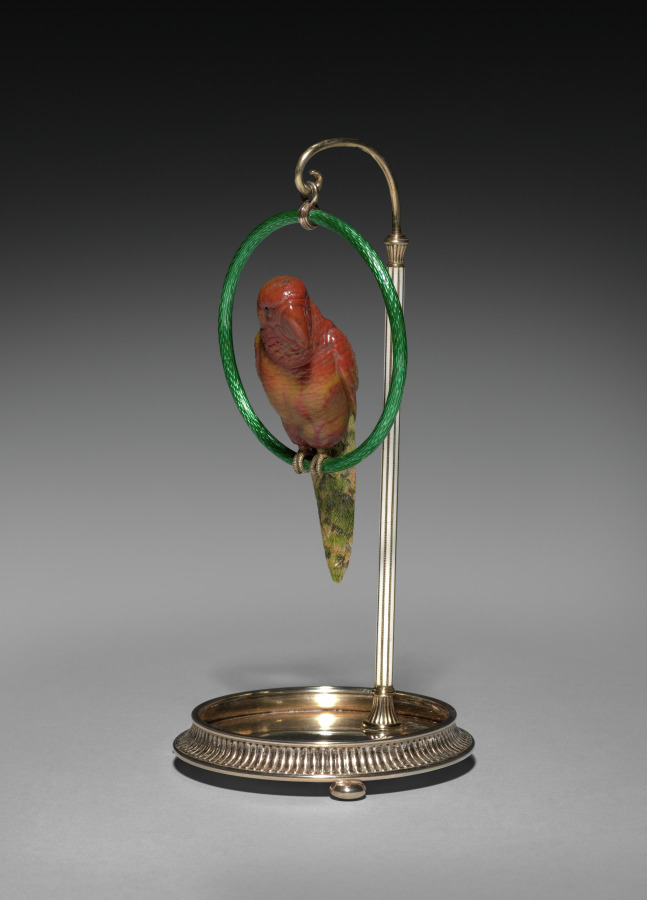
The use of Russian hardstones in creating precious objects became a hallmark of design from the House of Fabergé. Easily carved, these minerals were sourced largely from the western region surrounding the Ural Mountains. Fabergé's workmasters used colorful stones such as agate, nephrite (jade), lapis lazuli, rock crystal, and rhodonite, seen here in this elaborate table or mantel clock, to create all manner of luxurious accessories. Bright pink rhodonite was among the rarest, and consequently most expensive, specimens used by the House of Fabergé. This clock resembles the Taynitskaya Tower, the middle tower on the south side of the Kremlin. The House of Fabergé created this work to commemorate the 300th anniversary of the Romanov dynasty, representing Fabergé's ability to balance the functionality of objects with intricate decorative design. The Kremlin tower, which this clock resembles, has a secret well and an underground tunnel that leads to the Moscow River.
Pregunta sobre esta obra
Pregunta con tus propias palabras. La respuesta sale de lo que el museo ha escrito sobre la obra, y lo dice cuando ahí no está.
Detalles
- Autor
- House of Fabergé (Russian, 1842–1918)
- Fecha
- c. 1913
- Técnica
- rhodonite, silver, enamel, emeralds, sapphires
- Dimensiones
- Overall: 29 x 14.6 cm (11 7/16 x 5 3/4 in.)
- Lugar de origen
- Russia
- Colección
- Museo de Arte de Cleveland, Cleveland · En sala · 211 Fabergé
- Procedencia
- The India Early Minshall Collection
Imagen: Cleveland Museum of Art, CC0