Un momento, por favor
Un momento, por favor
Ancient Greek · 410-400 BCE · Instituto de Arte de Chicago
Una mirada más cercana que conecta los detalles principales con el contexto de la obra.
Buscando esta guía.
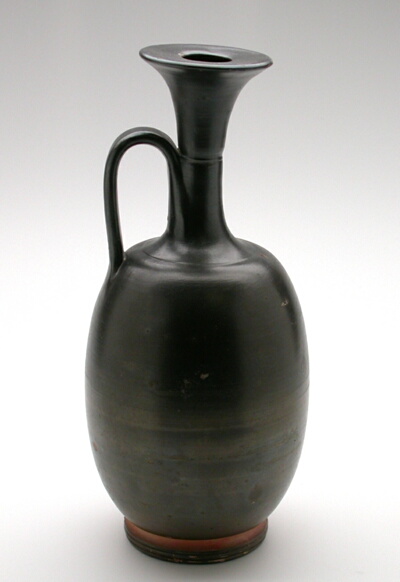
Athenian cemeteries housed a variety of monuments and offerings to the dead. Examples include the marble tombstones and terracotta vessels, like this object. This vase, called a lekythos, held oil. From the middle until the end of the fifth century BC, they were usually decorated in a distinctive technique known as white ground, so called after the light slip coating on the body and shoulder of the vase. Atop this, figures were usually drawn in outline and then painted in rich colors, many of which have since faded. Since most of these bottles were made for burial with the dead or to be left at their graves, the scenes on their surfaces typically represent tombs, visitors to tombs, and farewell scenes. A brown-haired, bearded man, his upper body covered with a blue garment, sits before a tomb. Behind him, a solemn youth is wrapped in a dark-orange himation, or mantle, and leans on a walking stick as he proffers a crested helmet to the man with his right hand. A scabbard is suspended from his left hand. Standing on the far side is the partially preserved figure of a red-haired woman wearing a chiton, or floor-length garment, that is orange-brown from her bust down with remains of vertical blue lines on the skirt. She holds a basket on her left shoulder.
Descripción original del museo, en inglés. Licencia: CC BY 4.0
Guarda la imagen y la información del museo en este dispositivo para leerlas sin conexión.
Pregunta con tus propias palabras. La respuesta sale de lo que el museo ha escrito sobre la obra, y lo dice cuando ahí no está.
Imagen: Art Institute of Chicago, CC0