Un momento, por favor
Un momento, por favor
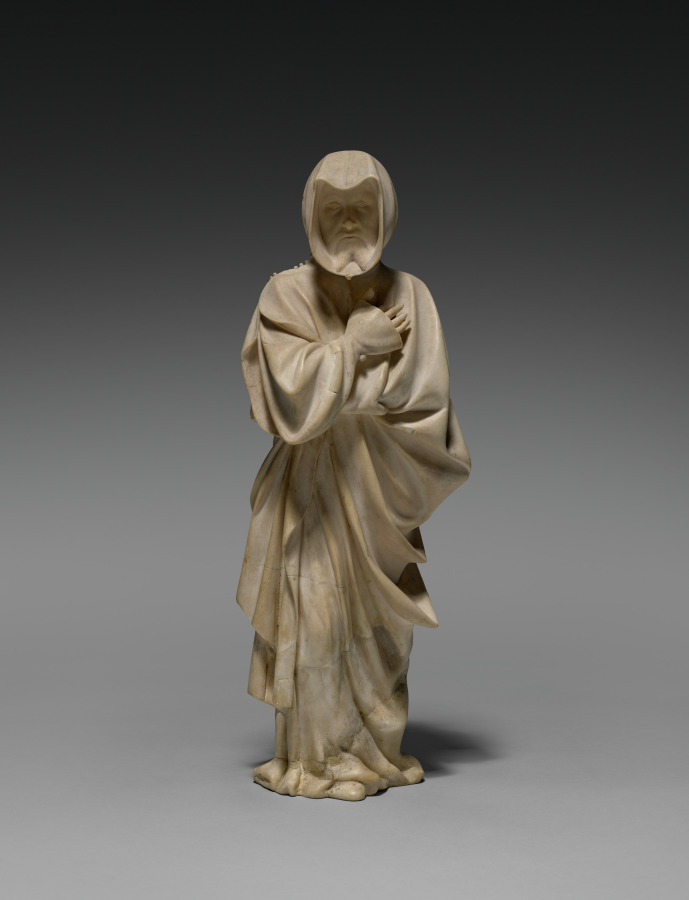
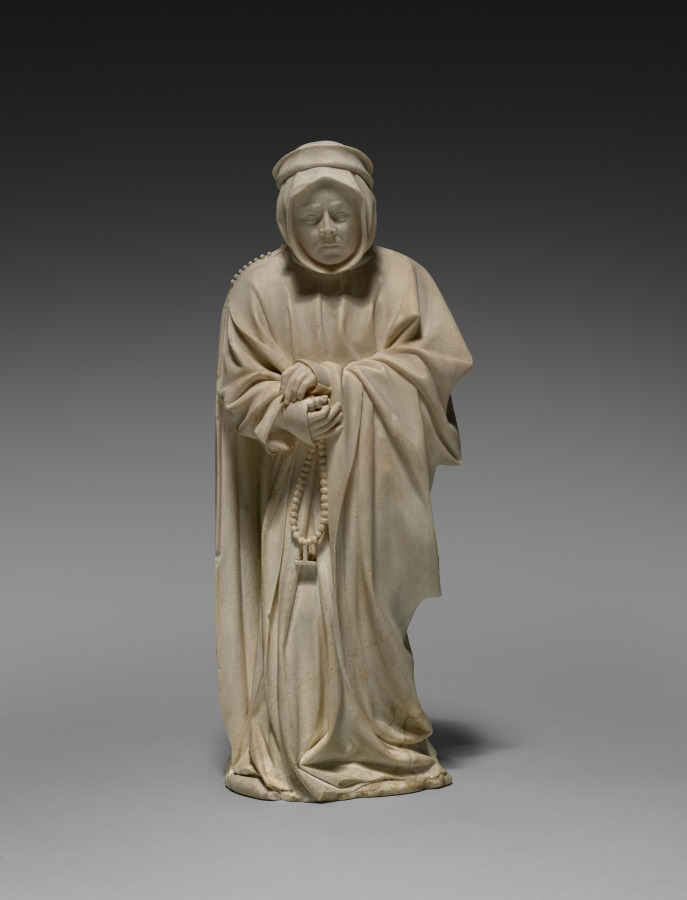
Claus de Werve · 1404–10 · Museo de Arte de Cleveland
Una mirada más cercana que conecta los detalles principales con el contexto de la obra.
Buscando esta guía.
This figure comes from the tomb of Duke Philip the Bold from the church of Champmol near Dijon (Burgundy, France). Philip, who founded the monastery and designated it as his burial place, hired the best artists, many of whom came from the Netherlands. While the commission was given in 1381, the work was not completed until 1410, six years after the duke’s death. This mourner is unusual for the time because it is not carved as a static low relief on the pedestal of the tomb but interact with the viewers and their fellow procession members. The lifelike quality of the figure is due in large part to the alabaster. Its softness allowed artists to carve details into the material, and the transparent, milky white stone could also be polished to a high gloss. The use of alabaster in the late Middle Ages began in the 1300s with court art in the circles of French kings, especially in the field of funerary sculpture.
Descripción original del museo, en inglés. Licencia: CC0
Guarda la imagen y la información del museo en este dispositivo para leerlas sin conexión.
Pregunta con tus propias palabras. La respuesta sale de lo que el museo ha escrito sobre la obra, y lo dice cuando ahí no está.
Imagen: Cleveland Museum of Art, CC0