Un momento, por favor
Un momento, por favor
Chelsea Porcelain Factory · c. 1760 · Museo de Arte de Cleveland
Una mirada más cercana que conecta los detalles principales con el contexto de la obra.
Buscando esta guía.
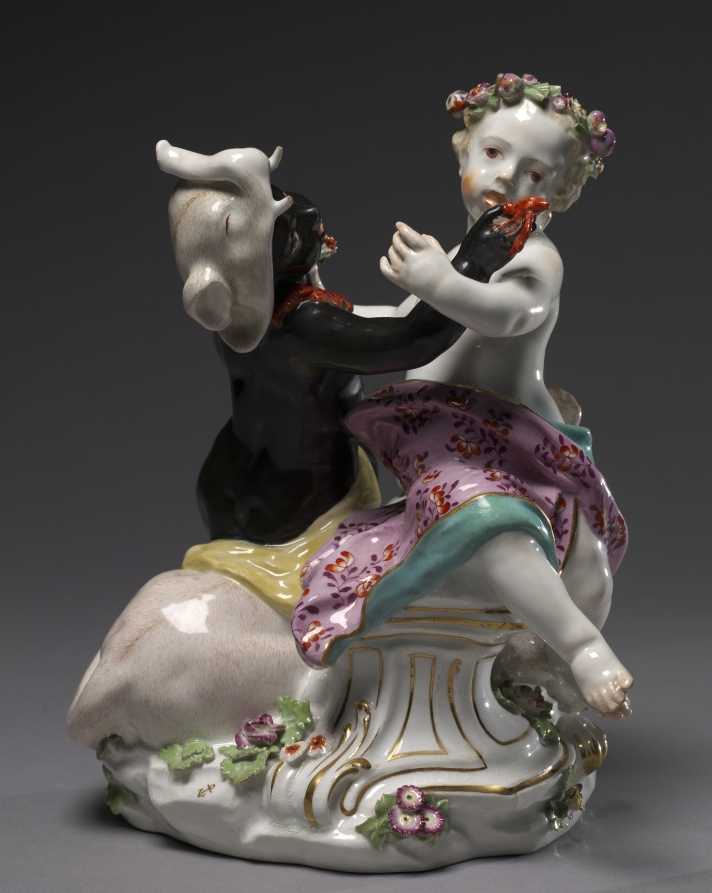
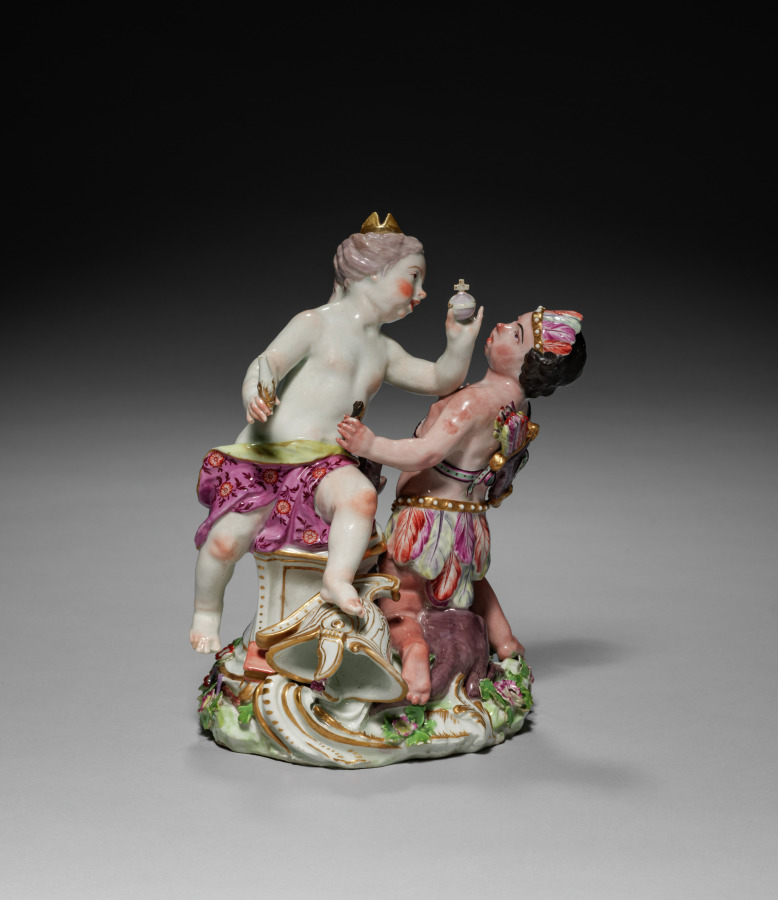
Often collected by wealthy British merchants who were beneficiaries of colonial expansion, figural groups were frequently part of elaborate table decorations meant to signify wealth and global prominence. In one pair, Europe is seen holding an orb and wearing a crown as queen of the world, suggesting Europe’s supremacy over the other continents. She is entangled with America, who is wearing feathers with a bow and arrow at her feet. Africa, who wears an elephant headdress and holds a scorpion in one hand, wrestles with Asia, who is surrounded by perfumes and native fruits. Today we recognize these depictions of America, Africa, and Asia as racial stereotypes, revealing a purely imagined understanding of other cultures and continents at the time. Figural representations of the four continents date back to the 1500s, but such imagery became even more popular in the 1700s as European empires expanded.
Descripción original del museo, en inglés. Licencia: CC0
Guarda la imagen y la información del museo en este dispositivo para leerlas sin conexión.
Pregunta con tus propias palabras. La respuesta sale de lo que el museo ha escrito sobre la obra, y lo dice cuando ahí no está.
Imagen: Cleveland Museum of Art, CC0