Paris under Snow
Guía
Ajustar la guíaPrincipiante · Media
Buscando esta guía.
Texto del museo
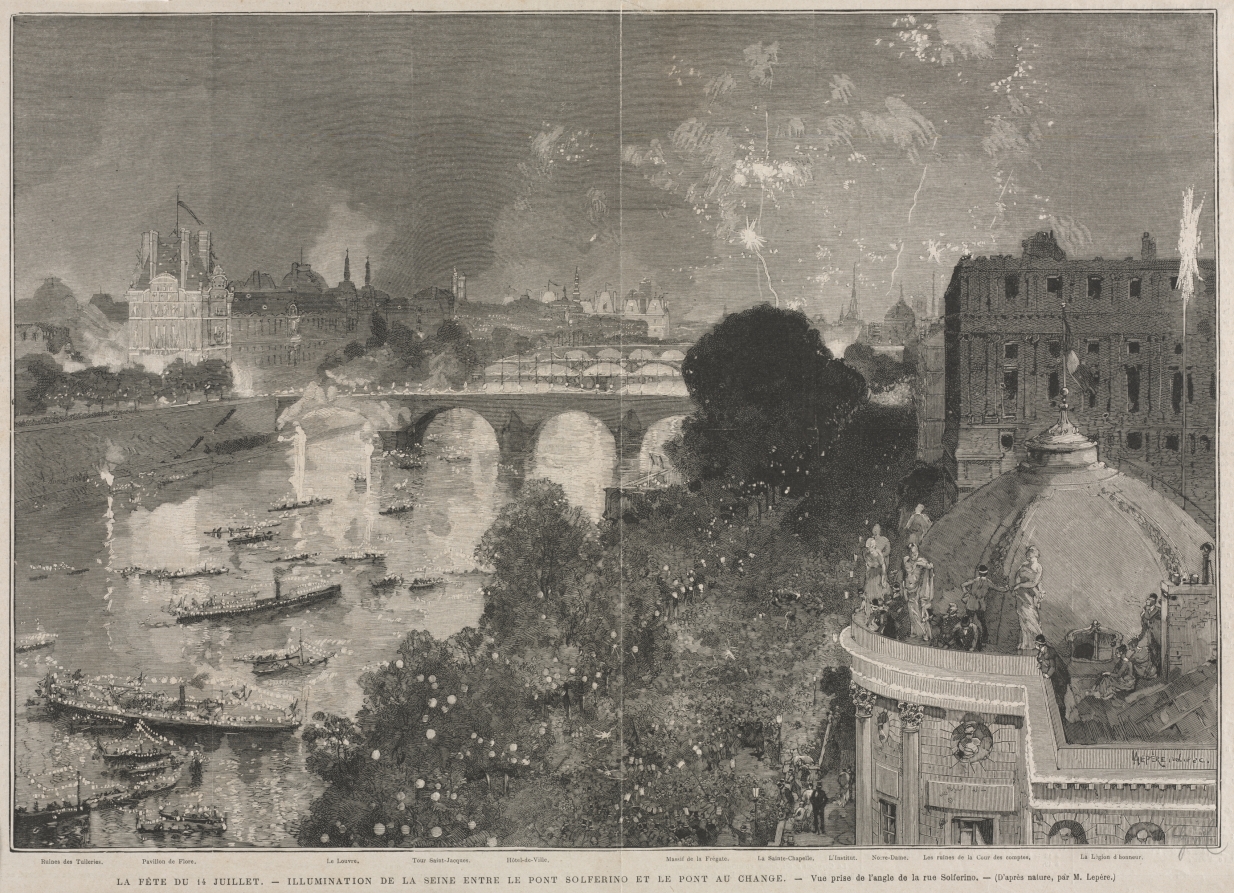
Wood engraving was perfected about 1770 in England by Thomas Bewick (1753–1828). Since the end grain of a hard wood is used, the block can be engraved with a sharp instrument called a burin, making closely set lines possible and producing a great range of textures and tones. The surface of the block is inked and printed so that the engraved lines appear as white areas. The strength of the block meant that numerous impressions could be printed. Wood engraving thus became a principal method for illustrating books and newspapers in the 19th century. Lepère developed an extraordinary mastery of wood engraving, which he used to effectively describe a snowy view of central Paris. The confetti-like snowflakes silhouetted against the dark river, and the overall blurring effect caused by the snowfall in the distance, are a tour de force.
Descripción original del museo, en inglés. Licencia: CC0
¿Qué te ha parecido?
Guarda la imagen y la información del museo en este dispositivo para leerlas sin conexión.
Pregunta sobre esta obra
Pregunta con tus propias palabras. La respuesta sale de lo que el museo ha escrito sobre la obra, y lo dice cuando ahí no está.
Detalles
- Autor
- Auguste Louis Lepère (French, 1849–1918)
- Fecha
- 1890
- Técnica
- wood engraving
- Dimensiones
- Border: 30.2 x 45.4 cm (11 7/8 x 17 7/8 in.)
- Lugar de origen
- France
- Colección
- Museo de Arte de Cleveland, Cleveland · No expuesta
- Procedencia
- Gift of Mrs. Malcolm L. McBride
Imagen: Cleveland Museum of Art, CC0