Un momento, por favor
Un momento, por favor
Nathaniel Plimer · c. 1795 · Museo de Arte de Cleveland
Una mirada más cercana que conecta los detalles principales con el contexto de la obra.
Buscando esta guía.
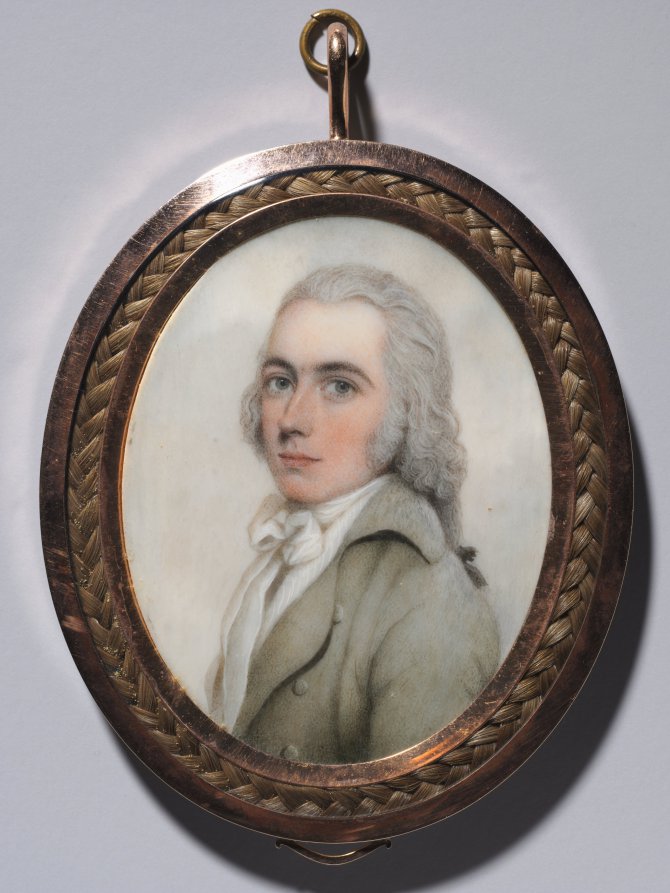
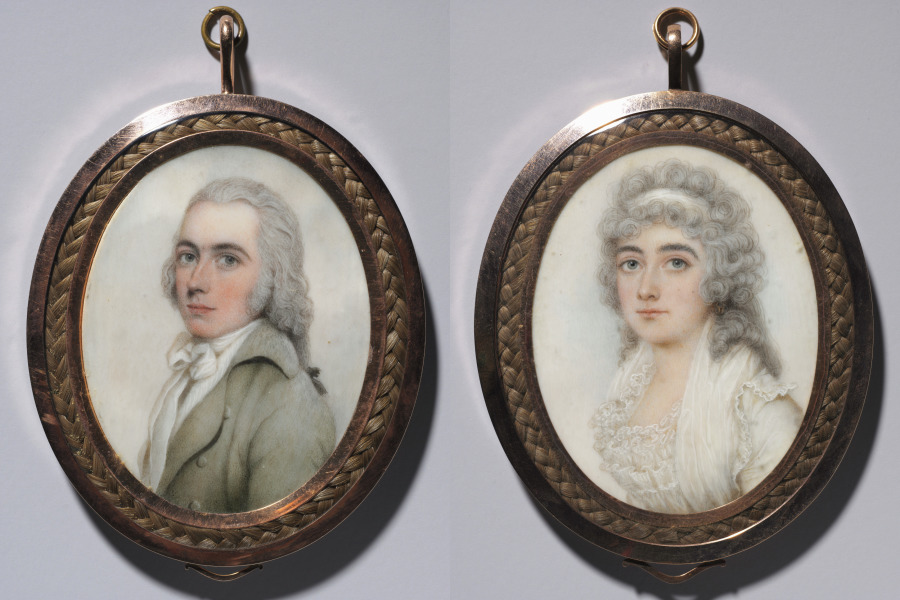
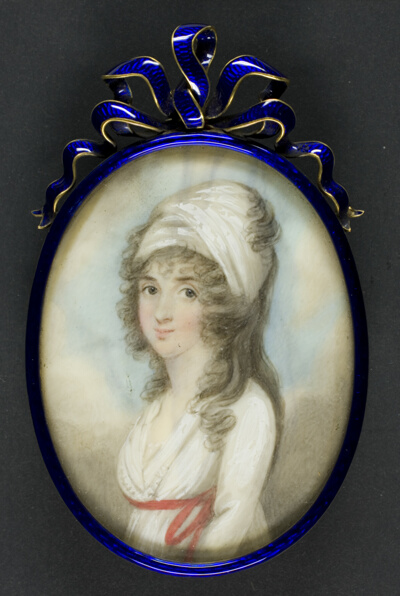
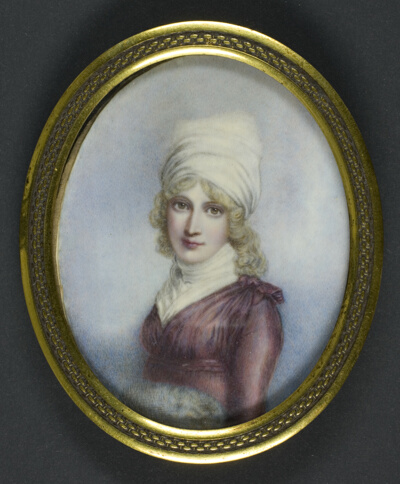
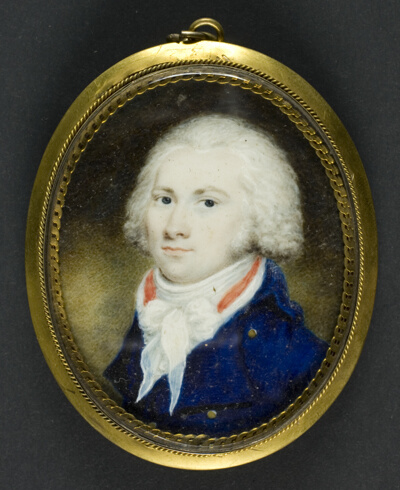
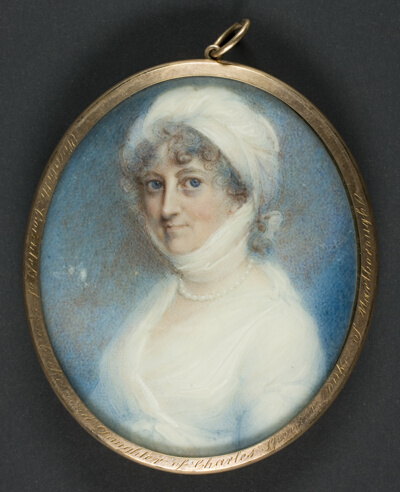
The sitter wears a wide, white ribbon bandeau in her powdered, curly hair, which falls to her shoulders. She has blue eyes and dark brows; a gold earring is visible in her left ear. The bust line of her white cotton gown is trimmed with many layers of ruffles, and she wears a fichu around her neck and shoulders. The background is very pale, with ivory ground visible, but faintly light blue close to the head. This miniature is probably the pendant to 1941.562.1. The female portrait is slightly larger than the male, and both date from c. 1795, the date at which a British woman would have been wearing this type of ruffled muslin gown and a bandeau in her long hair. It is impossible to know for certain if these unidentified sitters were married, but the fact that they are housed in identical frames, which date from the same period as the paintings, suggests that they are a pair. Although husbands and wives often commissioned portraits in miniature simultaneously, the pairs were frequently divided over time through inheritance, loss, breakage, or independent sale. Both miniatures are housed in identical, wonderfully elaborate period gold frames with braided hairwork. The blue glass back of each has a plait of brown hair in its center. The hair incorporated into the framing of each miniature is approximately the same color, suggesting either that the couple had the same color hair or that the same hair was used in each frame. Traditionally it was the hair of the sitter that was mounted with his or her miniature portrait. They are both unsigned, as was typical for Nathaniel Plimer’s works during this period This miniature has a companion piece, 1941.562.1, although the relationship to the sitters is unknown.
Descripción original del museo, en inglés. Licencia: CC0
Guarda la imagen y la información del museo en este dispositivo para leerlas sin conexión.
Pregunta con tus propias palabras. La respuesta sale de lo que el museo ha escrito sobre la obra, y lo dice cuando ahí no está.
Imagen: Cleveland Museum of Art, CC0