
Un momento, por favor
Un momento, por favor
Una mirada más cercana que conecta los detalles principales con el contexto de la obra.
Buscando esta guía.
Part of a large Italian artist family recently settled in Munich, Domenico Quaglio was active in Germany for his entire career. Like his father, he initially made his living as a theater scenery painter for the Munich court, and he was even named court painter for architectural scenery by age 21. Leaving Munich to make topographical paintings of sites throughout the country, he was also an adherent of lithography, a relatively new printmaking technique invented in Munich in 1798. Quaglio traveled throughout Central Europe, recording images of churches and castles as prints. Amidst the ruins in this scene are the tombstones of Saint Genevieve and her husband, Siegfried, Count Palatine of the Rhine. Genevieve was wrongly accused of adultery and forced to live in a forest for several years. She survived through her faith until her husband happened across her while hunting. After she convinced Siegfried of her innocence, she returned to Andernach. She had the Church of Our Lady built in the forest where she had stayed in order to show her gratitude to God for keeping her safe.
Descripción original del museo, en inglés. Licencia: CC BY 4.0
Guarda la imagen y la información del museo en este dispositivo para leerlas sin conexión.
Pregunta con tus propias palabras. La respuesta sale de lo que el museo ha escrito sobre la obra, y lo dice cuando ahí no está.
Imagen: Art Institute of Chicago, CC0
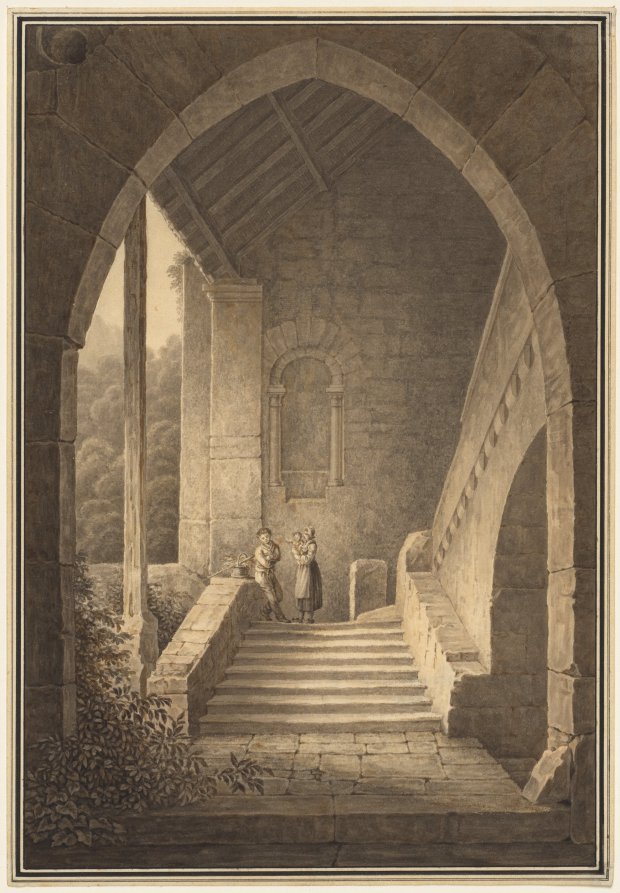 Outer Staircase of a Gothic RuinDomenico Quaglio · 1830
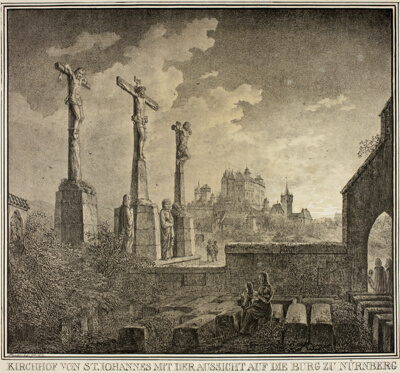 Saint John's Cemetery with a View of the City of Nuremberg, from Collection of Memorable Medieval Buildings in GermanyDomenico Quaglio · 1819
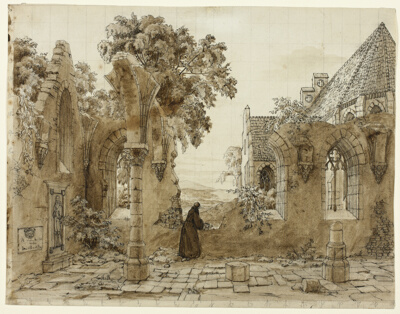 Monk in the Ruins of a MonasteryDomenico Quaglio · 1820/1830
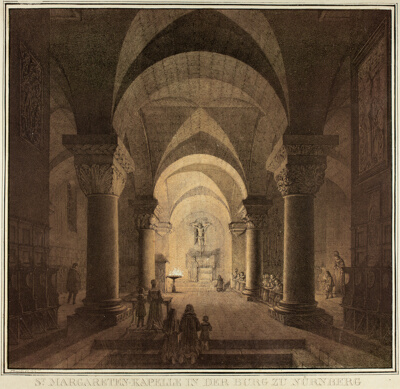 Chapel of Saint Margaret in the City of Nuremberg, from Collection of Memorable Medieval Buildings in GermanyDomenico Quaglio · 1819
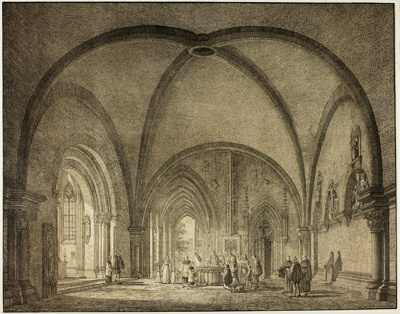 Baptismal Hall and Cloisters in the Cathedral at Mainz, from Collection of Memorable Medieval Buildings in GermanyDomenico Quaglio · 1823
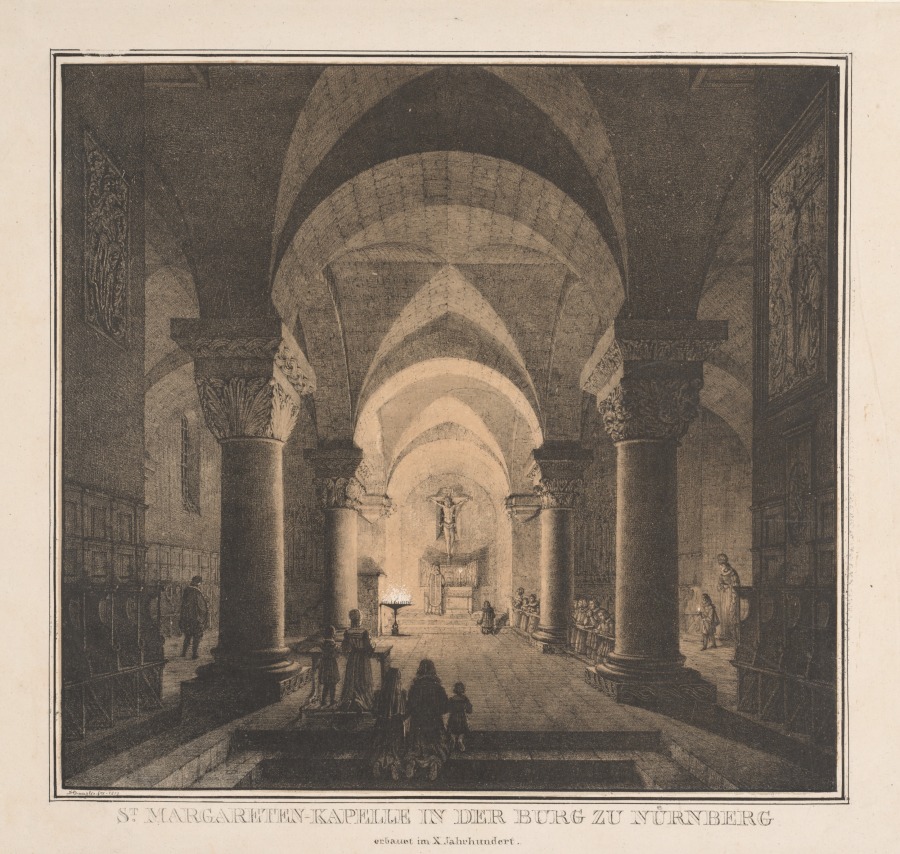 Notable Buildings of the Middle Ages in Germany: St. Margaret's Chapel in the Imperial Castle at NurembergDomenico Quaglio · 1819
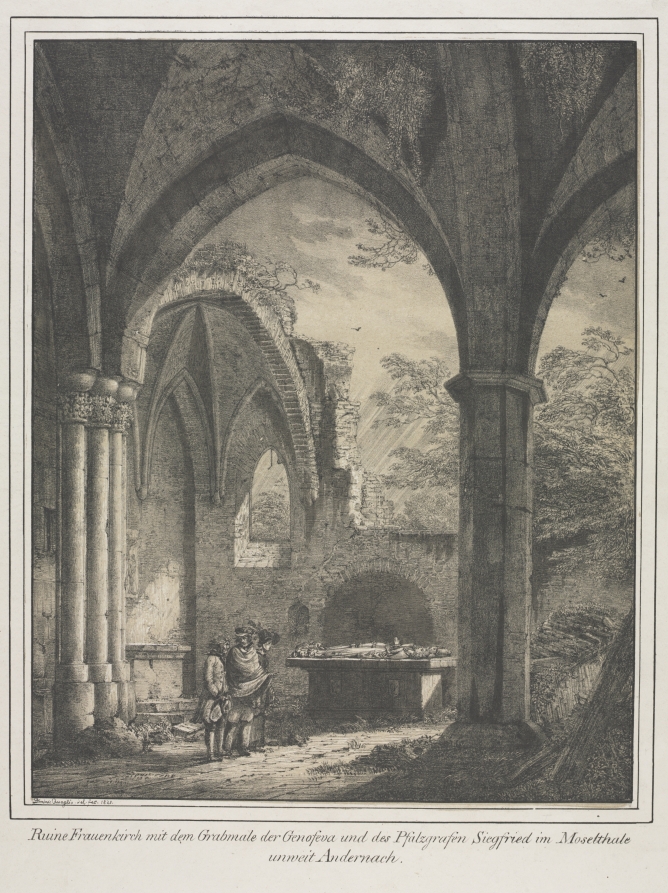 Notable Buildings of the Middle Ages in Germany: Ruins of the Church of the Virgin with the Tomb of Genevieve and Siegfried, Count Palatine of the Rhine, in the Moselle Valley near AndernackDomenico Quaglio · 1821
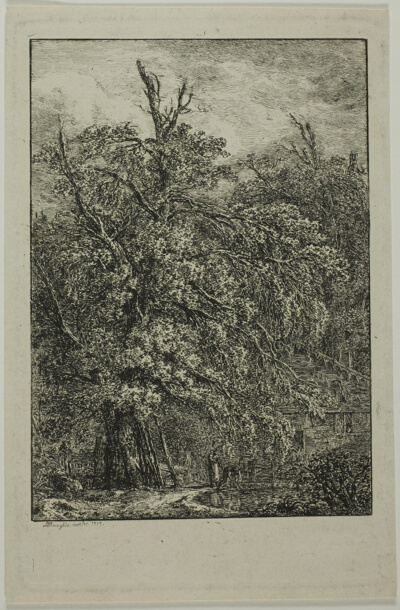 Great TreeDomenico Quaglio · 1809