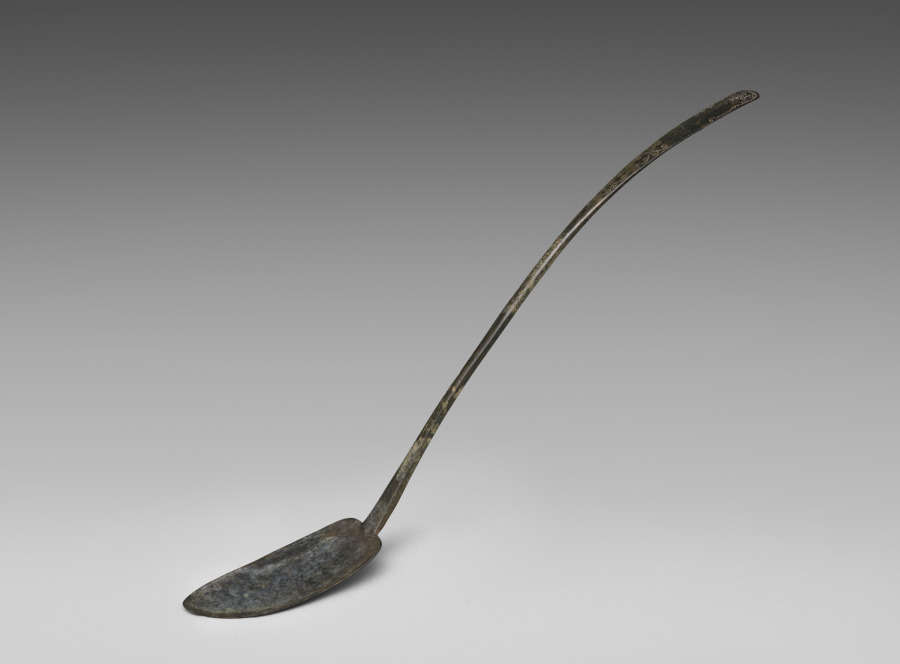
Spoon
Korea, Goryeo dynasty (918–1392) · 918–1392 · Museo de Arte de Cleveland
¿Qué te ha parecido?
Guarda la imagen y la información del museo en este dispositivo para leerlas sin conexión.
Guía
Ajustar la guíaPrincipiante · Media
Nadie ha escuchado todavía esta guía. Prepararla lleva unos veinte segundos y, después, cualquiera podrá escucharla al momento.
Texto del museo
Celadons, spoons, seals, and bronze mirrors were the most common burial objects in tombs during the Goryeo period (918–1392). Furnishing tombs with an elaborate assemblage of objects was believed to honor and comfort the newly dead. Generally, Goryeo tombs were left untouched until the late 19th century. During the colonial period (1910–45), however, Japanese archaeologists hastily excavated the tombs located in Kaeseong, the former capital of the Goryeo period. Scholars recently have proposed that toward the end of the 14th century, Koreans enjoyed meat-based soups more than any other dishes, explaining why many more spoons than chopsticks were buried in tombs. Bronze spoons are the most common burial item. Scholars have proposed that toward the end of the 14th century, Koreans enjoyed meat-based soups more than any other dishes, explaining why spoons became common household items as well as burial goods.
Pregunta sobre esta obra
Pregunta con tus propias palabras. La respuesta sale de lo que el museo ha escrito sobre la obra, y lo dice cuando ahí no está.
Detalles
- Autor
- Korea, Goryeo dynasty (918–1392)
- Fecha
- 918–1392
- Técnica
- silver bronze
- Dimensiones
- Overall: 31.8 cm (12 1/2 in.)
- Lugar de origen
- Korea
- Colección
- Museo de Arte de Cleveland, Cleveland · En sala · 003 Special Exhibition Hall
- Procedencia
- General Income Fund
Imagen: Cleveland Museum of Art, CC0