
Un momento, por favor
Un momento, por favor
Raphael · c. 1507–8 · Museo de Arte de Cleveland
Una mirada más cercana que conecta los detalles principales con el contexto de la obra.
Buscando esta guía.
This drawing comes from Raphael’s "pink sketchbook," a set of ten roughly equal sheets, each portraying variations of a mother and child. Today, six of the drawings are at the Palais des Beaux-Arts, Lille; two are at the British Museum; one is in a private collection; and one is in Cleveland. The small format of the sheets would have enabled the artist to take the sketchbook with him as he traveled from Florence to Rome around 1508. Raphael used metalpoint on paper prepared with a pink surface, a technique popular in 15th- and early 16th-century Italy. The sheet includes one of Raphael's earliest studies after a nude female model, who is seated on the ground and wears a turban. The infant's head in the drawing was based on that of the Christ child in Leonardo da Vinci's Benois Madonna, then in a private collection in Florence, with changes—such as the uplifted eyes and open mouth—made by Raphael. The three sketches of a reclining infant at the bottom of the sheet are freely handled and improvisational, relaying the child's squirming, continuous movement with repeated contour lines. Raphael later used a similar pose for the Christ child in a painting of the Holy Family (The Madonna of the Veil, c. 1511, Musée Condé, Chantilly). The Renaissance drawing technique of metalpoint employed a stylus of soft metal that left a mark when applied to a specially prepared sheet coated with ground eggshell, powdered bone, or lead white. It required great skill, as it was impossible to erase or efface.
Descripción original del museo, en inglés. Licencia: CC0
Guarda la imagen y la información del museo en este dispositivo para leerlas sin conexión.
Pregunta con tus propias palabras. La respuesta sale de lo que el museo ha escrito sobre la obra, y lo dice cuando ahí no está.
Imagen: Cleveland Museum of Art, CC0
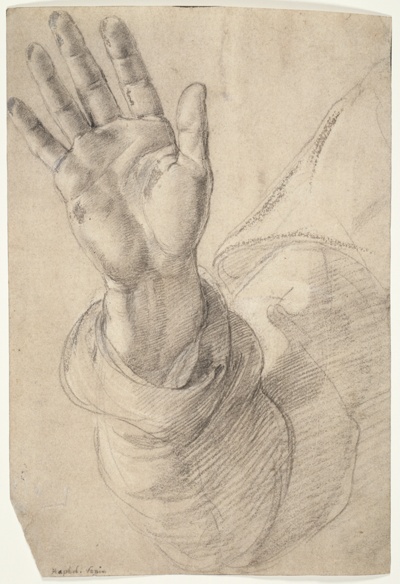 Upraised Right Hand, with Palm Facing Outward: Study for Saint PeterRaphael · 1518/20
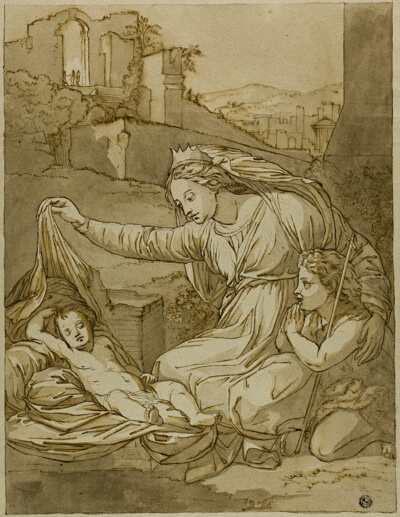 Virgin and Sleeping Christ Child with the Infant John the BaptistRaphael · 18th century
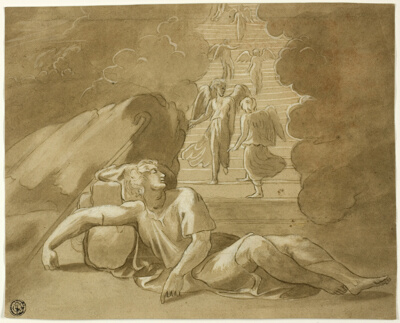 Jacob's DreamRaphael · n.d.
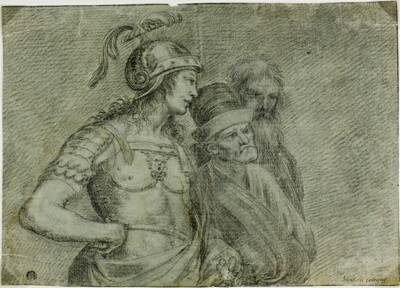 Alcibiades and Two PhilosophersRaphael · 18th century
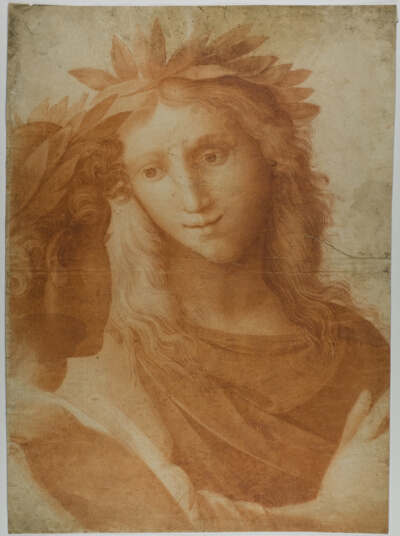 Man and Woman Crowned with LaurelRaphael · n.d.
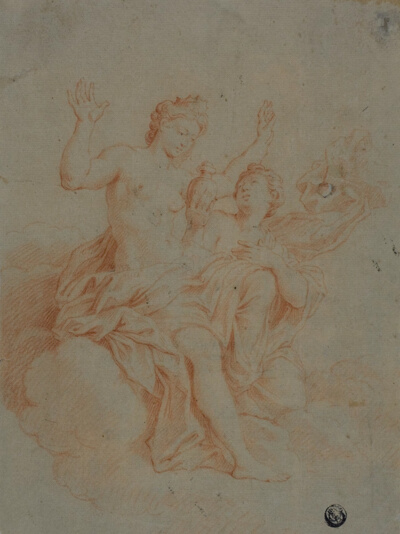 Psyche Presenting the Phial of Water to VenusRaphael · 18th century
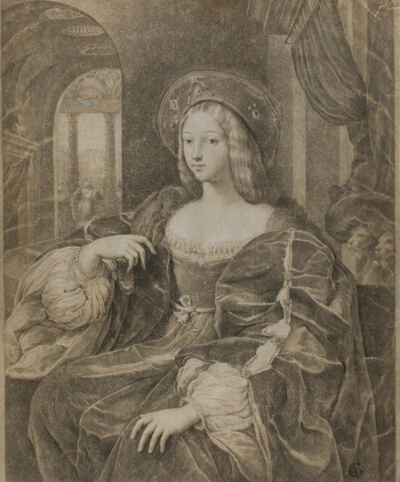 Joanna of AragonRaphael · n.d.
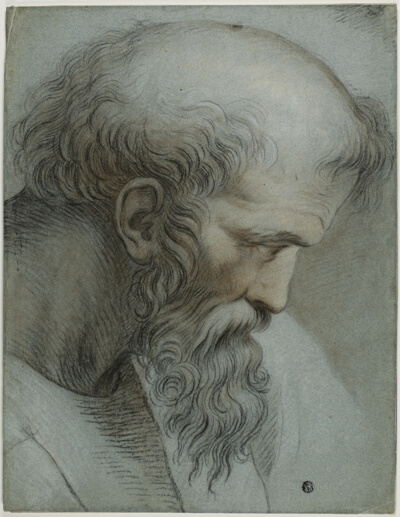 Head of PythagorasRaphael · 18th century