Un momento, por favor
Un momento, por favor
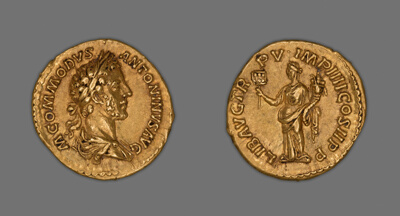
Ancient Roman · 297-281 BCE, issued by King Lysimachus of Thrace · Instituto de Arte de Chicago
Una mirada más cercana que conecta los detalles principales con el contexto de la obra.
Buscando esta guía.
Following the premature death of Alexander the Great in 323 BCE, his generals, friends, and heirs engaged in forty years of wars over his empire. Lysimachus (reigned 323–281 BCE), one of Alexander’s companions and bodyguards, used the king’s image on his own coins in order to cast himself in the role of successor and legitimize his claim to the kingdom of Thrace. Alexander, responsible for establishing the conventions of royal portraiture, is depicted in his preferred manner: youthful and clean-shaven, with long locks of hair rising above his forehead and eyes cast upward. Additionally, he is shown with horns curling around his ears. These “horns of Ammon” symbolize Alexander’s claim that he was the son of the Egyptian god Ammon—a claim reportedly confirmed by the oracle at the sanctuary of Zeus-Ammon at Siwa, Egypt. On the reverse of the coin, Lysimachus exerts his own royal autonomy by naming himself “king.” The goddesses Athena and Nike (Greek for “victory”) crown his name with laurels, which symbolized victory or honor. The lion on the shield at Athena’s side references Lysimachus’s famous exploit of killing a lion with his bare hands and reinforces his association with Alexander, who used the skin of the Nemean lion as a symbol of power and courage.
Descripción original del museo, en inglés. Licencia: CC BY 4.0
Guarda la imagen y la información del museo en este dispositivo para leerlas sin conexión.
Pregunta con tus propias palabras. La respuesta sale de lo que el museo ha escrito sobre la obra, y lo dice cuando ahí no está.
Imagen: Art Institute of Chicago, CC0