Un momento, por favor
Un momento, por favor
Claude Gillot · c. 1693–1715 · Museo de Arte de Cleveland
Una mirada más cercana que conecta los detalles principales con el contexto de la obra.
Buscando esta guía.
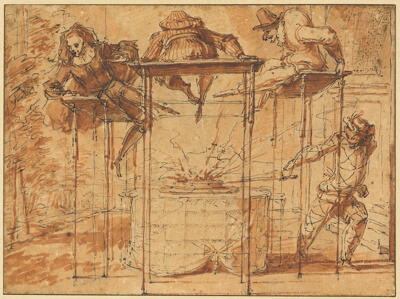
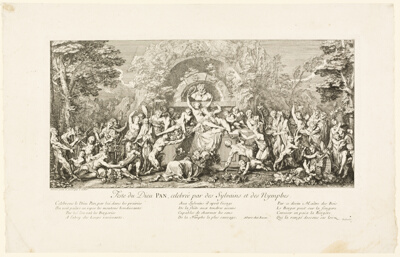
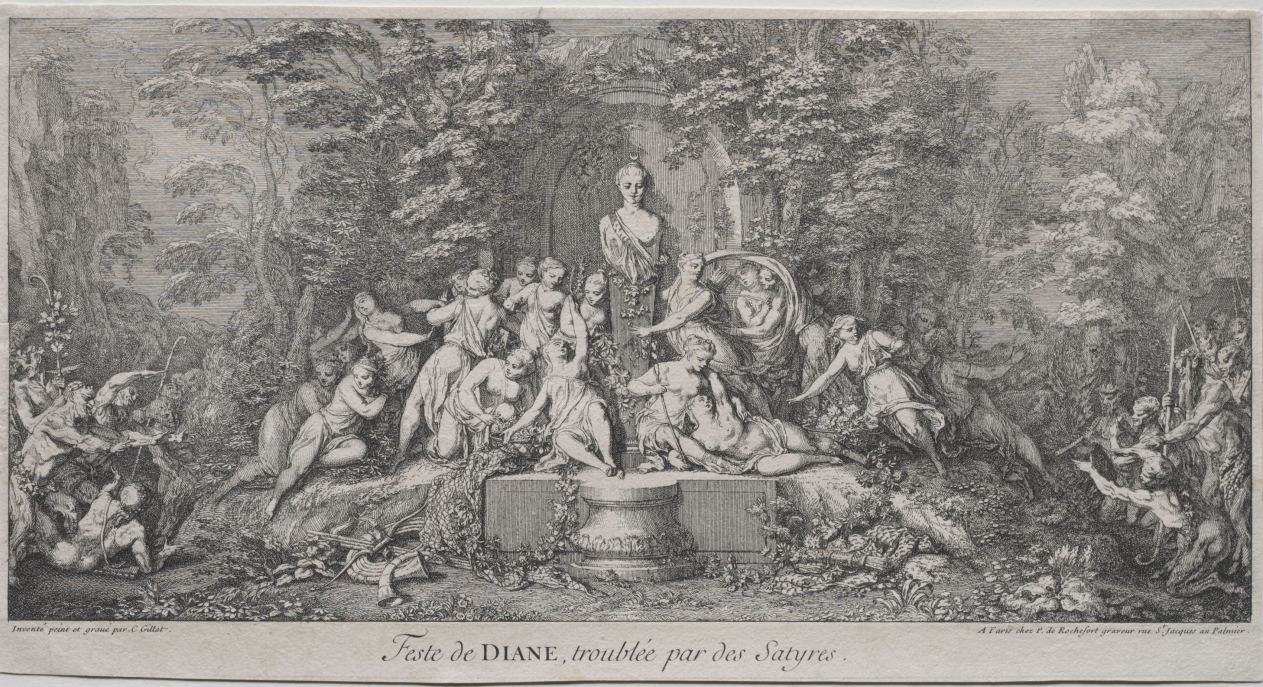
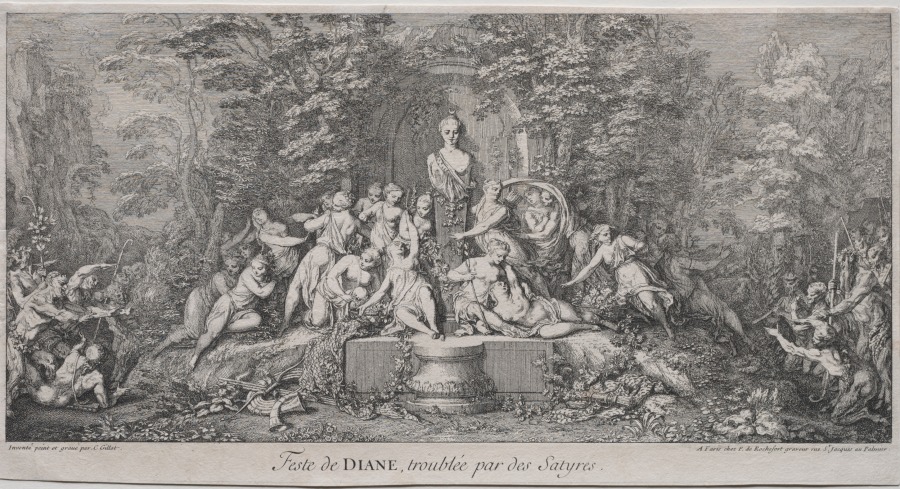
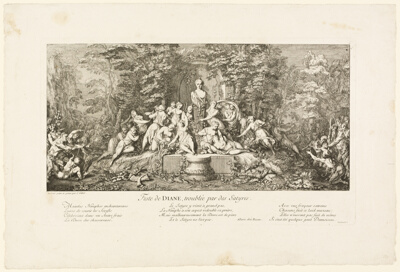
The principal source of inspiration for Claude Gillot, while working in Paris during the final years of the reign of Louis XIV (r. 1643–1715), was popular theater. His staged and precisely choreographed bacchanalia scene consists of music, dancing bacchants, drinking, and plentiful food, all symmetrically composed around a herm (a stone pillar topped by the head of Bacchus). According to written sources in Gillot’s time, a herm marked a site in ancient Greece where rites to Bacchus occurred. At the far right, a young satyr holds a thyrsus—a wand decorated with grape leaves and ivy—a bacchanalian symbol of fertility and hedonism. The lovely bacchantes (female followers of Bacchus) dancing throughout the composition appear in contrast with the beastly satyrs and fauns. The term bacchante could also be used to describe an intoxicated and libidinous woman in less mythological contexts.
Descripción original del museo, en inglés. Licencia: CC0
Guarda la imagen y la información del museo en este dispositivo para leerlas sin conexión.
Pregunta con tus propias palabras. La respuesta sale de lo que el museo ha escrito sobre la obra, y lo dice cuando ahí no está.
Imagen: Cleveland Museum of Art, CC0