잠시만 기다려 주세요
잠시만 기다려 주세요
작품의 주요 특징과 배경을 연결해 살펴봐요.
가이드를 찾고 있습니다.
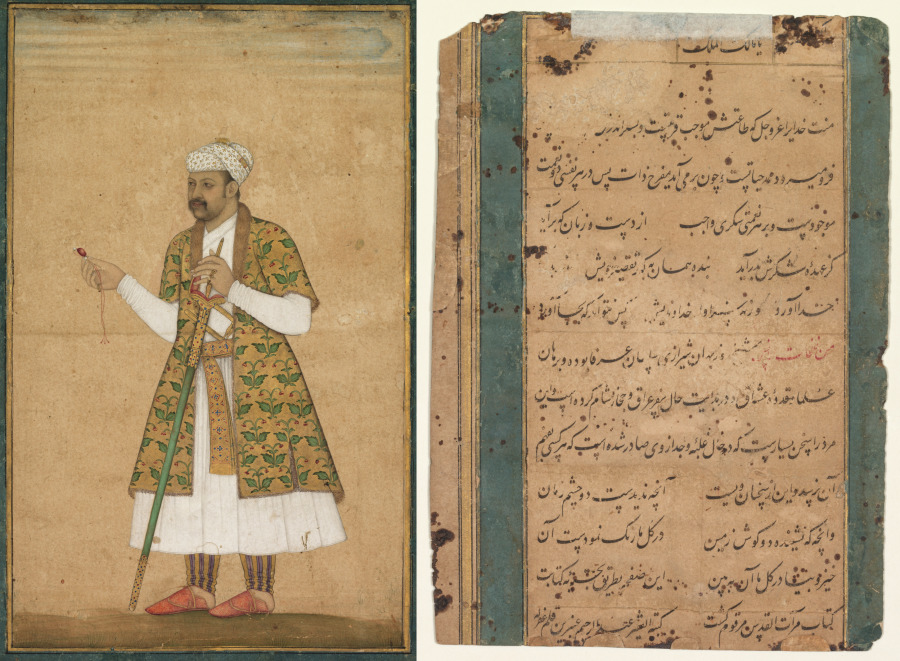
According to Akbar's court historian, the emperor ordered likenesses to be taken of the grandees of his realm. "An immense album was thus formed: those that have passed away have received a new life, and those who are still alive have immortality promised them." Akbar's son and successor, Jahangir (reigned 1605-27), continued the tradition of commissioning works of lifelike portraiture for inclusion in imperial albums. This courtier wears an opulent fur-trimmed, fringed velvet coat over his belted white tunic and striped pants-the typical Mughal dress derived from their roots among the nomadic horse-riding people of Central Asia. The artist has reveled in creating the soft textures of the facial hair, fur and fabrics. He holds a ruby-like gemstone called a spinel, which was prized among the Mughals for its talismanic properties of protection during battle.
미술관이 쓴 설명 원문입니다(영어). 라이선스: CC0
작품 이미지와 미술관 정보를 이 기기에 저장해 인터넷 연결 없이 읽어 보세요.
궁금한 것을 내 말로 물어보세요. 미술관이 이 작품에 대해 쓴 글에서 답을 찾고, 거기에 없으면 없다고 말합니다.
이미지: Cleveland Museum of Art, CC0