잠시만 기다려 주세요
잠시만 기다려 주세요
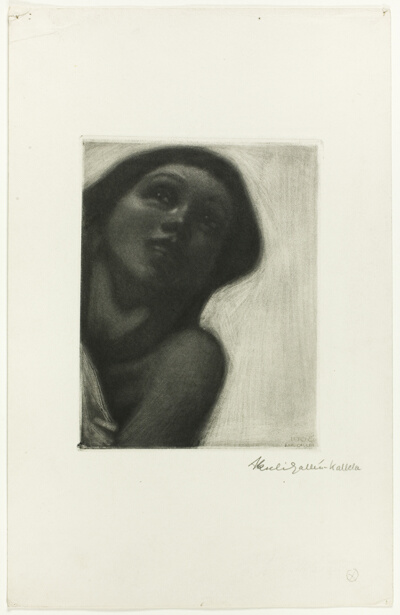
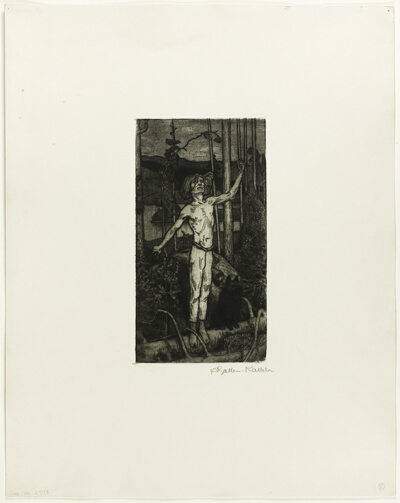
Akseli Gallen-Kallela · 1894–96 · 시카고 미술관
작품의 주요 특징과 배경을 연결해 살펴봐요.
가이드를 찾고 있습니다.
After associating with the Symbolists, including Edvard Munch, in Paris, Akseli Gallen-Kallela carried these influences to his native Finland while also incorporating indigenous folkloric traditions into his artistic practice. By intermingling Nordic Neo-Romanticism, Symbolism, and the decorative arts, he created a new visual language, which both spoke to and espoused the burgeoning sense of Finnish identity in the late 19th century. This conception of a unique ethnic culture reflected a general resistance within Finland to the dominance of Russia, which had conquered the country in 1809, as well as the rise of nationalist movements throughout Europe during this time. The artist produced Ad astra (To the Stars) in rural Finland. He later built a wilderness studio and home there and this work decorated the space. Gallen-Kallela saw the girl’s pose as recalling Christ’s Crucifixion. The suspension of gravity, as indicated by her hair, and the upward momentum evoke the triumph of the Resurrection. The frame, which he both designed and executed, was fashioned to resemble an altarpiece, and he employed the painting as one during his daughter’s baptism.
미술관이 쓴 설명 원문입니다(영어). 라이선스: CC BY 4.0
작품 이미지와 미술관 정보를 이 기기에 저장해 인터넷 연결 없이 읽어 보세요.
궁금한 것을 내 말로 물어보세요. 미술관이 이 작품에 대해 쓴 글에서 답을 찾고, 거기에 없으면 없다고 말합니다.
이미지: Art Institute of Chicago, CC0