잠시만 기다려 주세요
잠시만 기다려 주세요
Master of the Schlägl Altarpiece · c. 1440s · 클리블랜드 미술관
작품의 주요 특징과 배경을 연결해 살펴봐요.
가이드를 찾고 있습니다.
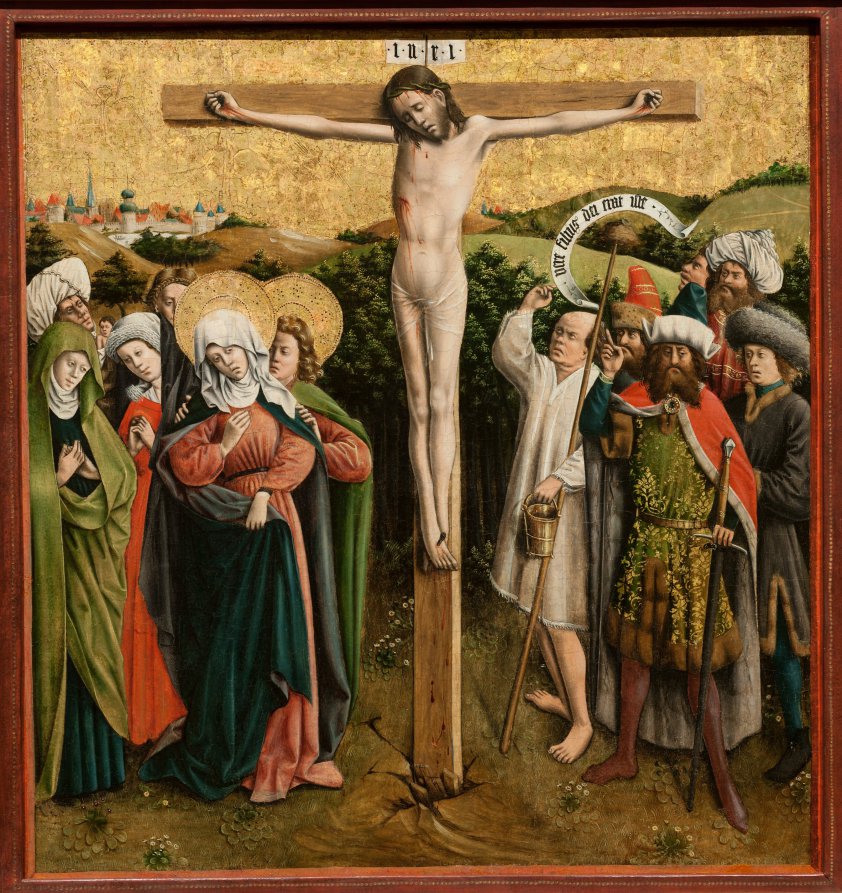
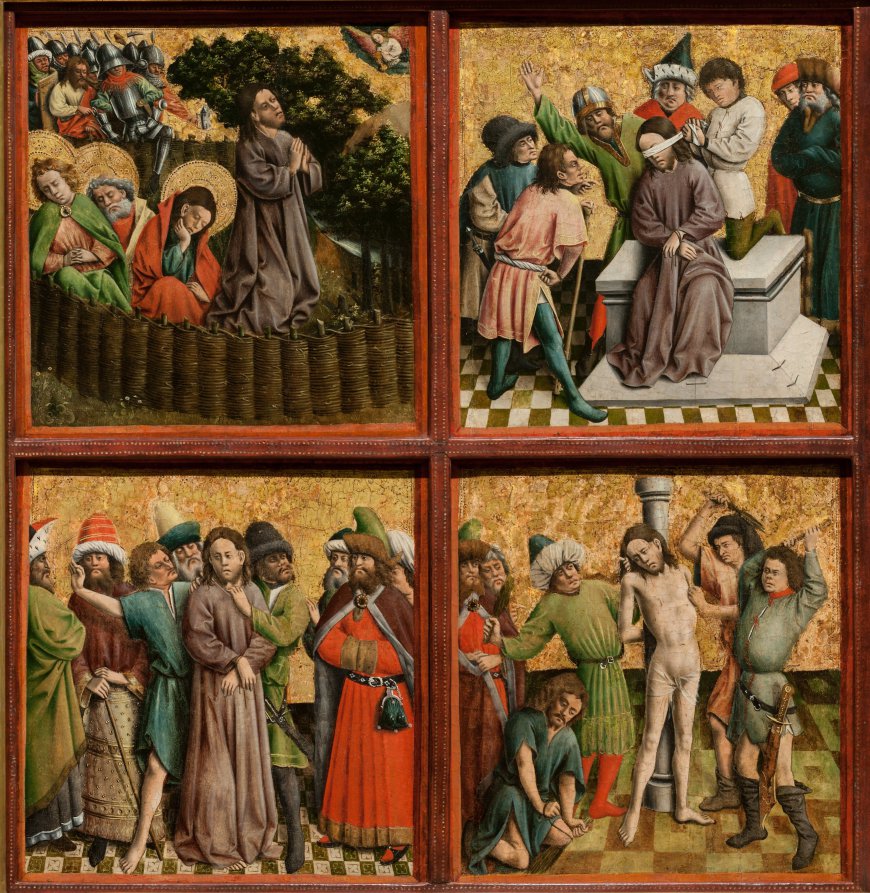
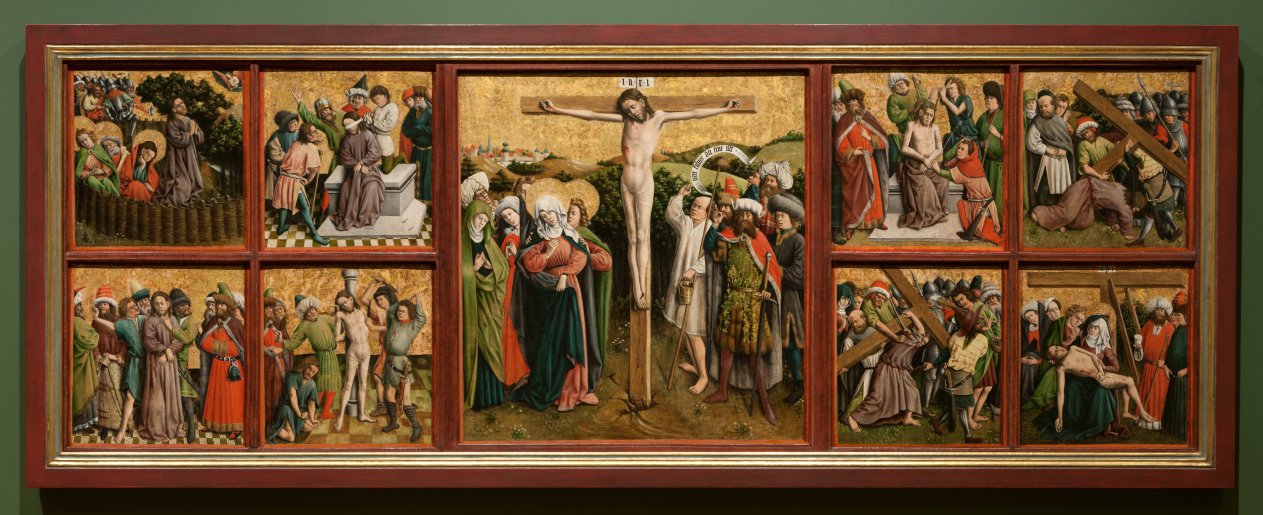
The visual focus of this altarpiece is the suffering and death of Christ on the cross. So-called Passion cycles in art include the events leading up to and following the Crucifixion, not only as single subjects but as scenes meant to be read in sequence. Passion cycles were promoted by the two great teaching orders, the Franciscans and the Dominicans, for whom this subject represented the main religious drama of their churches, and also by the German mystics who advocated private contemplation on the humanity and suffering of Christ. The original context for this altarpiece remains unknown, but it was probably made for a religious institution in Westphalia in the Rhine Valley. During the 1870s it was given to the Abbey of Schlägl, near Linz in Upper Austria, from which both altarpiece and artist take their names. The altarpiece is not preserved today in its original format, and some of the individual scenes are missing. Scholars continue to debate the original number of scenes and their sequencing; nine of the original panels have survived, four are shown here.
미술관이 쓴 설명 원문입니다(영어). 라이선스: CC0
작품 이미지와 미술관 정보를 이 기기에 저장해 인터넷 연결 없이 읽어 보세요.
궁금한 것을 내 말로 물어보세요. 미술관이 이 작품에 대해 쓴 글에서 답을 찾고, 거기에 없으면 없다고 말합니다.
이미지: Cleveland Museum of Art, CC0