잠시만 기다려 주세요
잠시만 기다려 주세요
Ancient Egyptian · New Kingdom–Third Intermediate Period (about 1500–664 BCE) · 시카고 미술관
가이드를 찾고 있습니다.
Carefully incised by an ancient Egyptian artisan, the jagged scales covering the body of this crocodile add texture and lifelike detail. Ancient Egyptians had several terms for small objects like this, which we call “amulets.” Worn by the living and the dead, these charms were meant to bring protection, health, and good luck, ensuring the bearer’s well-being in both life and the afterlife. The crocodiles that previously lived on the banks of the Nile River in Egypt posed a serious threat to nearby livestock and travelers along the river. Ancient Egyptians believed that wearing images of dangerous animals could enable an individual to harness some of their power and counteract their risk; artisans pierced this amulet with a small hole so that it could be strung like a bead and worn. Ancient Egyptians also worshipped crocodiles as a physical manifestation of Sobek, a god of the primeval waters, and represented him with the animal’s features. People revered Sobek as a deity of the earliest forces of creation. He represented both the danger and the life-giving aspects of the water.
미술관이 쓴 설명 원문입니다(영어). 라이선스: CC BY 4.0
작품 이미지와 미술관 정보를 이 기기에 저장해 인터넷 연결 없이 읽어 보세요.
궁금한 것을 내 말로 물어보세요. 미술관이 이 작품에 대해 쓴 글에서 답을 찾고, 거기에 없으면 없다고 말합니다.
이미지: Art Institute of Chicago, CC0
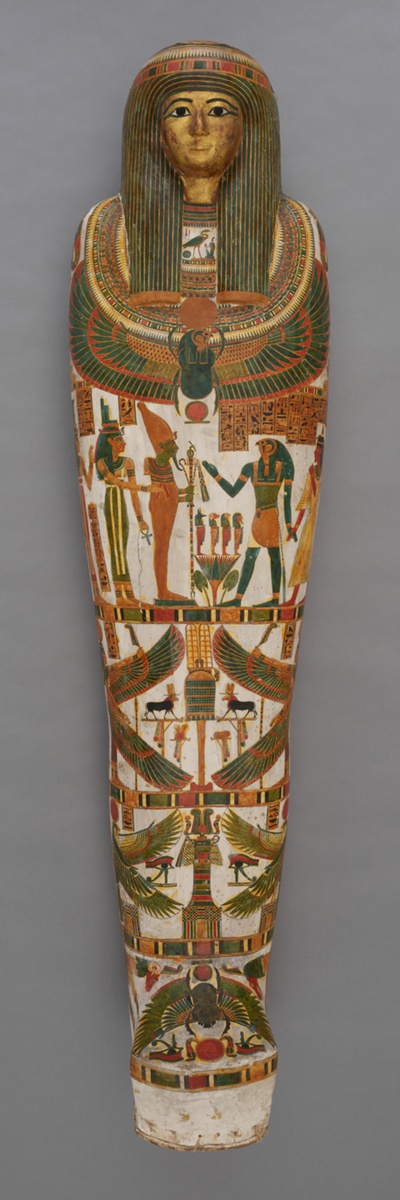 해설Coffin and Mummy of Paankhaenamun파앙케나문의 관과 미라Ancient Egyptian · Third Intermediate Period, Dynasty 22, reign of Osorkon I (about 924–889 BCE)
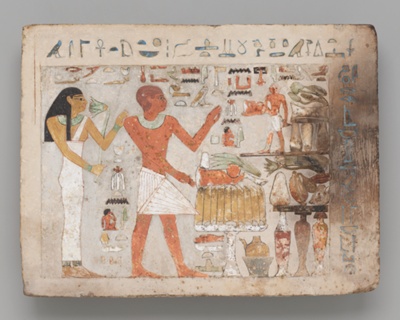 해설Stela of Amenemhat and Hemet아메넴하트와 헤메트의 석비Ancient Egyptian · Middle Kingdom, early Dynasty 12, about 1956–1877 BCE
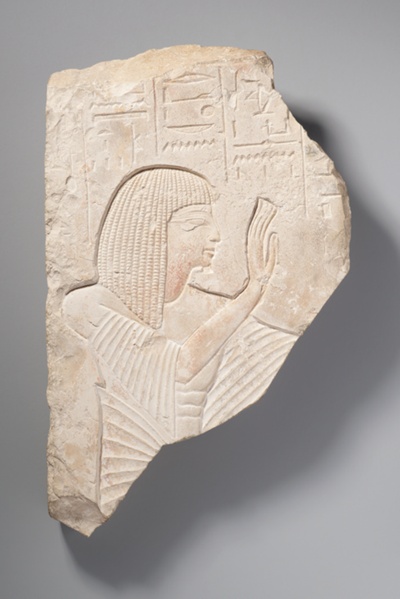 Fragment of a Stela of NeferhotepAncient Egyptian · New Kingdom, mid-Dynasty 19, about 1240-1195 BCE