잠시만 기다려 주세요
잠시만 기다려 주세요
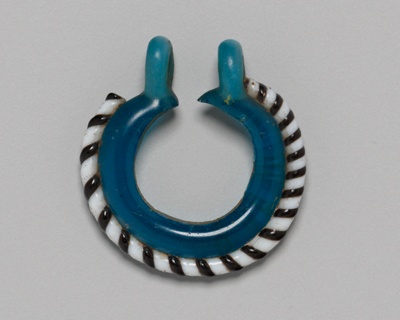
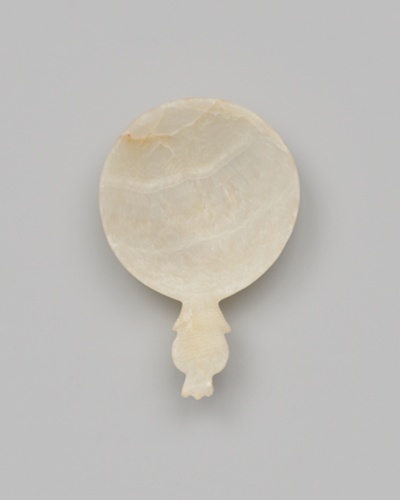
Ancient Egyptian · Late Period, Dynasty 26 (664–525 BCE) · 시카고 미술관
작품의 주요 특징과 배경을 연결해 살펴봐요.
가이드를 찾고 있습니다.
Ancient Egyptians had several terms for small objects like this, which we call “amulets.” Worn by the living and the dead, these charms were meant to bring protection, health, and good luck, ensuring the bearer’s well-being in both life and the afterlife. This amulet depicts the foreparts of both a lion and a bull, joined together at the back. It resembles another amulet type that shows conjoined lions, a representation of the god Aker, who was associated with the western and eastern horizons in the underworld. The identities of the figures on double-bull, double-ram, or lion-and-bull amulets like this one remain more elusive. To an ancient Egyptian audience, the placement of the suspension loop in the center of the two animals would have evoked the hieroglyph for “horizon,” which represents the sun between two hills. Viewed in profile, the loop resembles the sun rising or setting against the horizon of the animals’ backs and may suggest that the amulet’s significance is tied to the solar cycle. Ancient Egyptians hoped that, just as the sun was reborn each day, they would experience their own rebirth into the afterlife.
미술관이 쓴 설명 원문입니다(영어). 라이선스: CC BY 4.0
작품 이미지와 미술관 정보를 이 기기에 저장해 인터넷 연결 없이 읽어 보세요.
궁금한 것을 내 말로 물어보세요. 미술관이 이 작품에 대해 쓴 글에서 답을 찾고, 거기에 없으면 없다고 말합니다.
이미지: Art Institute of Chicago, CC0
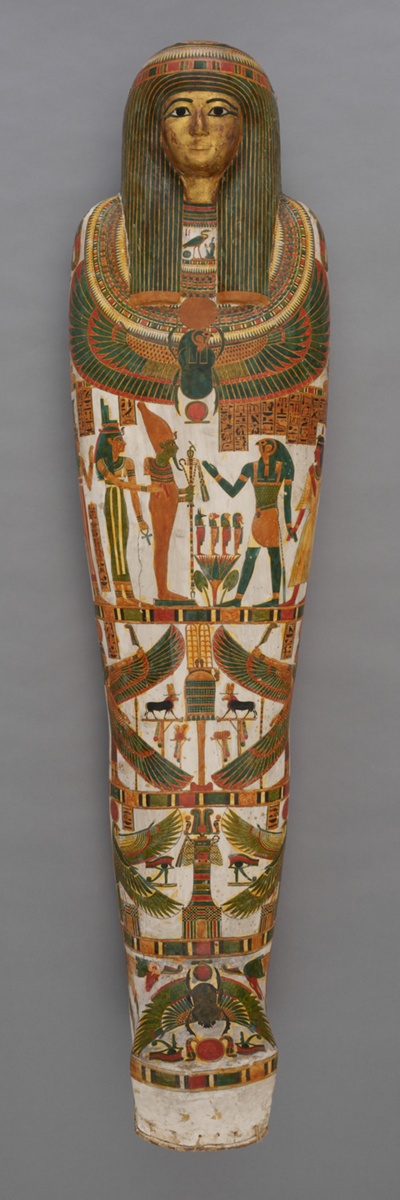 해설Coffin and Mummy of Paankhaenamun파앙케나문의 관과 미라Ancient Egyptian · Third Intermediate Period, Dynasty 22, reign of Osorkon I (about 924–889 BCE)
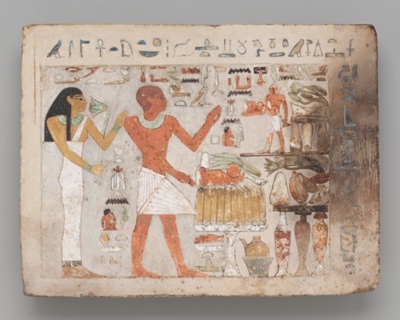 해설Stela of Amenemhat and Hemet아메넴하트와 헤메트의 석비Ancient Egyptian · Middle Kingdom, early Dynasty 12, about 1956–1877 BCE
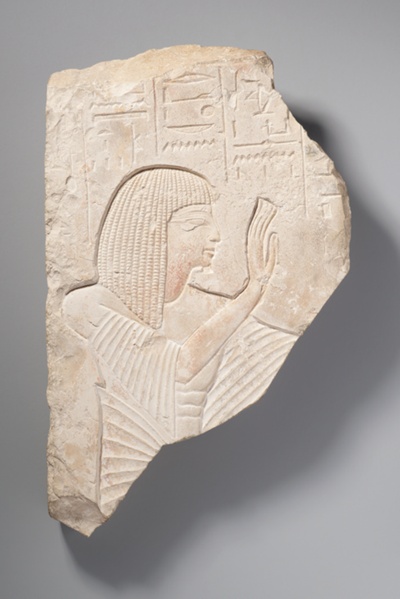 Fragment of a Stela of NeferhotepAncient Egyptian · New Kingdom, mid-Dynasty 19, about 1240-1195 BCE