잠시만 기다려 주세요
잠시만 기다려 주세요
Ancient Egyptian · Ptolemaic Period–Roman Period, 4th century BCE–4th century CE · 시카고 미술관
작품의 주요 특징과 배경을 연결해 살펴봐요.
가이드를 찾고 있습니다.
With the body of a rearing cobra and the head of a ferocious lion, this faience amulet is small but mighty. During the mummification process, amulets like this one were folded into the linen wrappings of a body to protect the deceased. Such objects often depicted gods and goddesses in their human, animal, or mixed forms. This amulet likely represents a goddess— either Sekhmet or Wadjet— but because the image is not inscribed with a name, her identity remains uncertain. Sekhmet typically is depicted as a lioness or lion-headed woman, while Wadjet appears in the form of a cobra. In Egyptian mythology, Sekhmet and Wadjet both acted as the Eye of Re—the daughter of the sun god, Re, who also served as his protector. In the fearsome mixed form shown here, they would embody protection and power. The lion-headed cobra form could be an allusion to the uraeus, a hooded cobra worn on the crowns of royalty and deities for protection.
미술관이 쓴 설명 원문입니다(영어). 라이선스: CC BY 4.0
작품 이미지와 미술관 정보를 이 기기에 저장해 인터넷 연결 없이 읽어 보세요.
궁금한 것을 내 말로 물어보세요. 미술관이 이 작품에 대해 쓴 글에서 답을 찾고, 거기에 없으면 없다고 말합니다.
이미지: Art Institute of Chicago, CC0
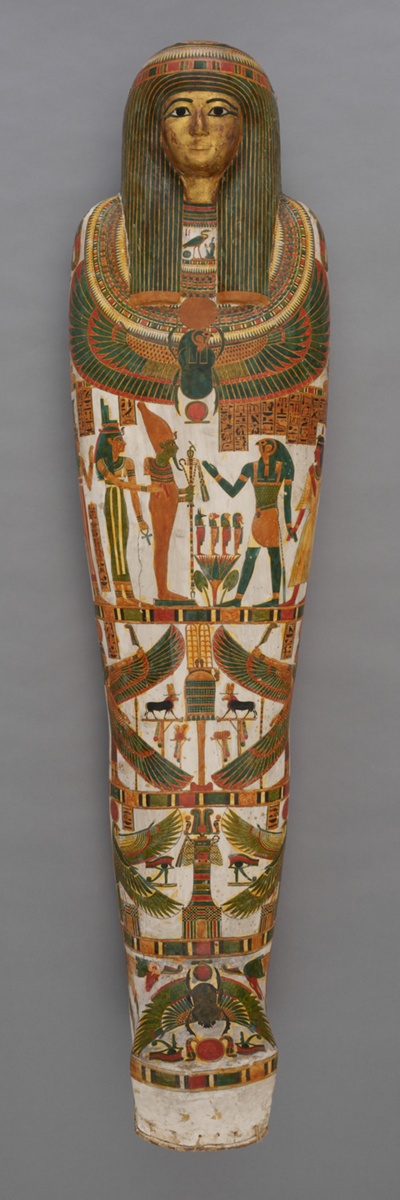 해설Coffin and Mummy of Paankhaenamun파앙케나문의 관과 미라Ancient Egyptian · Third Intermediate Period, Dynasty 22, reign of Osorkon I (about 924–889 BCE)
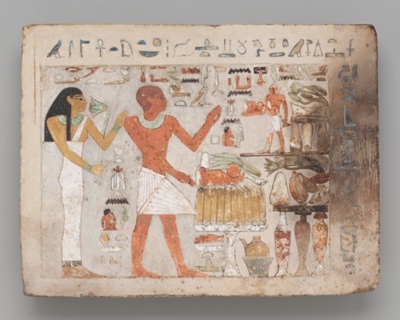 해설Stela of Amenemhat and Hemet아메넴하트와 헤메트의 석비Ancient Egyptian · Middle Kingdom, early Dynasty 12, about 1956–1877 BCE
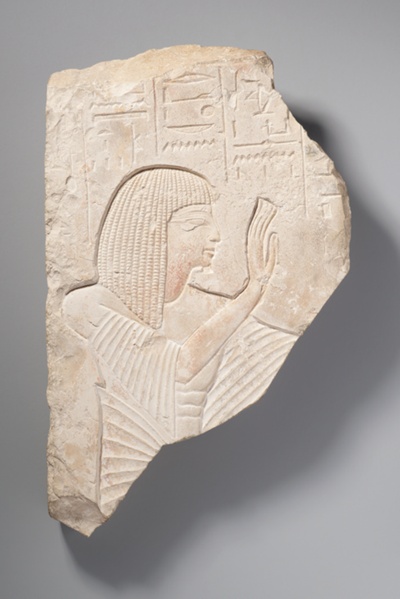 Fragment of a Stela of NeferhotepAncient Egyptian · New Kingdom, mid-Dynasty 19, about 1240-1195 BCE