잠시만 기다려 주세요
잠시만 기다려 주세요
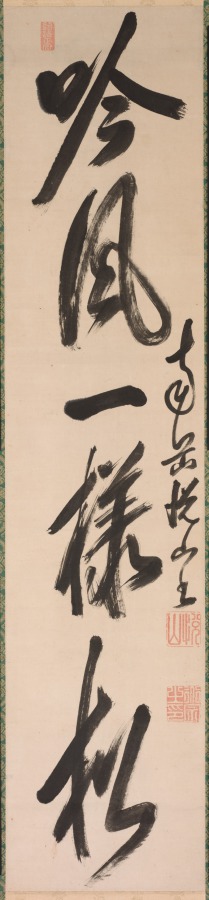
Yueshan Daozong · c. 1660–1709 · 클리블랜드 미술관
작품의 주요 특징과 배경을 연결해 살펴봐요.
가이드를 찾고 있습니다.
This spontaneous, bold calligraphy style is characteristic of members of the Japanese Ōbaku school (Huangbo in Chinese) of Chan (Zen in Japanese) Buddhism, which was founded in Japan by Chinese monks in the 1600s. The monk Yueshan emigrated to Japan from the Chinese province of Fujian, taking a priestly post at Manpukuji, the headquarters of the Ōbaku school in Japan. He later became the seventh abbot of the distinguished temple. Yueshan’s calligraphy features rounded characters that allow him to fuse strokes and characters in speedy brush movements. Here the text begins with the large character chu (初, “the beginning”), the initial focus of meditation on the text: The dragon murmurs after sunset. The tiger roars before dawn. Ōbaku-style calligraphy favors rounded—rather than angular—brushstrokes. It is not a subtle style of calligraphy, as the Chan monks preferred a bold approach.
미술관이 쓴 설명 원문입니다(영어). 라이선스: CC0
작품 이미지와 미술관 정보를 이 기기에 저장해 인터넷 연결 없이 읽어 보세요.
궁금한 것을 내 말로 물어보세요. 미술관이 이 작품에 대해 쓴 글에서 답을 찾고, 거기에 없으면 없다고 말합니다.
이미지: Cleveland Museum of Art, CC0